
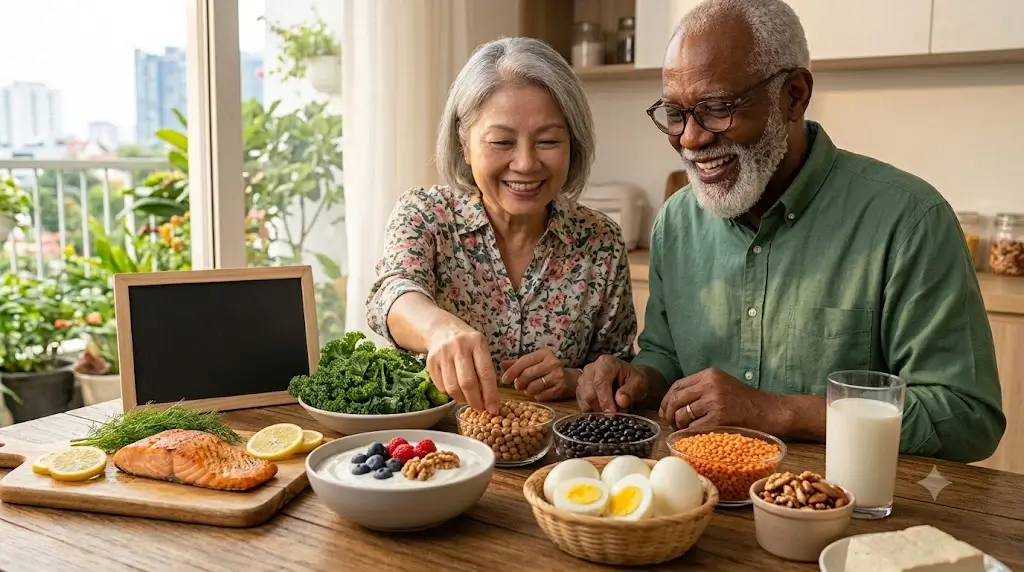
This guide focuses on practical lunch ideas for adults 50 and older, including quick lunches, high-protein options, high-fiber meals, no-cook lunches, meals for one, make-ahead options, and lunches that require less standing or chopping.
What Makes a Healthy Lunch for an Older Adult?
A balanced lunch can be built from four basic components:
- Protein: fish, poultry, eggs, yogurt, cottage cheese, beans, lentils, tofu, nuts, or seeds.
- Vegetables and/or fruit: fresh, frozen, canned, or pre-cut options can all work.
- Fiber-rich carbohydrate: whole-grain bread, oats, brown rice, quinoa, beans, lentils, or other whole grains.
- Healthy fat: avocado, nuts, seeds, olive oil, or another unsaturated-fat source when appropriate.
NIA recommends choosing a variety of nutrient-dense foods across the major food groups and including protein foods throughout the day. It also suggests using pre-cut fruits and vegetables when chopping is difficult and reducing excess sodium by using herbs, spices, and citrus for flavor.
How Should You Build a Healthy Lunch?
Instead of starting with a recipe, start with the main food groups you want to include.
| Lunch component | Practical choices | Easy combinations |
|---|---|---|
| Protein | Chicken, tuna, salmon, eggs, yogurt, beans, lentils, tofu | Chicken sandwich, tuna salad, bean bowl |
| Vegetables | Leafy greens, tomatoes, carrots, peppers, broccoli, frozen vegetables | Salad, soup, grain bowl |
| Fruit | Apples, berries, oranges, bananas, pears | Fruit with yogurt or a sandwich |
| Whole grains | Whole-grain bread, oats, brown rice, quinoa, whole-grain pasta | Sandwich, grain bowl, pasta salad |
| Healthy fats | Avocado, nuts, seeds, olive oil, nut butter | Avocado toast, salad dressing, nut topping |
The goal is not to make every lunch mathematically perfect. A practical pattern is more useful: include a protein source, add produce, choose a high-fiber carbohydrate when it fits the meal, and keep the overall meal varied.
What Are the Best Healthy Lunch Ideas for Older Adults?
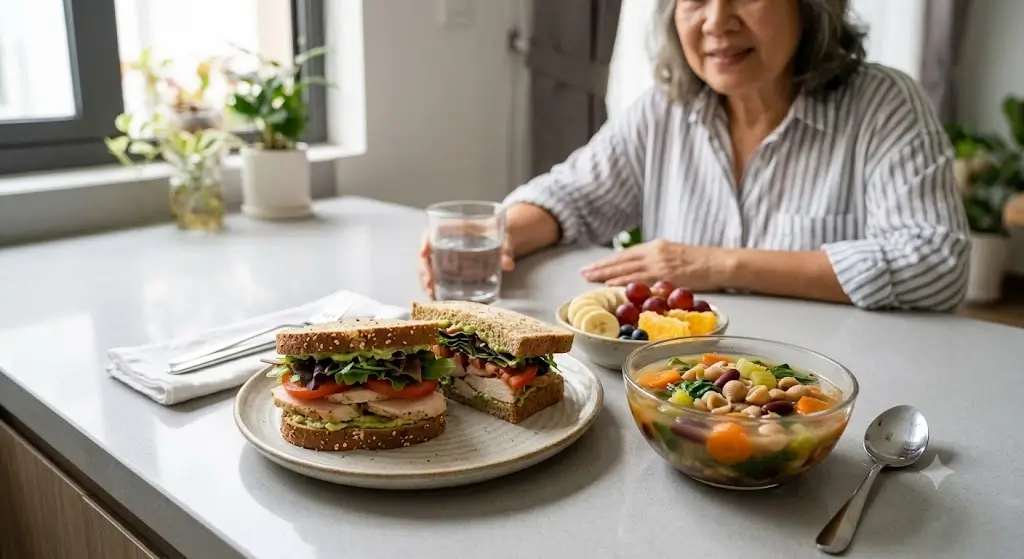
1. Chicken and Avocado Whole-Grain Sandwich
Combine sliced or shredded chicken with avocado, tomato, and leafy greens on whole-grain bread.
This is one of the simplest complete lunches because the sandwich can provide protein, vegetables, fruit-group nutrients if paired with fruit, whole grains, and unsaturated fat.
Easy side: an apple, orange, berries, or a small serving of plain yogurt.
2. Bean and Vegetable Soup With Whole-Grain Toast
Bean soup can combine plant protein, fiber, and vegetables in one bowl. Add whole-grain toast and fruit if you want a more substantial meal.
For convenience, use a lower-sodium prepared soup or make a batch at home and freeze individual portions.
3. Tuna Salad With Whole-Grain Crackers and Vegetables
Mix tuna with a simple dressing and serve it with whole-grain crackers, sliced tomatoes, cucumber, carrots, or leafy greens.
For a lighter preparation, part of the mayonnaise can be replaced with plain yogurt. Check the Nutrition Facts label when comparing prepared tuna salads, crackers, and other packaged foods because sodium can vary substantially.
4. Salmon and Vegetable Grain Bowl
Build a bowl with cooked salmon, brown rice or quinoa, vegetables, and a small amount of olive-oil-based dressing.
Frozen vegetables can make this lunch much easier to assemble. Cooked grains can also be prepared ahead and portioned for several meals.
5. Egg and Vegetable Whole-Grain Toast
Top whole-grain toast with eggs and vegetables such as spinach, tomatoes, mushrooms, or peppers.
This works particularly well when lunch needs to be inexpensive and quick. Add fruit or yogurt for additional variety.
6. Greek Yogurt, Fruit, Oats, and Nuts
For a lunch requiring almost no cooking, combine plain Greek yogurt with berries or another whole fruit, oats, and a small portion of nuts or seeds.
This can be especially useful on days when appetite is modest or cooking feels like too much work. Choose plain or lower-added-sugar yogurt when possible.
7. Chicken and Vegetable Wrap
Fill a whole-grain or high-fiber wrap with cooked chicken, lettuce, tomato, cucumber, and avocado. Add fruit on the side.
Using already-cooked chicken can turn this into a five-minute lunch.
8. Lentil and Vegetable Bowl
Combine cooked lentils with vegetables and a whole grain such as brown rice or quinoa. Add olive oil, lemon juice, herbs, or another simple seasoning.
Lentils provide both protein and fiber, making them useful for a plant-forward lunch.
9. Turkey and Vegetable Sandwich
Build a sandwich with turkey, leafy greens, tomato, and avocado or another vegetable topping. Choose whole-grain bread when practical.
Because processed meats can contribute significant sodium, compare labels and choose lower-sodium options when available.
10. Hummus and Vegetable Plate
Serve hummus with carrots, cucumber, bell peppers, whole-grain pita, and fruit.
This is a useful no-cook lunch when chopping and cooking are difficult. Buy pre-cut vegetables when that makes preparation easier.
What Are Good High-Protein Lunch Ideas for Older Adults?
Protein is an important part of the eating pattern for older adults. NIA specifically recommends including protein foods such as seafood, dairy or fortified soy products, beans, peas, and lentils throughout the day.
Easy protein-centered lunches include:
- Chicken and vegetable whole-grain sandwich
- Salmon with vegetables and brown rice
- Tuna and bean salad
- Egg and vegetable toast
- Greek yogurt with fruit, oats, and nuts
- Lentil soup with whole-grain toast
- Tofu and vegetable grain bowl
- Bean and avocado quesadilla
- Cottage cheese with fruit and whole-grain toast
- Chicken and vegetable wrap
The goal is not simply to maximize protein. Lunch should still fit the person’s overall eating pattern, appetite, preferences, energy needs, and other dietary considerations.
For a deeper explanation of protein needs, see How Much Protein Do Older Adults Need?. For a full breakdown of nutrient-dense options across food categories, see High-Protein Foods for Adults Over 50.
What Are Good High-Fiber Lunch Ideas?
Fiber can come from vegetables, fruits, beans, lentils, whole grains, nuts, and seeds.
| Lunch | Main fiber sources |
|---|---|
| Lentil soup + whole-grain toast | Lentils, vegetables, whole grains |
| Bean and vegetable bowl | Beans, vegetables, whole grains |
| Chicken sandwich + apple | Whole-grain bread, vegetables, whole fruit |
| Oat and yogurt bowl | Oats, berries, nuts or seeds |
| Hummus vegetable plate | Chickpeas, vegetables, whole-grain pita |
| Salmon grain bowl | Whole grain, vegetables, optional beans |
If fiber intake is currently low, increasing high-fiber foods gradually and drinking enough fluids can make the transition easier for some people.
What Are Good No-Cook Lunches for Older Adults?
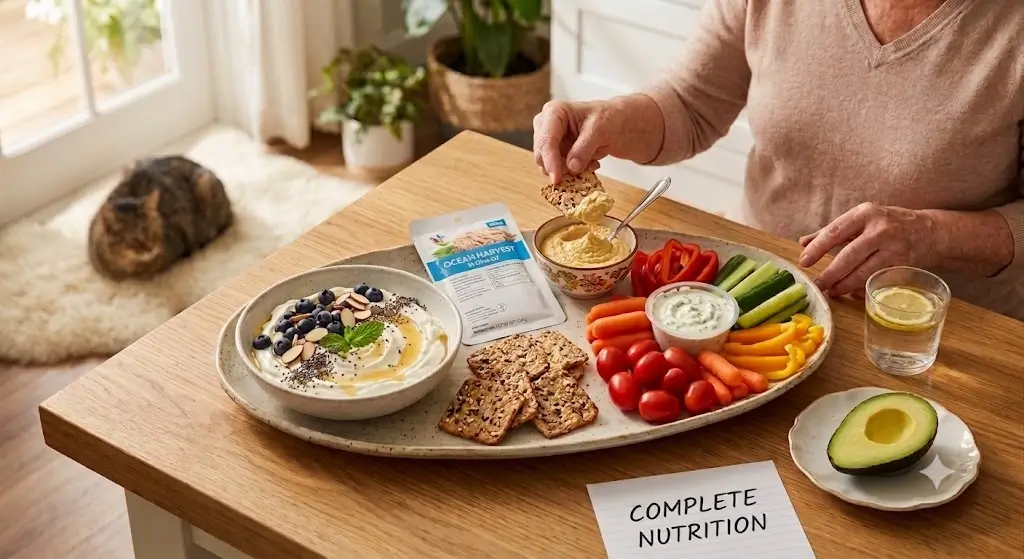
A healthy lunch does not have to involve a stove. No-cook meals can be especially practical for people who have limited energy, standing tolerance, hand strength, or access to a full kitchen.
- Greek yogurt + berries + oats + nuts
- Hummus + pre-cut vegetables + whole-grain pita
- Chicken salad + whole-grain crackers + fruit
- Tuna packet + avocado + whole-grain toast
- Cottage cheese + fruit + whole-grain toast
- Bean salad + pre-washed greens
- Turkey sandwich + tomato + fruit
- Overnight oats + yogurt + fruit
Convenience foods are not automatically unhealthy. Frozen vegetables, canned beans, pre-cut produce, cooked grains, rotisserie-style chicken, and other ready-to-use foods can reduce preparation barriers. The important step is to compare labels and choose options that fit the person’s nutritional needs and preferences.
What Are Easy Lunches for One Older Adult?
Cooking for one creates a different problem: a full recipe may produce too much food, while cooking a fresh meal every day can become tiring.
A better approach is to prepare a few reusable components:
- Cook one protein.
- Prepare one grain or other carbohydrate.
- Keep several vegetables available.
- Keep fruit ready to eat.
- Use different seasonings or sauces to change the flavor.
For example, cooked chicken can become a sandwich one day, a grain bowl the next day, and a salad another day.
For more strategies specifically designed around shopping, portions, leftovers, and cooking for one, see Healthy Meal Planning for One Person.
What Are Easy Lunches for Two Older Adults?
For two people, shared meals can be easier when the main ingredients are the same but portions or toppings can vary.
Examples include:
- Chicken grain bowls with different vegetables
- Whole-grain sandwiches with different fillings
- Bean and vegetable soup with different toppings
- Salmon with shared vegetables and adjustable grain portions
- Egg-and-vegetable wraps
- Large salad with separate protein choices
This approach reduces the need to prepare completely separate meals while still allowing individual preferences.
What Lunches Work Well When Cooking Feels Difficult?
When cooking is physically demanding, reduce the number of tasks rather than abandoning healthy meals altogether.
| Common difficulty | Practical lunch strategy |
|---|---|
| Standing for a long time | Use no-cook meals or prepare food while seated when appropriate |
| Chopping vegetables | Use pre-cut or frozen vegetables |
| Opening containers | Choose packaging with easier-to-use closures |
| Lifting heavy cookware | Use smaller containers and lighter cookware |
| Low energy | Keep simple backup lunches available |
| Cooking for one | Prepare components rather than large complete meals |
NIA specifically notes that pre-cut fruits and vegetables can be useful when chopping is difficult, and recommends planning meals around preparation time and practical barriers.
How Can You Make Lunches Healthier Without Making Them Complicated?
Small substitutions can improve the overall nutritional pattern without turning lunch into a project.
- Choose whole fruit instead of juice more often.
- Use whole-grain bread or grains when practical.
- Add vegetables to sandwiches, wraps, soups, and bowls.
- Include a clear protein source.
- Use beans or lentils regularly.
- Choose unsaturated-fat sources such as avocado, nuts, seeds, or olive oil.
- Compare sodium levels in packaged foods.
- Choose beverages with little or no added sugar.
NIA recommends a variety of nutrient-dense foods and limiting excess added sugar, saturated fat, and sodium. It also recommends water throughout the day. For an overview of dietary balance across meals, see Healthy Eating After 50: Complete Guide.
How Can You Keep Lunches Interesting?
Eating the same basic ingredients does not require eating the same meal.
| Base | Protein | Flavor direction |
|---|---|---|
| Brown rice | Chicken | Lemon and herbs |
| Whole-grain bread | Tuna | Tomato and avocado |
| Quinoa | Chickpeas | Lemon and olive oil |
| Whole-grain wrap | Turkey | Greens and avocado |
| Mixed greens | Salmon | Herbs and citrus |
Changing seasonings, vegetables, textures, and presentation can create variety without requiring a completely different grocery list each week.
What Are Good Healthy Lunch Ideas for Low-Energy Days?
Keep a few meals that require almost no active cooking. A practical backup lunch might include:
- Plain Greek yogurt + fruit + nuts
- Hummus + pre-cut vegetables + whole-grain pita
- Low-sodium bean soup + whole-grain toast
- Pre-cooked chicken + microwaveable brown rice + frozen vegetables
- Tuna + whole-grain crackers + fruit
The purpose of these meals is not to create a perfect diet. It is to make a nutritious lunch possible when cooking from scratch is not realistic.
What Should Older Adults Consider When Choosing Packaged Lunch Foods?
Packaged foods can be useful, but compare the Nutrition Facts label when possible.
Pay particular attention to:
- Sodium: especially when choosing soups, deli meats, sauces, and prepared meals.
- Added sugars: particularly in flavored yogurt, drinks, and packaged snacks.
- Protein: useful when comparing otherwise similar lunch options.
- Fiber: useful when choosing breads, cereals, grains, and packaged meals.
- Serving size: make sure the listed nutrition information matches how much is actually being eaten.
NIA states that people age 51 and older should reduce sodium intake to 2,300 mg per day, while individual dietary needs can differ.
How Should Leftover Lunches Be Stored Safely?
Food safety matters when lunch includes cooked meat, poultry, seafood, eggs, dairy, rice, or other perishable foods.
USDA FSIS recommends refrigerating leftovers within two hours, or within one hour when the surrounding temperature is above 90°F. Refrigerated leftovers should generally be used within three to four days or frozen for longer storage. Shallow containers can help leftovers cool more quickly.
Do not rely on smell or appearance alone to determine whether food is safe. When in doubt about food that has been left unrefrigerated too long, discard it.
Can Older Adults Prepare Lunch Ahead of Time?
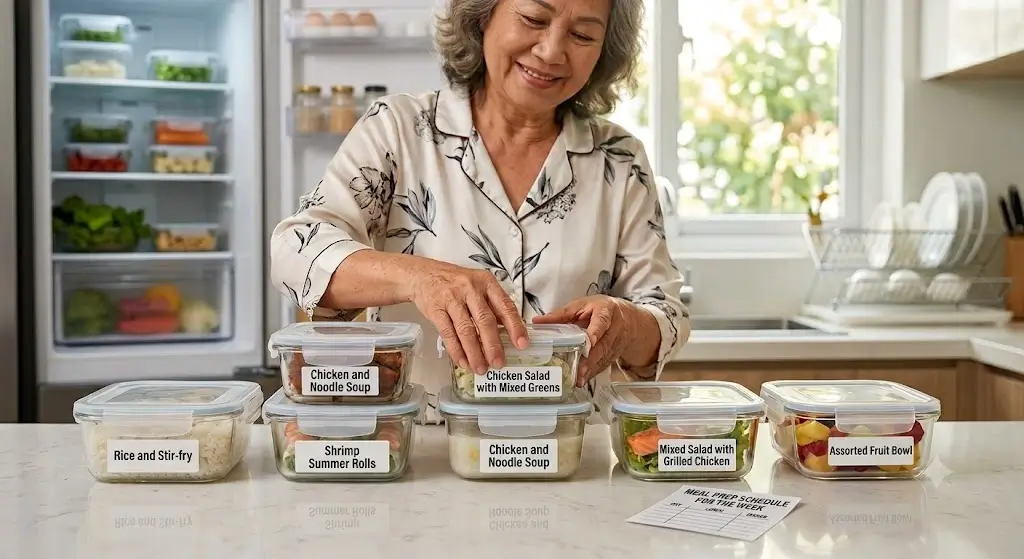
Yes. Preparing components ahead can make healthy lunches much easier during the week.
A simple system is:
- Prepare one or two proteins.
- Cook one grain or other lunch base.
- Wash or portion vegetables.
- Prepare several fruit portions.
- Store foods in clearly labeled containers.
- Assemble different combinations during the week.
NIA recommends planning ahead and notes that cooking extra and packaging individual portions can make later meals easier.
For a broader system covering batch preparation and reusable meal components, see Easy Meal Prep for Older Adults.
What If an Older Adult Has a Small Appetite?
A smaller appetite can make large meals unappealing. Instead of forcing a large lunch, a person may prefer a smaller, nutrient-dense meal and another eating occasion later.
Examples include:
- Greek yogurt with fruit and nuts
- Egg and avocado toast
- Half a chicken sandwich with fruit
- Small bowl of lentil soup with toast
- Cottage cheese with fruit and whole-grain crackers
Persistent appetite changes, unintended weight changes, or difficulty eating should be discussed with an appropriate healthcare professional because the underlying cause matters.
What If Chewing or Swallowing Makes Lunch Difficult?
Safety Note on Swallowing Difficulties: Persistent difficulty chewing, coughing while eating, or feelings of food catching in the throat can indicate dysphagia. Consult a speech-language pathologist or primary care physician for individualized texture modification guidelines.
Choose softer foods and textures that are comfortable for the individual rather than assuming that every healthy lunch needs to be crunchy or raw.
Examples may include soft-cooked vegetables, oatmeal, yogurt, soups, lentils, tender fish, eggs, mashed beans, or soft grain bowls.
Anyone with diagnosed swallowing difficulty should follow the texture and food recommendations provided by their healthcare professional or swallowing specialist.
7-Day Healthy Lunch Idea Rotation
| Day | Lunch |
|---|---|
| Monday | Chicken, avocado, tomato, and whole-grain sandwich + fruit |
| Tuesday | Lentil and vegetable soup + whole-grain toast |
| Wednesday | Salmon, brown rice, and vegetables |
| Thursday | Greek yogurt, berries, oats, and nuts |
| Friday | Turkey and vegetable whole-grain wrap + fruit |
| Saturday | Bean and avocado bowl + vegetables |
| Sunday | Egg and vegetable toast + yogurt or fruit |
This is a template rather than a prescribed diet. Portions and food choices should be adjusted to individual appetite, energy needs, preferences, allergies, dietary restrictions, and medical guidance when applicable.
Healthy Lunch Checklist for Older Adults
- ☐ Include a protein food.
- ☐ Add vegetables, fruit, or both.
- ☐ Include a fiber-rich carbohydrate when appropriate.
- ☐ Choose whole grains regularly.
- ☐ Include a source of healthy unsaturated fat when appropriate.
- ☐ Keep added sugar and excess sodium in check.
- ☐ Choose water or another suitable low-added-sugar beverage.
- ☐ Keep a few no-cook lunches available.
- ☐ Use pre-cut or frozen produce when preparation is difficult.
- ☐ Refrigerate perishable leftovers promptly.
- ☐ Build lunches around foods that are realistic to prepare and enjoy.
Frequently Asked Questions
What is a good simple lunch for an older adult?
A chicken or tuna whole-grain sandwich with vegetables and fruit is a simple option. Other practical choices include bean soup with whole-grain toast, yogurt with fruit and oats, or a grain bowl with vegetables and protein.
What is a good high-protein lunch for seniors?
Good options include chicken and vegetable sandwiches, salmon grain bowls, tuna salad, eggs with whole-grain toast, lentil soup, Greek yogurt with nuts, and bean-based bowls.
What is a good lunch for an older adult who lives alone?
Choose meals that use small portions and reusable ingredients. Sandwiches, grain bowls, soup portions, yogurt bowls, and no-cook meals are particularly easy to adapt for one person.
What can an older adult eat for lunch without cooking?
Try Greek yogurt with fruit and oats, hummus with vegetables and whole-grain pita, tuna with whole-grain crackers, cottage cheese with fruit, or a ready-to-eat chicken salad with whole-grain bread.
Are sandwiches healthy for older adults?
They can be. Use a protein filling, add vegetables, choose whole-grain bread when practical, and compare sodium levels in processed meats, cheese, sauces, and prepared fillings.
What are good high-fiber lunches?
Bean bowls, lentil soup, vegetable-and-grain bowls, hummus plates, oatmeal-based meals, and sandwiches made with whole-grain bread can provide useful sources of fiber.
What should an older adult eat if lunch appetite is low?
Smaller nutrient-dense meals may be easier than a large plate. Yogurt with fruit and nuts, egg-and-avocado toast, soup with whole-grain toast, or a half sandwich with fruit are examples.
How can lunch be easier to prepare with limited mobility?
Reduce standing, chopping, lifting, and carrying. Pre-cut vegetables, frozen vegetables, prepared grains, simple sandwiches, no-cook meals, and individually portioned leftovers can reduce physical effort.
How long are leftover lunches safe in the refrigerator?
USDA FSIS recommends using refrigerated leftovers within three to four days, provided they were refrigerated promptly and stored properly. Perishable food should not remain at room temperature for more than two hours, or one hour above 90°F.
Does every healthy lunch need to be homemade?
No. Prepared and convenience foods can be part of a healthy eating pattern. Frozen vegetables, canned beans, prepared proteins, whole-grain products, and other convenient foods can reduce the physical and time demands of cooking. Compare labels when appropriate and combine convenience foods with minimally processed foods such as fruits and vegetables.
The Bottom Line
The best healthy lunch for an older adult is one that provides useful nutrition while remaining practical enough to prepare and eat consistently.
Start with a protein food, add vegetables or fruit, include a fiber-rich carbohydrate or whole grain, and use healthy fats when appropriate. Keep several quick and no-cook options available for low-energy days, and use pre-cut or frozen ingredients when preparation is physically difficult.
There is no single “perfect” senior lunch. A sustainable lunch routine should fit the person’s appetite, preferences, budget, cooking ability, household size, and overall eating pattern.
Editorial Methodology
This guide uses an evidence-first approach based primarily on guidance from the National Institute on Aging, USDA MyPlate, and USDA Food Safety and Inspection Service. Nutrition recommendations are presented as general educational information rather than individualized medical or dietary advice. Product recommendations, when discussed elsewhere on AgingWellGuide, are evaluated separately using product-specific evidence and manufacturer specifications.
Sources
- National Institute on Aging — Healthy Meal Planning: Tips for Older Adults
- National Institute on Aging — Healthy Eating As You Age: Know Your Food Groups
- National Institute on Aging — Healthy Eating, Nutrition, and Diet
- National Institute on Aging — Healthy Aging Tips for Older Adults
- National Institute on Aging — Vitamins and Minerals for Older Adults
- USDA MyPlate — Healthy Eating for Older Adults
- USDA Food Safety and Inspection Service — The 2-Hour Rule and Leftover Food Safety
Editorial standard: AgingWellGuide distinguishes general nutritional planning from medical nutrition therapy. Meal recommendations prioritize nutrient density, affordability, and physical accessibility while maintaining strict safety boundaries for food storage and chronic medical conditions.
