
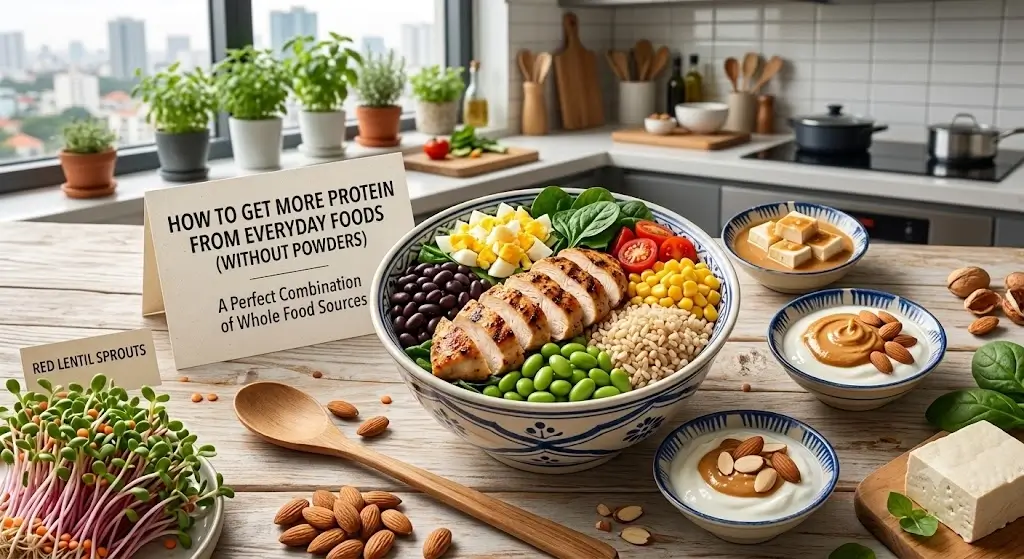
For adults over 50, the practical challenge is often consistency. A breakfast of toast and coffee, a light lunch, and a protein-heavy dinner may provide a very different protein pattern from one that includes a protein food at breakfast, lunch, and dinner.
This guide explains how to increase protein using ordinary foods, including simple meal upgrades, breakfast and lunch strategies, plant-based options, snacks, cooking-for-one strategies, low-effort choices, and common mistakes.
How Can You Get More Protein From Everyday Foods?
Use this simple five-step approach:
- Choose the protein first. Decide what protein food will anchor the meal.
- Include protein at breakfast. Eggs, Greek yogurt, cottage cheese, milk, or another suitable option can replace a breakfast based almost entirely on refined carbohydrates.
- Build lunch around protein. Add chicken, fish, beans, lentils, eggs, tofu, or another protein food to sandwiches, salads, soups, wraps, and bowls.
- Keep dinner balanced. Pair protein with vegetables and a whole grain or other fiber-rich carbohydrate when appropriate.
- Use protein-containing snacks strategically. Yogurt, cottage cheese, nuts, cheese, eggs, hummus, or nut butter can be useful between meals when appropriate.
The goal is not to make every meal extremely high in protein. It is to stop treating protein as something that only belongs at dinner.
Why Is It Helpful to Include Protein Throughout the Day?
Protein is needed throughout the body for functions including maintaining and repairing tissues. NIA recommends including protein foods throughout the day as part of a healthy eating pattern.
A practical pattern might look like this:
| Meal | Example protein food |
|---|---|
| Breakfast | Eggs or Greek yogurt |
| Lunch | Chicken, tuna, beans, or tofu |
| Snack | Yogurt, nuts, cheese, or hummus |
| Dinner | Fish, poultry, beans, lentils, or tofu |
This approach makes protein part of the day’s overall eating pattern instead of concentrating it into one meal.
The amount an individual needs varies. Body size, activity, age, health status, and overall dietary intake can all matter. If you are calculating personal targets based on body weight, review our detailed guide on how much protein older adults need. This article therefore focuses on how to increase protein rather than prescribing a universal daily target.
What Are the Best Everyday Foods for Increasing Protein?

You can increase protein without buying specialty foods. Start with foods already used in ordinary breakfasts, lunches, dinners, and snacks.
| Food | Easy uses |
|---|---|
| Eggs | Breakfast, sandwiches, bowls, salads |
| Greek yogurt | Breakfast, snacks, smoothies |
| Cottage cheese | Breakfast, snacks, fruit bowls |
| Chicken | Sandwiches, salads, soups, grain bowls |
| Fish | Dinner, salads, grain bowls |
| Beans | Soups, tacos, salads, bowls |
| Lentils | Soups, stews, bowls |
| Tofu | Stir-fries, soups, grain bowls |
| Nuts | Snacks, oatmeal, yogurt, salads |
| Seeds | Oatmeal, yogurt, salads, bowls |
| Nut butter | Toast, oatmeal, fruit |
| Milk or suitable fortified alternatives | Oatmeal, smoothies, beverages |
There is no requirement to use every food on this list. For a full breakdown of nutritional density and portion gram values, explore our comprehensive guide to high-protein foods for adults over 50. Variety makes it easier to build a sustainable eating pattern.
How Can You Add More Protein to Breakfast?

Breakfast is often the easiest meal to improve because relatively small changes can introduce a protein food.
Replace plain toast with eggs and toast
Keep the whole-grain toast but add eggs. Add fruit or vegetables if desired.
Upgrade oatmeal
Prepare oatmeal with milk or a suitable fortified alternative and add nuts, seeds, or yogurt.
Build a yogurt bowl
Combine plain or lower-added-sugar Greek yogurt with berries, oats, nuts, or seeds.
Add cottage cheese
Pair cottage cheese with fruit or whole-grain toast for a quick breakfast.
Use a smoothie
A smoothie can combine yogurt or another protein-containing food with fruit and other nutrient-dense ingredients.
The goal is not to make breakfast unusually large. It is simply to give protein a clear place in the meal.
How Can You Add More Protein to Lunch?
Start with the protein rather than treating it as a garnish.
For example:
| Current lunch | Simple protein upgrade |
|---|---|
| Vegetable salad | Add chicken, tuna, beans, eggs, or tofu |
| Vegetable soup | Add beans, lentils, chicken, or tofu |
| Toast and vegetables | Add eggs, cottage cheese, or hummus |
| Crackers and fruit | Add cheese, yogurt, or nuts |
| Sandwich | Use chicken, tuna, turkey, eggs, or another protein filling |
This kind of upgrade changes the nutritional structure without requiring an entirely new recipe. For balanced lunchtime plates that integrate seamlessly into your day, browse our favorite healthy lunch ideas for older adults.
How Can You Add More Protein to Dinner?
Dinner can follow a straightforward formula:
Protein + vegetables or fruit + whole grain or other fiber-rich carbohydrate + appropriate healthy fat.
Examples include:
- Salmon + broccoli + brown rice
- Chicken + roasted vegetables + potatoes
- Turkey and bean chili
- Lentil stew + whole-grain bread
- Tofu + vegetables + brown rice
- Fish + quinoa + vegetables
- Black beans + vegetables + whole-grain tortillas
Protein does not need to dominate the plate. The objective is to build a balanced meal in which protein has a deliberate place.
How Can You Add Protein to Snacks?
Snacks can be useful when meals are small or when there is a long gap between meals. They do not need to be specialized protein products.
- Greek yogurt + berries
- Cottage cheese + fruit
- Apple + peanut butter
- Cheese + whole-grain crackers
- Unsalted nuts + fruit
- Hummus + vegetables
- Hard-cooked egg + whole-grain toast
- Plain yogurt + oats + nuts
Not everyone needs snacks. Use them when they fit the individual’s hunger, meal schedule, and overall nutritional needs.
How Can You Get More Protein From Plant Foods?
Plant foods can make a substantial contribution to protein intake, particularly beans, lentils, soy foods, nuts, and seeds.
Try adding:
- Black beans to tacos
- Chickpeas to salads
- Lentils to soup
- Tofu to stir-fries
- Beans to grain bowls
- Nuts to oatmeal
- Seeds to yogurt
- Peanut butter to whole-grain toast
One advantage of many plant protein foods is that they can provide other nutrients as well. Beans and lentils, for example, also contribute dietary fiber.
Do You Need to Eat Meat to Get More Protein?
No. Protein can come from both animal and plant foods.
Depending on dietary preferences, meals can include:
- Fish and seafood
- Poultry
- Eggs
- Dairy foods
- Beans
- Lentils
- Tofu and soy foods
- Nuts and seeds
A person who eats little or no meat can still build meals around protein-containing plant foods and other suitable foods.
How Can You Combine Protein and Fiber?
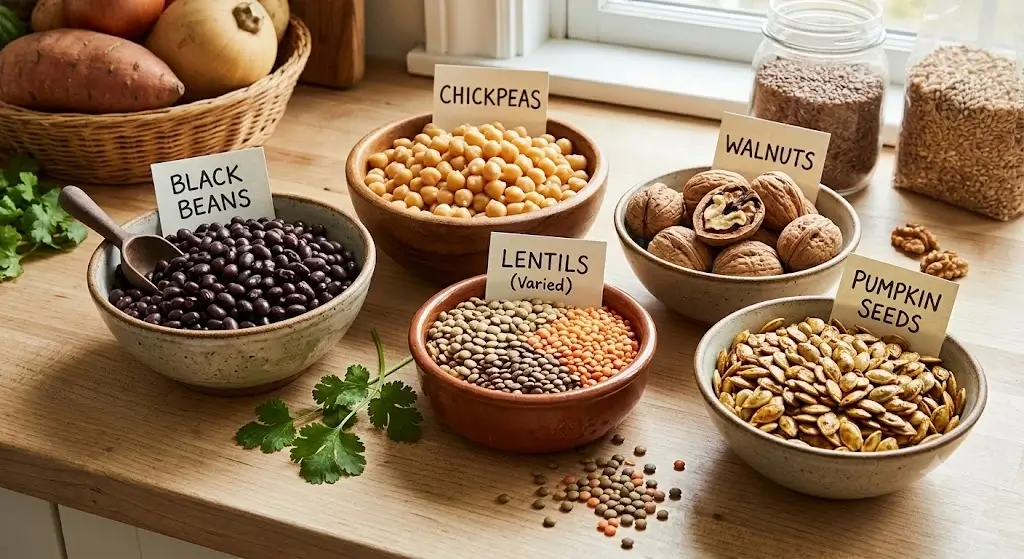
Some of the most useful everyday foods provide both protein and fiber.
| Food | Protein | Fiber |
|---|---|---|
| Beans | Yes | Yes |
| Lentils | Yes | Yes |
| Chickpeas | Yes | Yes |
| Nuts | Yes | Yes |
| Seeds | Yes | Yes |
| Some whole grains | Some | Yes |
Combining these foods with vegetables, fruits, and other nutrient-dense foods can help create meals that address several nutritional needs simultaneously. If you want to increase dietary bulk safely alongside your protein, see our practical guide on how to add more fiber to your diet after 50.
How Can You Increase Protein Without Making Meals More Complicated?
The most practical strategy is to upgrade meals you already eat.
| Instead of | Try |
|---|---|
| Toast alone | Toast + eggs or nut butter |
| Oatmeal alone | Oatmeal + yogurt, milk, nuts, or seeds |
| Salad alone | Salad + chicken, beans, tuna, eggs, or tofu |
| Vegetable soup | Vegetable + lentil or bean soup |
| Fruit alone | Fruit + yogurt or nuts |
| Rice + vegetables | Rice + vegetables + beans, tofu, chicken, or fish |
This method requires fewer new recipes and makes protein part of an existing routine.
How Can You Get More Protein When Cooking for One?
Cooking for one can make protein planning difficult because large packages may lead to waste.
Keep several flexible protein foods available:
- Eggs
- Greek yogurt
- Cottage cheese
- Canned beans
- Canned fish
- Tofu
- Frozen fish
- Nuts and seeds
- Peanut butter
Prepare one protein and use it in several ways. Cooked chicken, for example, can become a grain bowl, sandwich, salad, or soup ingredient on different days. The same principle works with beans, lentils, eggs, and other foods. For a comprehensive strategy on single-portion shopping and minimizing food waste, refer to our guide on healthy meal planning for one person.
How Can You Increase Protein When Cooking Feels Physically Difficult?
Healthy eating needs to account for preparation effort.
| Cooking challenge | Practical protein option |
|---|---|
| Chopping is difficult | Yogurt, eggs, canned fish, beans, tofu |
| Standing is tiring | No-cook foods such as yogurt, cottage cheese, nuts, or hummus |
| Lifting cookware is difficult | Small portions, lightweight cookware, prepared foods |
| Cooking takes too long | Eggs, canned beans, prepared grains, canned fish |
| Cleanup is tiring | Simple sandwiches, yogurt bowls, salads, grain bowls |
NIA recognizes physical limitations, fatigue, and food-preparation difficulties as potential barriers to healthy eating. Making protein easier to access can therefore be more useful than choosing a theoretically ideal food that is too difficult to prepare.
Can Protein Be Added Without Eating a Much Larger Meal?
Often, yes. One approach is to substitute a protein-containing food for part of a lower-protein component rather than simply adding food to the existing meal.
For example:
- Replace some crackers with cheese.
- Add yogurt instead of a sweetened dessert.
- Add beans to part of a rice-based meal.
- Use eggs with toast instead of toast alone.
- Add chicken or tofu to a vegetable-heavy bowl.
This can make meals more protein-containing without requiring a dramatic increase in meal size.
How Can Dairy Foods Help Increase Protein?
For people who consume dairy, yogurt, cottage cheese, milk, and cheese can be convenient protein foods.
Simple combinations include:
- Greek yogurt + berries
- Cottage cheese + fruit
- Milk + oatmeal
- Cheese + whole-grain crackers
- Yogurt + oats + nuts
Compare Nutrition Facts labels when choosing packaged dairy foods because protein, added sugar, sodium, and saturated fat can differ between products.
Are Eggs a Good Everyday Protein Option?
Eggs are versatile and require relatively little preparation.
Use them in:
- Omelets
- Scrambled eggs
- Egg sandwiches
- Hard-cooked eggs
- Vegetable frittatas
- Egg-and-grain bowls
Pair eggs with vegetables, fruit, and whole grains to create a more complete meal.
Are Beans and Lentils Good Everyday Protein Choices?
Yes. Beans and lentils are especially practical because they provide protein and fiber and can be used in many different meals.
Use them in:
- Chili
- Soup
- Tacos
- Salads
- Grain bowls
- Pasta
- Stews
Canned beans and lentils can reduce preparation time. When choosing canned products, compare sodium on the Nutrition Facts label and rinse canned beans when appropriate.
How Can You Increase Protein on a Budget?
Protein does not have to come from expensive specialty foods.
Practical choices may include:
- Eggs
- Beans
- Lentils
- Peanut butter
- Peanuts
- Yogurt
- Cottage cheese
- Canned fish
- Chicken
- Tofu
Beans and lentils are particularly versatile because they can be used in several different meals and also provide fiber.
How Can You Use Leftovers to Increase Protein?
Leftovers can reduce the effort required to include protein at later meals.
| Leftover protein | Next use |
|---|---|
| Chicken | Sandwich, salad, grain bowl |
| Salmon | Salad, grain bowl |
| Turkey chili | Tacos, rice bowl |
| Lentils | Soup, grain bowl |
| Tofu | Stir-fry, soup, bowl |
Store leftovers safely and use them within recommended storage periods. Planning leftovers intentionally can make protein intake easier without requiring additional cooking every day.
Should You Choose Protein-Rich Foods That Are Also Low in Sodium?
Protein content should not be considered in isolation.
Some packaged protein foods can contain substantial sodium, including certain processed meats, prepared meals, soups, sauces, and cheeses.
When comparing similar foods, check:
- Protein
- Sodium
- Added sugars
- Saturated fat
- Serving size
- Ingredient list
NIA recommends limiting excess sodium, added sugars, and saturated fat as part of a healthy eating pattern.
Do You Need Protein Powder to Get More Protein?
No, not automatically.
Many adults can increase protein through ordinary foods such as eggs, yogurt, fish, poultry, beans, lentils, tofu, nuts, and seeds.
Protein supplements can be convenient in some situations, but they are not a requirement for healthy eating after 50. Whole foods can provide protein alongside other nutrients.
Clinical Renal Caution: Individuals diagnosed with chronic kidney disease (CKD), impaired kidney function, or hepatic disorders should not dramatically increase protein intake or take high-dose protein supplements without individualized guidance from their nephrologist or dietitian. Excess protein breakdown can place additional metabolic filtration stress on the kidneys.
If an individual has a medical condition requiring a specific protein intake, the appropriate amount and source should be determined with qualified healthcare guidance rather than by following a generic high-protein recommendation.
How Much Protein Should You Eat at Each Meal?
There is no single meal-level protein amount that applies to every adult over 50.
Daily protein requirements vary according to individual factors. The practical strategy is to include protein foods regularly rather than becoming overly focused on hitting one number at every meal.
Someone trying to determine a specific daily target should first establish their individual protein requirement, then distribute that amount across the day’s meals and snacks as appropriate.
What Are the Biggest Mistakes When Trying to Eat More Protein?
Eating almost all protein at dinner
It is often easier to create a balanced pattern by including protein at breakfast and lunch as well.
Thinking only meat counts
Beans, lentils, dairy, eggs, tofu, nuts, and seeds can all contribute protein.
Ignoring the rest of the meal
More protein does not automatically make a meal balanced. Vegetables, fruit, whole grains, fiber, healthy fats, and fluids still matter.
Buying foods that are difficult to prepare
A food is not a practical everyday solution if it creates a preparation barrier.
Assuming supplements are necessary
Start with ordinary foods unless there is a specific reason to use a supplement.
Ignoring sodium and added sugars
Evaluate the whole food or packaged product, not just its protein number.
What Does a Simple High-Protein Day Look Like?
Here is an example of how protein-containing foods can be distributed throughout an ordinary day:
| Time | Example |
|---|---|
| Breakfast | Eggs + whole-grain toast + fruit |
| Snack | Greek yogurt + berries |
| Lunch | Chicken and vegetable whole-grain wrap |
| Snack | Apple + peanut butter |
| Dinner | Salmon + vegetables + brown rice |
This is an example of meal structure, not a prescribed diet or a recommendation for specific portion sizes.
How Can You Make Protein a Daily Habit?
Use environmental cues rather than relying on memory.
- Keep yogurt visible in the refrigerator.
- Keep eggs available for quick breakfasts.
- Keep canned beans in the pantry.
- Keep nuts or seeds available for appropriate snacks.
- Prepare one protein for several meals when practical.
- Choose a protein first when planning dinner.
The goal is to make the protein choice automatic rather than another decision that has to be made from scratch every day.
What If Appetite Is Small?
When appetite is limited, very large meals may be unappealing. Smaller meals and snacks can sometimes make it easier to include protein throughout the day.
Examples include:
- Greek yogurt with berries
- Egg and avocado toast
- Cottage cheese with fruit
- Small chicken sandwich
- Lentil soup with whole-grain toast
- Hummus with whole-grain pita
Persistent appetite changes or unintended weight loss should be discussed with a healthcare professional rather than managed solely by increasing protein.
What If Chewing or Swallowing Is Difficult?
Dysphagia Safety Guidance: Anyone with a diagnosed swallowing disorder or chewing impairment must follow texture-modified diet levels (such as IDDSI puréed, minced, or soft foods) established by a speech-language pathologist or clinical nutritionist to avoid choking or aspiration risks.
Protein foods can be selected according to texture. Potentially softer options include:
- Yogurt
- Cottage cheese
- Eggs
- Soft tofu
- Beans
- Lentils
- Tender fish
- Nut butter
What Are Five Protein Habits to Start This Week?
- Add protein to breakfast. Try eggs or Greek yogurt.
- Add protein to lunch. Put chicken, beans, fish, eggs, or tofu into the meal.
- Keep one protein-containing snack available.
- Use beans or lentils at least occasionally.
- Prepare one protein ahead of time. Use it in several meals.
These changes are deliberately small. Consistency is more useful than a complicated nutrition plan that is difficult to maintain.
Protein From Everyday Foods Checklist
- ☐ Include a protein food at breakfast.
- ☐ Include protein at lunch.
- ☐ Include protein at dinner.
- ☐ Use protein-containing snacks when appropriate.
- ☐ Eat a variety of protein foods.
- ☐ Include plant-based protein sources regularly.
- ☐ Combine protein with vegetables, fruits, or whole grains.
- ☐ Keep convenient protein foods available.
- ☐ Consider preparation effort when choosing foods.
- ☐ Compare sodium and added sugars in packaged foods.
- ☐ Do not assume protein supplements are required.
- ☐ Consider individual dietary requirements.
Frequently Asked Questions
What is the easiest way to get more protein from food?
Include a protein food at each main meal. Eggs, yogurt, fish, poultry, beans, lentils, tofu, nuts, seeds, and nut butter are practical everyday options.
How can I add protein to breakfast?
Add eggs, Greek yogurt, cottage cheese, milk, nuts, seeds, or nut butter to foods you already eat.
How can I add protein to lunch?
Add chicken, fish, beans, lentils, eggs, tofu, hummus, or another protein food to sandwiches, salads, soups, wraps, and grain bowls.
What are easy protein snacks for older adults?
Greek yogurt with berries, cottage cheese with fruit, cheese with whole-grain crackers, nuts with fruit, hummus with vegetables, and eggs with toast are simple options.
Can you get enough protein without eating meat?
Yes. Beans, lentils, tofu, soy foods, nuts, seeds, dairy, and eggs can all contribute protein depending on the person’s dietary pattern.
Are beans a good source of protein?
Yes. Beans and lentils provide protein and fiber and can be used in soups, salads, tacos, chili, grain bowls, and other meals.
Do older adults need protein at every meal?
There is no universal meal-by-meal requirement. Including protein foods regularly throughout the day is a practical strategy, while the exact amount depends on individual needs.
Do you need protein powder after 50?
No, not automatically. Many adults can obtain protein from ordinary foods. Supplements may be useful in particular circumstances but are not required for everyone.
How can someone get more protein if cooking is difficult?
Use convenient foods such as yogurt, cottage cheese, eggs, canned beans, canned fish, tofu, nuts, seeds, and nut butter. Prepared proteins can also reduce cooking effort.
What is an inexpensive way to eat more protein?
Eggs, beans, lentils, peanut butter, peanuts, yogurt, canned fish, tofu, and chicken can all be practical choices depending on local prices.
Can protein foods also provide fiber?
Yes. Beans, lentils, chickpeas, nuts, seeds, and some whole grains provide both protein and fiber.
What if appetite is low?
Smaller protein-containing meals and snacks may be easier to manage than very large meals. Persistent appetite changes or unintended weight loss should be discussed with a healthcare professional.
What if someone has a medical condition affecting protein intake?
Generic protein advice may not be appropriate. Follow individualized dietary guidance from the healthcare professional managing the condition.
The Bottom Line
Getting more protein from everyday foods is primarily a habit-building problem, not a supplement problem.
Start by putting a protein food into breakfast, lunch, and dinner. Use eggs, yogurt, fish, poultry, beans, lentils, tofu, nuts, seeds, and other familiar foods. When appropriate, use simple protein-containing snacks to fill gaps between meals.
Then make the system easier: keep convenient foods available, prepare versatile proteins ahead of time, use plant-based protein regularly, and choose options that match your cooking ability and preferences. For an overall look at structuring your meals and nutrition, review our foundational guide to healthy eating after 50.
The most sustainable approach is simple:
Choose the protein first → build the meal around it → add vegetables or fruit → add a fiber-rich carbohydrate when appropriate → repeat consistently.
Editorial Methodology
This guide uses an evidence-first approach based primarily on National Institute on Aging nutrition guidance and general U.S. dietary guidance. It focuses on food-based strategies rather than assuming supplements are necessary. It does not establish an individualized protein prescription. Adults with medical conditions that affect protein intake or with specific dietary restrictions should follow individualized guidance from an appropriate healthcare professional.
Sources
- National Institute on Aging (NIA) — Healthy Meal Planning: Tips for Older Adults
- National Institute on Aging (NIA) — Healthy Eating As You Age: Know Your Food Groups
- National Institute on Aging (NIA) — Healthy Eating, Nutrition, and Diet
- National Institute on Aging (NIA) — How Much Should I Eat? Quantity and Quality
- National Institute on Aging (NIA) — Overcoming Roadblocks to Healthy Eating
- U.S. Department of Agriculture (USDA) / HHS — Dietary Guidelines for Americans
- National Library of Medicine / MedlinePlus — Dietary Proteins
Editorial standard: AgingWellGuide provides evidence-aligned educational nutrition information. We prioritize whole-food sources, home meal practicality, and distinct clinical cautions for older adults managing renal, metabolic, or swallowing restrictions.
