
Quick Answer
The simplest way for two older adults to plan healthy meals is to create one shared weekly plan with adjustable portions.
- Choose several shared protein foods.
- Select vegetables and fruits that can be used in multiple meals.
- Add whole grains or other fiber-rich carbohydrates.
- Plan breakfasts, lunches, dinners, and a few simple snacks.
- Cook some foods in larger batches when leftovers will be used.
- Use different seasonings and meal formats to prevent repetition.
- Buy quantities that match two people’s actual needs.
- Keep several quick meals available for busy or low-energy days.
- Store leftovers safely and plan when they will be eaten.
The goal is not to make every meal identical. It is to share the basic ingredients and preparation work while allowing each person to adjust portions and food choices to their own needs.
Why Is Meal Planning for Two Older Adults Different?
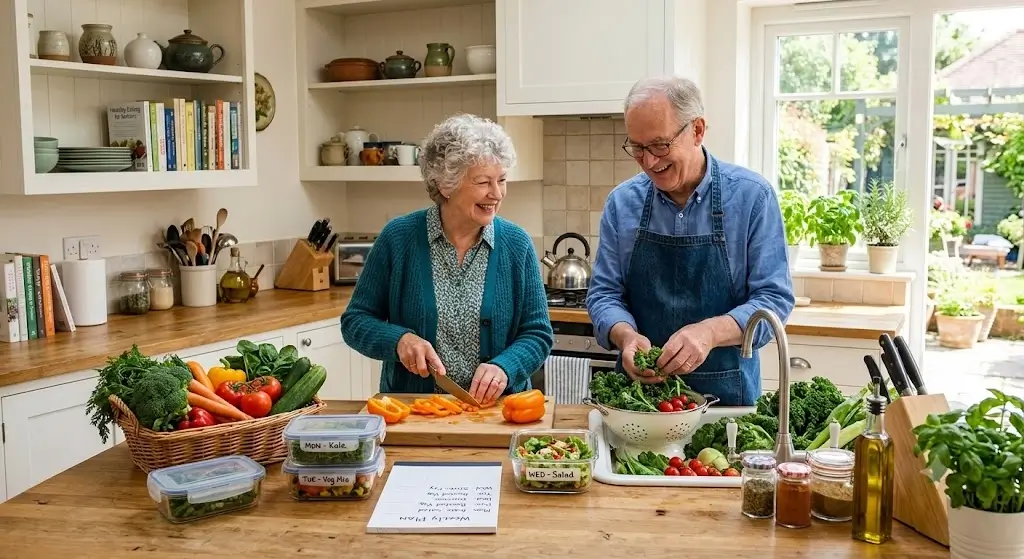
Cooking for two has an important advantage over cooking for one: many standard food packages and recipes naturally work better for two people.
However, two people may still have different appetites, activity levels, food preferences, dietary restrictions, or nutritional needs.
That means the best approach is usually shared ingredients and flexible portions, rather than forcing both people to eat exactly the same amount.
Meal planning can also make shared eating easier. NIA notes that healthy eating supports healthy aging and that sharing meals can be a useful part of maintaining social connection and healthy routines.
What Should a Healthy Meal Plan for Two Older Adults Include?
A practical plan should provide variety across the major food groups rather than focusing on one particular food.
| Food category | Examples for two people | Planning role |
|---|---|---|
| Protein foods | Fish, poultry, eggs, beans, lentils, tofu, yogurt | Build satisfying meals and help provide protein |
| Vegetables | Broccoli, spinach, carrots, peppers, green beans | Add nutrients, fiber, color, and variety |
| Fruit | Berries, apples, oranges, bananas, melon | Convenient fruit for meals and snacks |
| Whole grains and other carbohydrates | Oatmeal, brown rice, whole-grain bread, potatoes, whole-grain pasta | Provide energy and can contribute fiber |
| Healthy fats | Nuts, seeds, avocado, olive oil, nut butter | Add flavor and energy |
| Dairy or fortified alternatives | Milk, yogurt, fortified soy products | Convenient nutrient-dense options |
| Fluids | Water, milk, unsweetened beverages | Support regular hydration |
NIA and USDA guidance emphasizes variety and nutrient-dense choices while limiting excess added sugars, saturated fat, and sodium.
How Do You Plan Meals for Two Without Buying Too Much Food?
Start with ingredients that can appear in several meals.
For example, a household might buy chicken, spinach, brown rice, broccoli, yogurt, berries, eggs, and whole-grain bread.
Those ingredients can then become several different meals:
| Shared ingredient | Possible meal uses |
|---|---|
| Chicken | Rice bowls, sandwiches, salads, soup |
| Spinach | Eggs, salads, sandwiches, smoothies |
| Brown rice | Chicken bowls, bean bowls, vegetable stir-fry |
| Greek yogurt | Breakfast, snack, smoothie, sauce |
| Broccoli | Roasted side, grain bowl, stir-fry, soup |
This approach follows the same general principle promoted by USDA MyPlate planning resources: purchase core foods and mix and match them with pantry staples so ingredients can serve several meals.
How Many Meals Should Two Older Adults Plan Each Week?
There is no required number of unique meals.
A practical starting point is:
- 2–3 breakfast options
- 3 lunch options
- 4 dinner options
- 2–3 snack options
- 2 emergency or low-effort meals
Some dinners can intentionally produce leftovers for lunch.
This is usually more efficient than creating 21 completely different meals for breakfast, lunch, and dinner.
How Do You Build a Weekly Meal Plan for Two Older Adults?
Use a simple sequence.
Step 1: Check the Week Ahead
Look at appointments, activities, shopping days, and evenings when cooking time will be limited.
Place simpler meals on busy days and more involved meals on days when there is more time.
Step 2: Choose Shared Protein Foods
Select several protein foods that both people enjoy.
Examples include:
- Eggs
- Fish
- Chicken or turkey
- Beans
- Lentils
- Tofu
- Yogurt
NIA recommends including protein foods such as seafood, dairy or fortified soy products, beans, peas, and lentils as part of healthy eating for older adults.
Step 3: Choose Produce With Multiple Uses
Choose several vegetables and fruits that can appear in more than one meal.
Frozen produce can be especially practical because two people can use the amount needed without requiring the entire package to be consumed quickly.
Step 4: Choose a Small Group of Staple Carbohydrates
For example:
- Oatmeal
- Brown rice
- Whole-grain bread
- Potatoes
- Whole-grain pasta
Step 5: Plan Leftovers Before Cooking
Decide which meal will use the extra food before making a larger batch.
For example, Monday’s roasted chicken can become Tuesday’s lunch rather than becoming an unplanned container in the refrigerator.
Step 6: Build the Shopping List
Only buy quantities that fit the actual meal plan.
NIA recommends planning ahead and creating a shopping list to help manage food choices and budget.
What Is a Simple 7-Day Meal Plan for Two?
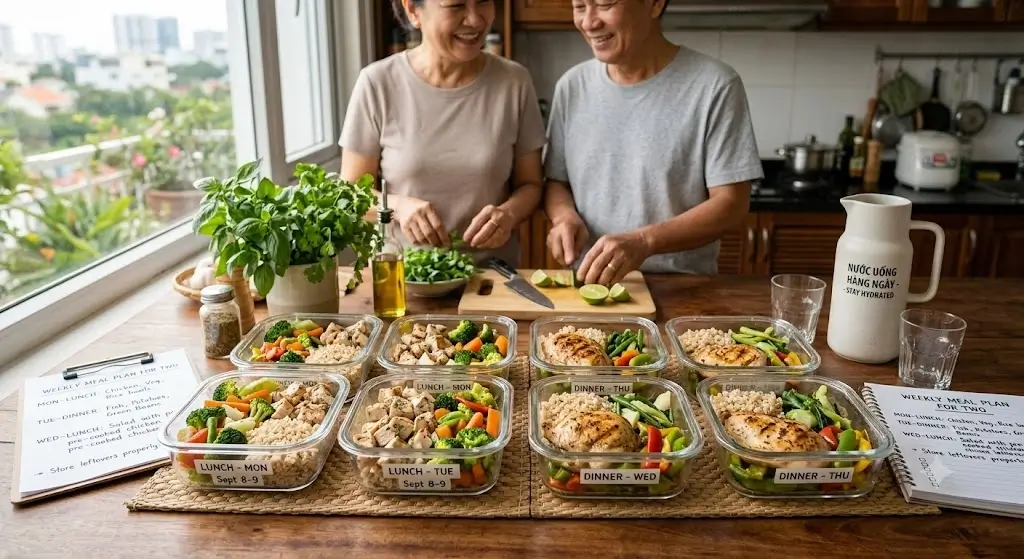
The following is a planning example, not a prescribed diet. Portions should be adjusted to each person’s appetite, energy needs, preferences, and dietary requirements.
| Day | Breakfast | Lunch | Dinner |
|---|---|---|---|
| Monday | Oatmeal, berries, yogurt | Chicken and vegetable sandwiches | Roasted salmon, broccoli, potatoes |
| Tuesday | Eggs, spinach, whole-grain toast | Leftover salmon bowls | Chicken, brown rice, mixed vegetables |
| Wednesday | Yogurt, fruit, nuts | Chicken and vegetable bowls | Bean and vegetable chili |
| Thursday | Oatmeal, banana, nut butter | Leftover chili with whole-grain toast | Fish, potatoes, green vegetables |
| Friday | Egg and vegetable scramble | Bean or tuna salad | Chicken and vegetable stir-fry |
| Saturday | Yogurt, berries, oatmeal | Leftover stir-fry | Lentil soup, vegetables, whole-grain bread |
| Sunday | Eggs, fruit, whole-grain toast | Lentil soup and salad | Simple chicken or fish dinner with vegetables |
The main planning principle is ingredient reuse rather than meal duplication.
Should Both Older Adults Eat the Same Portions?
No. Two people can share the same meal without needing identical portions.
Energy needs vary between individuals. NIA notes that calorie needs depend on factors including age, sex, and physical activity level.
For example, two people might eat the same chicken, vegetables, and brown rice dinner while serving different amounts of rice or chicken according to their individual needs and preferences.
This makes shared cooking easier without assuming that both people have identical nutritional requirements.
How Can Two Older Adults Manage Different Appetites?
Use the same base meal with flexible portions and optional additions.
For example:
| Shared meal | Person with larger appetite | Person with smaller appetite |
|---|---|---|
| Chicken grain bowl | More grain or vegetables as desired | Smaller base portion |
| Soup and bread | Additional serving if appropriate | Smaller soup portion |
| Breakfast oatmeal | More oatmeal or toppings | Smaller bowl |
The meal itself does not have to change. Only the serving size or optional components need to change.
How Do You Plan for Different Food Preferences?
Build modular meals.
Instead of preparing two completely separate dinners, prepare a shared base and allow each person to customize it.
Examples include:
- Grain bowls with different toppings
- Tacos or wraps with several fillings
- Soup with optional bread or grains
- Salads with separate protein choices
- Roasted vegetables with different sauces
This reduces kitchen work while preserving individual choice.
How Can Two Older Adults Save Money on Healthy Meals?
Planning for two can be economical when ingredients are deliberately reused.
Useful strategies include:
- Plan several meals around the same core ingredients.
- Compare unit prices rather than package prices alone.
- Use store brands when the product meets your needs.
- Use beans, lentils, eggs, and other affordable protein foods.
- Buy frozen vegetables when fresh produce is difficult to finish.
- Freeze suitable foods before they spoil.
- Use leftovers as planned meals rather than accidental leftovers.
NIA specifically recommends setting a food budget, planning a shopping list, looking for sales, considering store brands, and choosing reasonably priced nutritious produce.
Are Frozen and Canned Foods Useful for Two Older Adults?
Yes. Frozen and canned foods can make a two-person meal plan more flexible.
Useful examples include:
- Frozen vegetables
- Frozen berries
- Canned beans
- Canned fish
- Low-sodium canned vegetables
- Frozen fish portions
USDA guidance notes that frozen and canned fruits and vegetables can be practical choices. When purchasing packaged foods, compare labels and look for options lower in sodium, saturated fat, and added sugars.
How Do You Plan Breakfast for Two?
Breakfast is an easy place to share ingredients.
Examples include:
- Oatmeal + berries + yogurt
- Eggs + spinach + whole-grain toast
- Greek yogurt + fruit + nuts
- Whole-grain toast + nut butter + fruit
- Smoothies with fruit, yogurt, and vegetables
Prepare a shared base while allowing each person to choose different toppings or portions.
How Do You Plan Lunch for Two?
Lunch is an ideal place to use planned leftovers.
Examples include:
- Leftover chicken over salad
- Bean and vegetable bowls
- Soup with whole-grain bread
- Fish or bean sandwiches
- Leftover roasted vegetables with eggs
Planning lunch around leftovers can reduce both cooking time and food waste.
How Do You Plan Dinner for Two?
Use a simple meal structure:
Protein food + vegetables or fruit + whole grain or other carbohydrate + optional healthy fat.
Examples include:
- Salmon + broccoli + potatoes
- Chicken + brown rice + vegetables
- Lentils + vegetables + whole-grain bread
- Tofu + mixed vegetables + rice
- Fish + salad + roasted sweet potato
The same framework can produce many different meals without requiring a complicated recipe collection.
How Much Should Two People Cook at Once?
Cook enough to make preparation efficient, but not so much that leftovers become a burden.
A useful rule is to ask:
“When will we eat the extra portion?”
If you can identify the next meal for the extra food, batch cooking makes sense. If you cannot, prepare a smaller quantity.
USDA MyPlate recommends planning how leftovers will be reused and storing them in individual portions when useful.
How Can Two Older Adults Use Leftovers Without Getting Bored?
Change the format rather than throwing away the ingredients.
| Original meal | Next meal |
|---|---|
| Roasted chicken and vegetables | Chicken grain bowls |
| Cooked beans | Bean tacos or soup |
| Brown rice | Vegetable stir-fry |
| Roasted vegetables | Omelet or grain bowl |
| Cooked fish | Fish salad or grain bowl |
USDA’s leftover-planning guidance specifically recommends mixing and matching core foods and reimagining leftovers as new dishes.
How Can Meal Planning Work When One Person Has Limited Mobility?
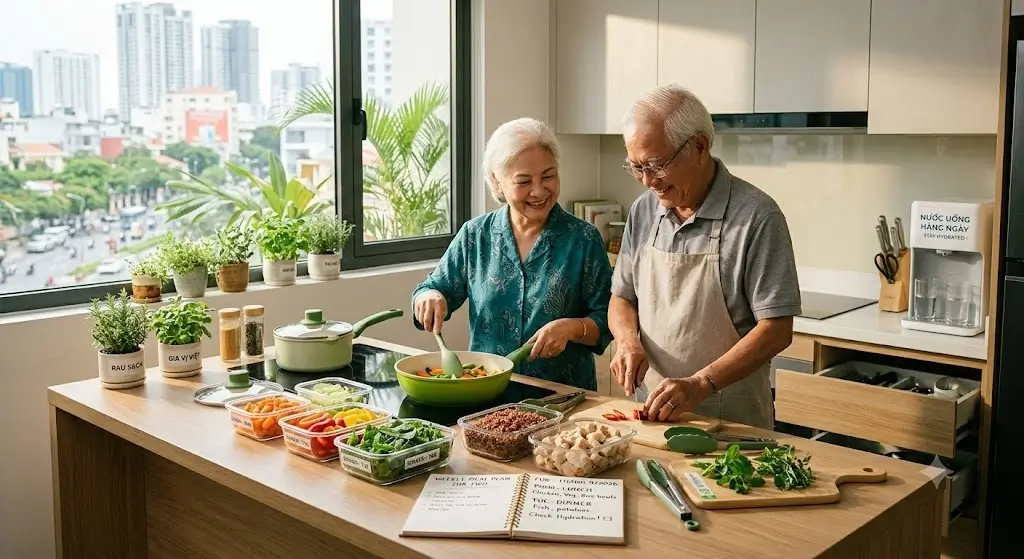
The meal plan should reduce the physical work required from the person who has more difficulty cooking.
Useful approaches include:
- Use pre-cut vegetables when appropriate.
- Keep frequently used foods within easy reach.
- Choose lightweight cookware when possible.
- Use appliances that reduce active cooking time.
- Prepare ingredients while seated when the kitchen setup permits it.
- Keep simple no-cook meals available.
- Divide cooking responsibilities according to each person’s abilities.
NIA identifies physical problems, cooking fatigue, budget, and other practical barriers as reasons healthy eating can become difficult and recommends adapting the food routine to those barriers.
How Should Couples Divide Cooking Responsibilities?
Do not assume the person who cooks should also handle every other food-related task.
Responsibilities can be divided into:
- Meal planning
- Grocery-list preparation
- Shopping
- Food preparation
- Cooking
- Dishwashing
- Leftover storage
- Checking the refrigerator for food that should be used first
This can make the overall system less physically demanding for both people.
What Are Good Low-Effort Meals for Two Older Adults?
Every weekly plan should include several meals that require little preparation.
Examples include:
- Eggs + whole-grain toast + fruit
- Greek yogurt + berries + nuts
- Bean soup + whole-grain bread
- Rotisserie-style cooked chicken + prepared vegetables + microwaveable grain
- Tuna or bean salad + whole-grain crackers
- Frozen vegetables + cooked grain + ready-to-eat protein
Convenience is not automatically incompatible with healthy eating. NIA notes that pre-cut produce and other practical food choices can help overcome preparation barriers.
How Should Two Older Adults Plan Snacks?
Keep several simple foods available so snacks do not require a separate shopping trip or extensive preparation.
Examples include:
- Fruit and yogurt
- Apple and nut butter
- Vegetables and hummus
- Nuts and fruit
- Whole-grain crackers and cheese
- Yogurt and berries
Each person can choose whether and how much to eat based on their individual appetite and daily needs.
How Does Hydration Fit Into a Meal Plan for Two?
Drinks should be part of the daily routine rather than something considered only when someone becomes thirsty.
Keep water and other appropriate beverages accessible during meals and throughout the day.
For older adults, hydration can be especially important because thirst may become less noticeable with age. NIA and USDA both recommend regular fluid intake as part of healthy eating for older adults. For practical fluid targets and portion breakdowns, see our guide on how much water older adults should drink.
How Should Two Older Adults Handle Different Dietary Needs?
Use a shared base whenever possible, then modify individual portions or components.
For example, a shared dinner might include vegetables, a grain, and a protein food while each person adjusts portions or chooses an appropriate variation.
However, a medically prescribed diet is different from a personal food preference. If one person has a medical condition requiring specific dietary or fluid restrictions, their healthcare professional should provide the individualized guidance.
Do not assume that a general healthy meal plan automatically satisfies a therapeutic diet.
How Should Meals Be Adjusted for Appetite or Difficulty Eating?
Some older adults may experience reduced appetite, difficulty chewing, or other physical barriers that make normal meals harder to manage.
Possible practical adaptations include:
- Smaller meals with additional snacks
- Soft or easier-to-chew foods when appropriate
- Pre-cut ingredients
- Easy-to-open packaging
- Convenient nutrient-dense foods
- Less physically demanding preparation
If persistent poor appetite, unintended weight changes, or difficulty chewing or swallowing is a concern, professional evaluation is more appropriate than simply changing portion sizes on your own. NIA identifies appetite and chewing or swallowing difficulties among common barriers to healthy eating.
How Can Two Older Adults Make Meals More Social?
Meal planning for two has an advantage that one-person meal planning does not: meals can become a shared daily routine.
Cooking together, setting the table, choosing recipes together, or simply eating at the same time can make healthy eating more enjoyable.
NIA and USDA both recognize the social value of eating with other people. USDA’s guidance for older adults specifically encourages making eating a social event.
How Do You Keep a Two-Person Meal Plan From Becoming Repetitive?
Use the same ingredients in different formats.
| Ingredient | Meal format 1 | Meal format 2 | Meal format 3 |
|---|---|---|---|
| Chicken | Grain bowl | Sandwich | Soup |
| Beans | Chili | Wrap | Salad bowl |
| Eggs | Scramble | Omelet | Whole-grain toast topping |
| Vegetables | Roasted | Stir-fried | Soup |
This creates variety without requiring a completely different grocery list every day.
How Do You Create a Two-Person Grocery List?
Build the list from the weekly meals.
| Category | Planning examples |
|---|---|
| Protein | Eggs, chicken, fish, beans, lentils, yogurt |
| Vegetables | Fresh and frozen vegetables used in multiple meals |
| Fruit | Several varieties suitable for meals and snacks |
| Whole grains | Oats, brown rice, whole-grain bread |
| Healthy fats | Nuts, seeds, olive oil, nut butter |
| Convenience foods | Frozen vegetables, canned beans, canned fish, pre-cut produce |
| Flavor | Herbs, spices, garlic, lemon, low-sodium seasonings |
Before buying something, ask whether it has a planned use. If not, consider whether it is likely to be eaten before it spoils.
How Do You Prevent Food Waste in a Two-Person Household?
Use a simple first-use plan.
- Identify foods that spoil quickly.
- Assign those foods to early-week meals.
- Use frozen foods later in the week.
- Freeze appropriate leftovers before they become difficult to use.
- Turn remaining ingredients into flexible meals.
USDA recommends planning meals to limit spoilage and using fresh food first while keeping frozen and pantry foods available between shopping trips.
How Should Leftovers Be Stored Safely?
Food safety is especially important for older adults because adults 65 and older have a higher risk of becoming seriously ill from some foodborne infections.
NIA recommends four basic food-safety steps: clean, separate, cook, and chill. Perishable foods should generally be refrigerated within two hours, or within one hour when temperatures are above 90°F.
For a two-person household:
- Divide large batches into practical containers.
- Refrigerate perishable food promptly.
- Label leftovers when useful.
- Freeze portions that will not be eaten soon.
- Plan the next meal for leftovers instead of leaving them forgotten in the refrigerator.
What Are the Most Common Meal-Planning Mistakes for Two Older Adults?
| Mistake | Better approach |
|---|---|
| Cooking identical portions for both people | Share meals but adjust portions individually |
| Planning too many different recipes | Reuse ingredients across meals |
| Buying large packages without a plan | Buy quantities that fit the week’s meals |
| Making too many leftovers | Cook extra only when the next use is known |
| Ignoring low-energy days | Keep several low-effort meals available |
| Relying only on fresh produce | Use fresh, frozen, and canned options strategically |
| Ignoring different food preferences | Use modular meals with customizable components |
| Forgetting food safety | Refrigerate and store leftovers promptly |
What Is the Simplest Weekly System for Two?
A repeatable weekly system can look like this:
| When | Task |
|---|---|
| Weekend | Review the week and choose meals |
| Shopping day | Buy ingredients from the plan |
| Preparation day | Prepare selected ingredients and easy components |
| During the week | Combine ingredients into different meals |
| Midweek | Use foods that need to be eaten first |
| End of week | Freeze or use suitable remaining ingredients |
The system should become easier over time because the household can reuse successful meals and shopping patterns.
How Can You Make Meal Planning Easier for Two?
The most effective simplification is to reduce the number of decisions.
Keep a short list of reliable breakfasts, lunches, dinners, snacks, and emergency meals.
Then rotate them instead of starting from zero every week.
For example:
- Breakfast rotation: oatmeal, eggs, yogurt bowls
- Lunch rotation: leftovers, sandwiches, soup
- Dinner rotation: fish, chicken, beans or lentils, simple pasta
- Snack rotation: fruit and yogurt, nuts and fruit, vegetables and hummus
- Emergency meals: frozen vegetables + grain + protein, soup + bread
NIA’s meal-planning guidance emphasizes planning ahead, considering preparation time, and choosing foods that fit both nutritional needs and budget.
Two-Person Healthy Meal Planning Checklist
- ☐ We planned the week’s main meals.
- ☐ We chose several protein foods.
- ☐ We have vegetables available.
- ☐ We have several fruits available.
- ☐ We have whole grains or other fiber-rich carbohydrates.
- ☐ We planned meals around overlapping ingredients.
- ☐ We adjusted portions to each person’s needs.
- ☐ We planned when leftovers will be eaten.
- ☐ We have several low-effort meals available.
- ☐ We included frozen or shelf-stable backup foods.
- ☐ We considered our food budget.
- ☐ We have a plan for storing leftovers safely.
- ☐ Drinks are readily available throughout the day.
- ☐ We considered individual dietary restrictions or food preferences.
Frequently Asked Questions
What is the easiest way for two older adults to meal plan?
Create one shared weekly plan around a small number of protein foods, vegetables, fruits, whole grains, and flexible ingredients. Reuse ingredients across several meals and adjust portions individually.
Should couples eat the same meals every day?
No. Sharing core ingredients is usually more practical than eating identical meals. Change seasonings, toppings, sauces, and meal formats to create variety.
Should both people eat the same portion?
No. The same meal can be served in different portions because individual energy and nutrition needs vary.
How many dinners should two people plan each week?
Four different dinners can be a practical starting point, with planned leftovers providing additional lunches. The exact number depends on how often the household wants to cook.
Is cooking for two cheaper than cooking for one?
It can be more efficient because ingredients and recipes are often easier to portion for two people. Savings depend on shopping habits, food waste, package sizes, and the types of foods purchased.
Are frozen vegetables good for older adults?
Yes. Frozen vegetables can be practical and help reduce waste. Compare packaged options for sodium, added sauces, and other ingredients when appropriate.
How do two people avoid wasting leftovers?
Decide how leftovers will be used before cooking. Store them promptly, portion them appropriately, and transform them into another meal when possible.
What if one person has different dietary needs?
Use a shared meal base when practical, then modify portions or components. If a medical condition requires a specific diet or fluid restriction, follow individualized professional guidance.
What if neither person wants to cook every day?
Use batch-prepared components, leftovers, frozen foods, simple meals, and a few reliable no-cook options. A sustainable meal plan does not require daily cooking from scratch.
How can two older adults make meals more enjoyable?
Choose meals together, share cooking responsibilities, try different seasonings and formats, and treat mealtime as a shared routine rather than only a nutritional task.
Final Takeaway
The best healthy meal plan for two older adults is shared but flexible.
Plan one household grocery system around nutrient-dense foods, then adjust portions and individual components according to each person’s needs. Reuse ingredients across several meals, deliberately plan leftovers, keep low-effort foods available, and use fresh, frozen, canned, and shelf-stable foods strategically.
Most importantly, do not confuse “cooking for two” with “both people must eat exactly the same thing in exactly the same amount.” A good two-person meal plan reduces cooking and shopping work while preserving individual choice.
When the system is simple enough to repeat every week, healthy eating becomes less dependent on daily decisions and much easier to maintain.
