
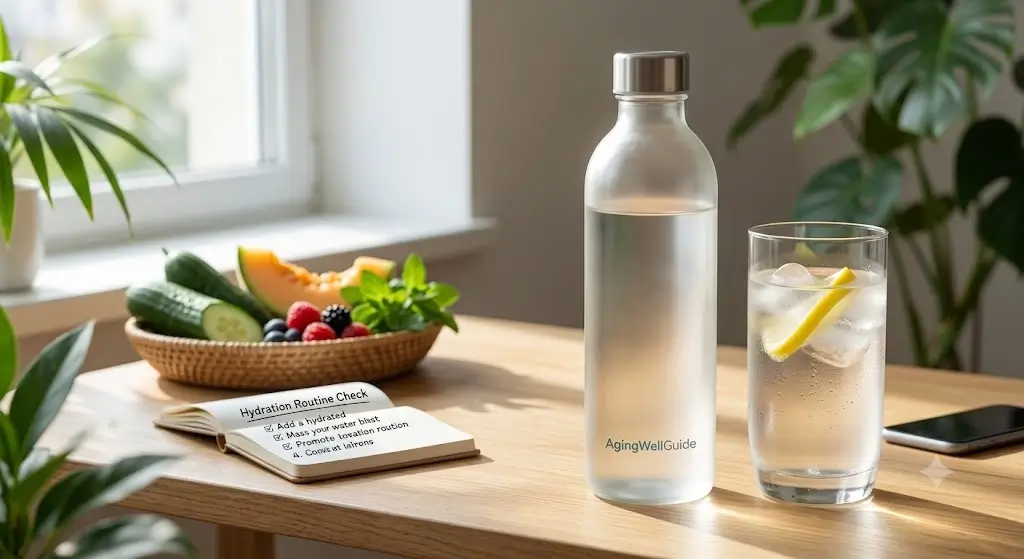
Quick Answer
Older adults do not have one universal daily water target. A commonly cited Adequate Intake for total water is approximately 3.7 L (125 oz) per day for men and 2.7 L (91 oz) per day for women. These amounts include water from beverages and food.
The amount someone actually needs to drink can be considerably different because food contributes water, and individual needs change with activity, heat, illness, medications, and health conditions.
For healthy adults, the better everyday strategy is to drink fluids regularly, choose water frequently, include water-containing foods, and increase attention to hydration during heat or increased physical activity. People with medical conditions that require fluid restriction should follow their clinician’s individualized guidance instead.
How Much Water Do Older Adults Actually Need Each Day?
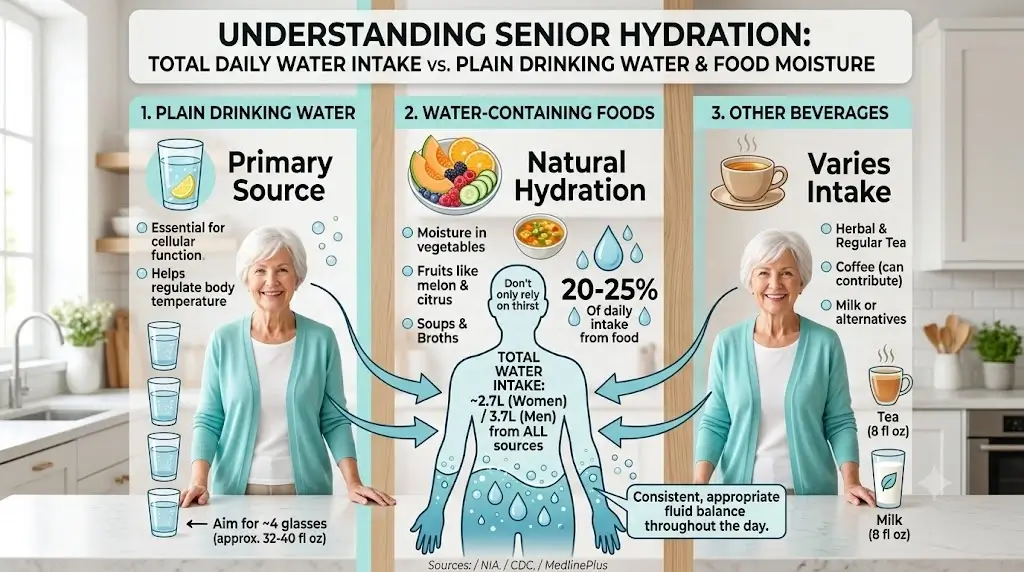
The most important distinction is between total water intake and water you drink.
The National Academies’ commonly cited Adequate Intake values are:
| Adult group | Total water per day | Approx. fluid ounces |
|---|---|---|
| Women | 2.7 L | 91 fl oz |
| Men | 3.7 L | 125 fl oz |
These are total-water values, not plain-water drinking targets. Total water includes water from drinking water, other beverages, and the water naturally contained in foods.
That distinction matters because telling every older adult to drink 91 or 125 ounces of plain water would incorrectly ignore water obtained through food and other beverages.
Does an Older Adult Need to Drink 91 or 125 Ounces of Water?
No. Those numbers should not be interpreted as a requirement to drink that exact amount of plain water.
There is no single plain-water prescription that applies to every older adult. Individual requirements can differ substantially based on body size, physical activity, environmental temperature, diet, health status, and medications.
For that reason, a useful hydration plan starts with the person’s circumstances rather than simply converting a population-level total-water value into a drinking-water quota.
What Counts Toward Daily Water Intake?
Daily water intake comes from more than a glass of plain water.
| Source | Counts toward hydration? | Practical consideration |
|---|---|---|
| Plain water | Yes | A simple everyday beverage with no added sugar or calories |
| Milk and fortified milk alternatives | Yes | Can also contribute useful nutrients |
| Coffee and tea | Yes | Can contribute to total fluid intake |
| Soups and other liquid foods | Yes | Food can contribute meaningful amounts of water |
| Fruits and vegetables | Yes | Many foods naturally contain substantial water |
| Other beverages | Yes | Consider added sugar, calories, sodium, and individual dietary needs |
NIA identifies water as a useful primary beverage and recommends getting enough fluids throughout the day.
Why Can Hydration Be More Important as People Get Older?
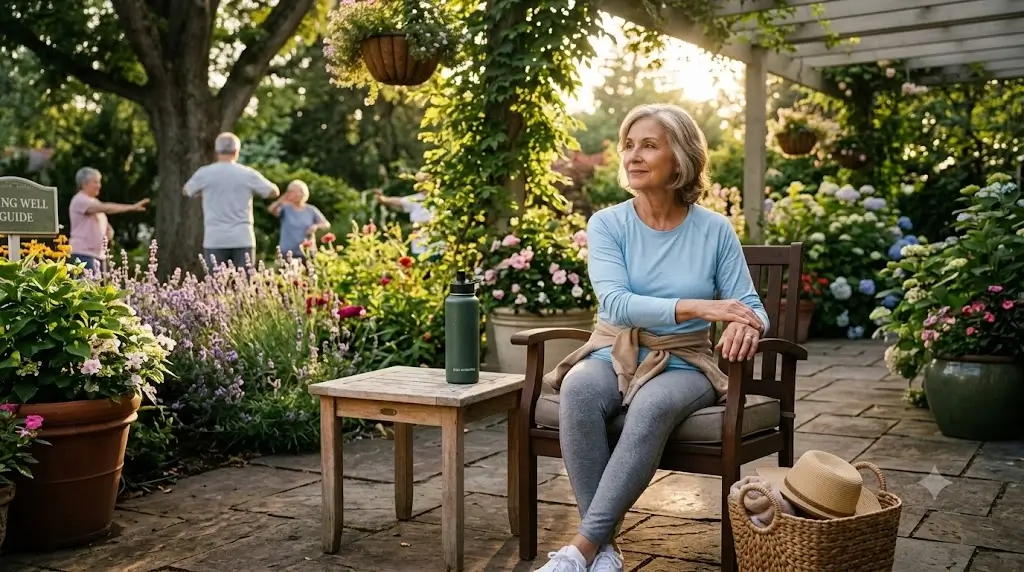
One important issue is that thirst may become less noticeable with age. An older adult may therefore not always receive a strong thirst signal telling them to drink. MedlinePlus specifically identifies older adults as a group at increased risk of dehydration for this reason.
This does not mean that every older adult is automatically dehydrated or needs a fixed amount of additional water. It means hydration should be treated as a regular daily routine rather than relying entirely on thirst.
Other factors can also increase fluid losses or make adequate intake more difficult, including:
- Hot weather
- Increased physical activity
- Fever
- Vomiting or diarrhea
- Some medications
- Illness that reduces eating or drinking
- Difficulty reaching, carrying, opening, or pouring beverages
MedlinePlus notes that dehydration can occur when fluid losses exceed intake and that older adults are among the groups at higher risk.
How Much Water Should a 60-Year-Old Drink?
A healthy 60-year-old does not automatically need a different fixed number simply because they have reached age 60.
The better question is:
How much total fluid does this individual need to maintain adequate hydration given their body size, diet, activity, environment, health conditions, and medications?
Age is one factor, but it is not enough by itself to determine a precise drinking-water requirement.
A practical approach for a healthy 60-year-old is to:
- Drink regularly throughout the day.
- Use water as a primary beverage.
- Include fluids with meals and snacks.
- Pay additional attention to fluid intake during heat or increased activity.
- Remember that foods also contribute to total water intake.
- Follow individualized medical advice when a condition or medication affects fluid needs.
How Much Water Should a 70-Year-Old Drink?
The same principle applies at age 70: there is no universal number of ounces that every 70-year-old should drink.
Some people may need more fluid because of heat, exercise, or fluid losses. Others may have medical conditions or treatment plans that require a clinician to set specific fluid guidance.
Therefore, 70 years old is not itself a reason to prescribe a specific number of glasses of water.
The practical priority is consistent hydration while accounting for the individual’s circumstances.
How Much Water Should an 80-Year-Old Drink?
An 80-year-old also does not have one universal plain-water target.
At this age, practical barriers can become especially relevant. An older adult may have difficulty remembering to drink, recognizing thirst, carrying a heavy pitcher, opening a bottle, or reaching a kitchen faucet.
Instead of focusing only on a daily ounce number, a useful routine may include:
- A beverage available at commonly used seating areas
- Fluids served with meals
- Easy-to-hold cups or bottles when grip is a limitation
- Regular drinking opportunities throughout the day
- Extra attention during hot weather or illness
The objective is not to force a predetermined volume. It is to make adequate fluid intake practical and consistent.
Should Older Adults Drink Water Before They Feel Thirsty?
Often, yes. For older adults who do not reliably notice thirst, waiting for a strong thirst signal may not be the best hydration strategy.
NIA specifically notes that some people lose part of their sense of thirst as they age and recommends incorporating fluids throughout the day rather than relying exclusively on thirst.
A simple routine is to associate drinking with existing daily activities:
| Daily activity | Hydration opportunity |
|---|---|
| Breakfast | Have a beverage with the meal |
| Morning | Keep a drink accessible |
| Lunch | Include a beverage with the meal |
| Afternoon | Drink during a regular break or snack |
| Dinner | Include a beverage with the meal |
| Evening | Follow the person’s normal routine and any clinician-provided guidance |
This approach creates repeated opportunities to drink without requiring someone to constantly calculate ounces.
Does Physical Activity Increase Water Needs?
Yes, physical activity can increase fluid needs. Sweating increases fluid loss, and people may need additional fluids when exercising or spending time outdoors in hot conditions.
CDC notes that water needs can increase with hot climates and greater physical activity, as well as during fever, vomiting, or diarrhea.
For an active older adult, the important distinction is that a normal-day hydration routine may not be enough under unusually hot or physically demanding conditions.
What About Walking?
Normal walking does not automatically require a sports drink or a fixed additional quantity of water.
For ordinary activity, water is often a practical beverage choice. More fluid attention becomes important when activity is prolonged, the weather is hot, or substantial sweating or fluid loss occurs.
Does Hot Weather Change How Much Water Older Adults Need?
Yes. Heat can increase fluid losses through sweating, which can increase the amount of fluid needed to maintain hydration.
During hot weather:
- Drink regularly rather than waiting until very thirsty.
- Keep water readily accessible.
- Pay attention to increased sweating.
- Take breaks from heat when appropriate.
- Increase fluid attention during outdoor activity.
CDC specifically identifies hot climates and physical activity as situations in which the body may need more water.
Can Food Provide Enough Water for Older Adults?
Food contributes to total water intake, but that does not mean an older adult can simply replace drinking fluids with food.
Fruits, vegetables, soups, yogurt, and other foods contain water and therefore contribute to total daily intake. The National Academies’ total-water figures explicitly include water from both foods and beverages.
A balanced diet can therefore support hydration, but regular beverages remain an important part of the daily routine.
What Are the Signs That an Older Adult May Be Dehydrated?
Possible signs of dehydration include:
- Increased thirst
- Dry mouth
- Urinating less than usual
- Darker urine
- Fatigue
- Dizziness
- Dry skin
These signs are not a substitute for medical assessment, and symptoms can have causes other than dehydration. MedlinePlus lists these among possible symptoms and notes that severe dehydration can be a medical emergency.
When Should an Older Adult Get Medical Help?
Prompt medical advice is appropriate when there are concerning symptoms, significant fluid losses, difficulty keeping fluids down, or uncertainty about whether dehydration is occurring.
Severe dehydration can be dangerous. An older adult who is very unwell, confused, extremely weak, unable to keep fluids down, or showing signs of significant dehydration should receive appropriate medical evaluation rather than relying on a self-calculated water target.
Do Medications Change How Much Water an Older Adult Needs?
They can. Some medications can affect fluid balance or increase fluid losses. MedlinePlus specifically notes that certain medicines may make adequate fluid intake more important.
However, this is an area where a generic internet water target can be misleading.
If a medication affects urination, fluid balance, or blood pressure, the correct fluid strategy should come from the prescribing clinician or pharmacist rather than from a general recommendation to drink more water.
What If an Older Adult Has a Medical Condition That Limits Fluids?
This is one of the most important exceptions to generic hydration advice.
Some medical conditions and treatment plans may require an individualized fluid limit or a specific fluid strategy. In those situations, do not automatically increase water intake based on a general recommendation such as 8 glasses per day or 91 ounces per day.
The individual’s healthcare professional should determine the appropriate fluid plan.
This is why a good hydration article should provide general education rather than turn a population-level water estimate into a medical prescription.
Is Eight Glasses of Water a Day Enough for Older Adults?
Not necessarily. “Eight glasses” is a simple rule of thumb, but it does not account for body size, food water, activity, temperature, health conditions, medications, or other beverages.
It can be a useful reminder to drink regularly, but it should not be treated as a scientifically precise target for every older adult.
The more useful framework is:
Regular fluids + water-containing foods + adjustment for circumstances + individualized medical guidance when needed.
Is Drinking More Water Always Better?
No. More water is not automatically better.
The goal is adequate hydration, not maximizing water consumption. Drinking excessive amounts of water can also be inappropriate, particularly for people whose medical conditions or treatment plans affect fluid balance.
That is another reason not to turn a general hydration recommendation into a rigid “more is better” rule.
What Is the Best Way for an Older Adult to Keep Track of Water?
Tracking can be useful when someone frequently forgets to drink, but it does not need to become complicated.
A simple system might use:
- A reusable bottle with a known capacity
- A marked pitcher
- A simple daily checklist
- Regular drinking times associated with meals
- A visible water container in the most frequently used room
The purpose of tracking is to create consistency, not to encourage someone to chase an arbitrary number of ounces.
How Can Older Adults Make Drinking Water Easier?
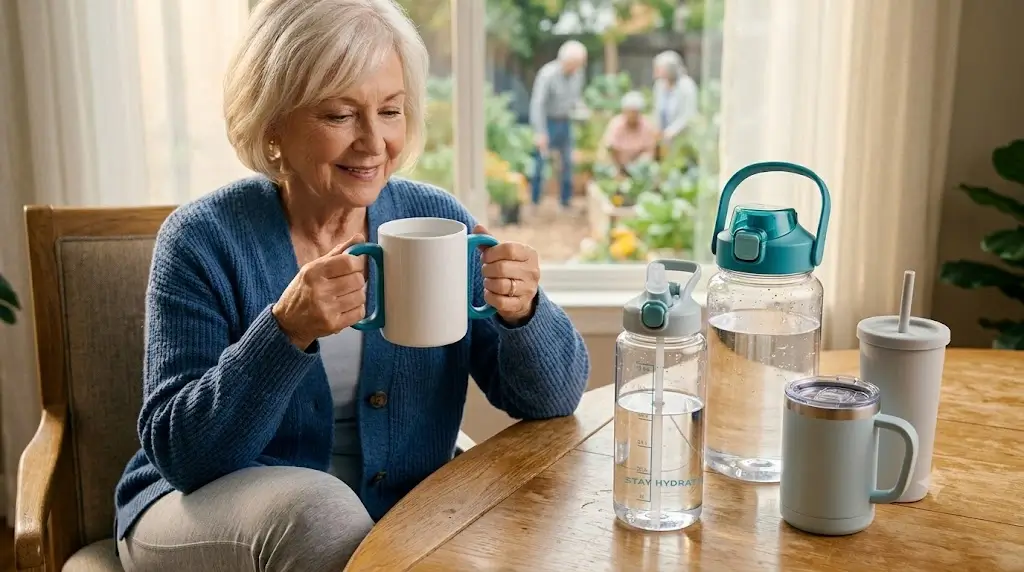
Hydration can fail because of accessibility rather than lack of knowledge.
Consider the physical steps involved:
- Getting to the kitchen
- Filling a container
- Carrying it
- Opening a bottle or cap
- Pouring the beverage
- Holding the cup
- Remembering to drink it
If any of those steps are difficult, changing the setup may be more effective than simply telling someone to drink more.
Useful everyday adaptations can include lightweight cups, easy-open bottles, smaller refillable containers, and keeping water within comfortable reach.
How Does Hydration Fit Into Healthy Eating After 50?
Hydration should be treated as one part of an overall healthy eating pattern rather than an isolated goal.
NIA recommends water as a primary beverage and emphasizes varied, nutrient-dense foods as part of healthy eating as people age.
A practical daily pattern combines adequate fluids with vegetables, fruits, whole grains, protein foods, and other nutrient-dense choices.
For the broader dietary framework, see Healthy Eating After 50: Complete Guide.
A Simple Hydration Decision Framework for Older Adults
| Situation | Practical response |
|---|---|
| Normal day, healthy adult | Drink regularly throughout the day and use water frequently |
| Thirst is less noticeable | Use scheduled drinking opportunities instead of relying only on thirst |
| Hot weather | Increase attention to fluids and heat exposure |
| More physical activity | Pay attention to fluid losses and drink accordingly |
| Fever, vomiting, or diarrhea | Fluid needs may increase; seek medical advice when symptoms are significant |
| Medication affects fluid balance | Ask a clinician or pharmacist about the appropriate fluid strategy |
| Medical fluid restriction | Follow the prescribed fluid plan rather than a generic water target |
| Difficulty carrying or opening drinks | Adapt the drinking setup and containers |
Hydration Checklist for Older Adults
- ☐ Drink fluids regularly throughout the day.
- ☐ Use water as a primary everyday beverage.
- ☐ Remember that food contributes to total water intake.
- ☐ Do not treat 2.7 or 3.7 liters as a plain-water prescription.
- ☐ Pay extra attention to hydration during hot weather.
- ☐ Pay extra attention during increased physical activity.
- ☐ Do not rely entirely on thirst if thirst has become less noticeable.
- ☐ Keep drinks physically easy to reach.
- ☐ Consider whether bottles, cups, or pitchers are difficult to handle.
- ☐ Ask a healthcare professional about fluid needs when medications or medical conditions affect hydration.
Frequently Asked Questions
How many ounces of water should a 70-year-old drink per day?
There is no universal number for every 70-year-old. A commonly cited total-water Adequate Intake is 91 fluid ounces for adult women and 125 fluid ounces for adult men, but those amounts include water from food and beverages, not just plain drinking water.
Should older adults drink 8 glasses of water a day?
Eight glasses can be a simple reminder to drink regularly, but it is not a precise requirement for every older adult. Individual fluid needs vary.
Does coffee count toward hydration?
Yes. Coffee and tea contribute fluid to total water intake. However, beverage choices should also be considered in the context of added sugar, calories, caffeine tolerance, and an individual’s overall diet.
Do fruits and vegetables count toward water intake?
Yes. Water naturally present in food contributes to total water intake.
Should older adults drink water before they feel thirsty?
It can be useful, particularly because some people experience a reduced sense of thirst as they age. Regular drinking opportunities throughout the day can reduce reliance on thirst alone.
Does an older adult need more water in hot weather?
Fluid needs can increase in hot conditions because the body can lose more water through sweating. Physical activity can increase needs further.
Can an older adult drink too much water?
Yes. More water is not always better, and some medical conditions require individualized fluid limits. Anyone with a clinician-directed fluid restriction should follow that plan rather than a general hydration recommendation.
What is the most important hydration habit for older adults?
The most useful general habit is to drink fluids regularly throughout the day instead of relying entirely on thirst, while adjusting for activity, heat, illness, medications, and individual medical guidance.
Final Takeaway
Older adults should not be given one universal number of ounces of plain water per day.
The commonly cited adult Adequate Intake values of 2.7 L for women and 3.7 L for men refer to total water from beverages and food, not a requirement to drink that amount of plain water.
For everyday life, the most useful strategy is to drink fluids regularly, choose water frequently, include water-containing foods, and pay closer attention to hydration during heat, physical activity, or illness. Older adults who have medical conditions, take medications that affect fluid balance, or have a prescribed fluid restriction should use individualized professional guidance.
In other words, the best hydration target is not simply a number. It is an appropriate daily fluid pattern matched to the individual.
Sources and Editorial Basis
- National Academies — Dietary Reference Intakes for Water and related total-water guidance.
- National Institute on Aging — Healthy Meal Planning and healthy eating guidance for older adults.
- MedlinePlus — Nutrition for Older Adults and Dehydration.
- Centers for Disease Control and Prevention — Water and healthier drinks.
Editorial note: This article provides general educational information about hydration and is not medical advice. Individual fluid requirements can differ substantially, particularly when health conditions or medications affect fluid balance.
