
Rubber vs. Aluminum Doorway Ramps: Durability & Traction
Engineering Ground Truth: Rubber vs. Aluminum Threshold Ramps
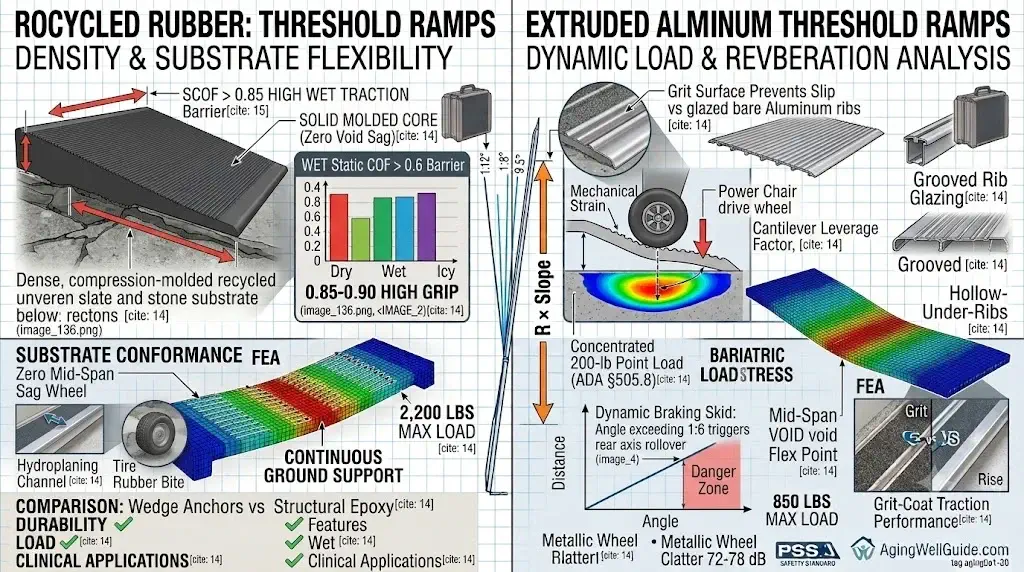
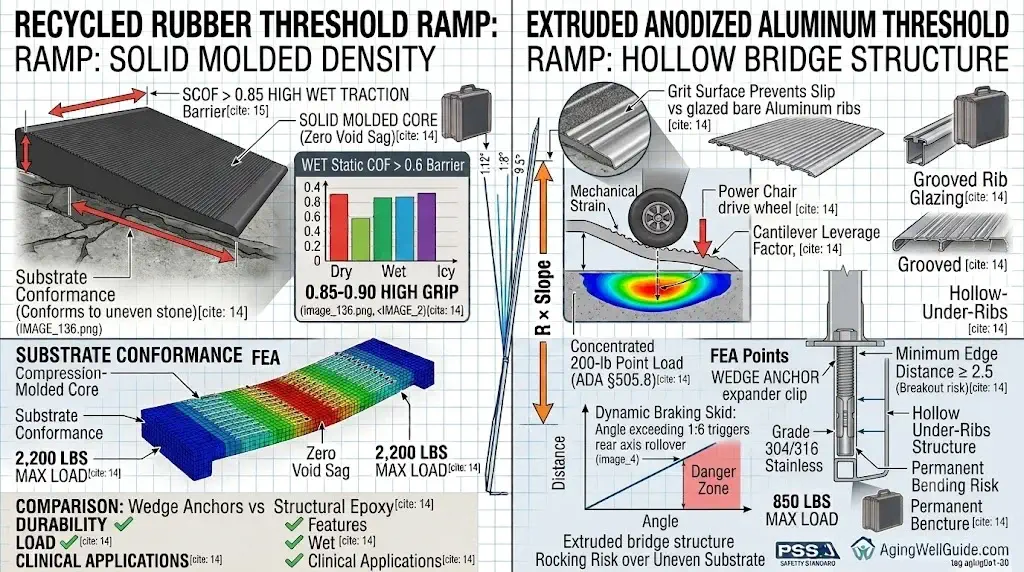
Deciding between rubber vs aluminum doorway ramps hinges on surface friction, substrate stability, and bariatric weight limits. Solid recycled rubber ramps dominate wet outdoor thresholds by providing a high Static Coefficient of Friction (SCOF) of 0.85 to 0.90 under ASTM D2047 standards, crushing load capacities up to 2,200 lbs, and superior acoustic dampening that eliminates hollow wheel clatter. Conversely, extruded 6061-T6 aluminum threshold ramps excel at multi-inch door rises exceeding 2.5 inches, weigh 75% less for rapid portability, and resist chemical de-icing salts, but exhibit a lower wet SCOF of 0.60 to 0.68 that demands high-traction punched perforations or mineral grit overlays to prevent caster slippage.
- Wet Traction Superiority: Recycled rubber maintains tire bite in rain and sleet, whereas bare ribbed aluminum becomes slippery when wet.
- Substrate Fitment: Rubber molds flexibly over uneven stone or slate thresholds, while rigid aluminum requires shimming to prevent rocking.
- Height Elevation Threshold: Aluminum ramps adjust easily from 1 to 6 inches via telescoping legs, whereas rubber ramps become unwieldy past 2.5 inches.
Quick Reference Specification: Rubber vs. Aluminum Doorway Threshold Ramps
The technical specification matrix below compares the structural, frictional, and environmental characteristics of recycled rubber versus architectural extruded aluminum doorway ramps:
| Engineering Metric | Solid Molded Rubber Ramps | Extruded Anodized Aluminum Ramps |
|---|---|---|
| Static COF (Dry Surface) | 0.92 to 0.98 (Superior Grip) | 0.75 to 0.82 (Adequate Grip) |
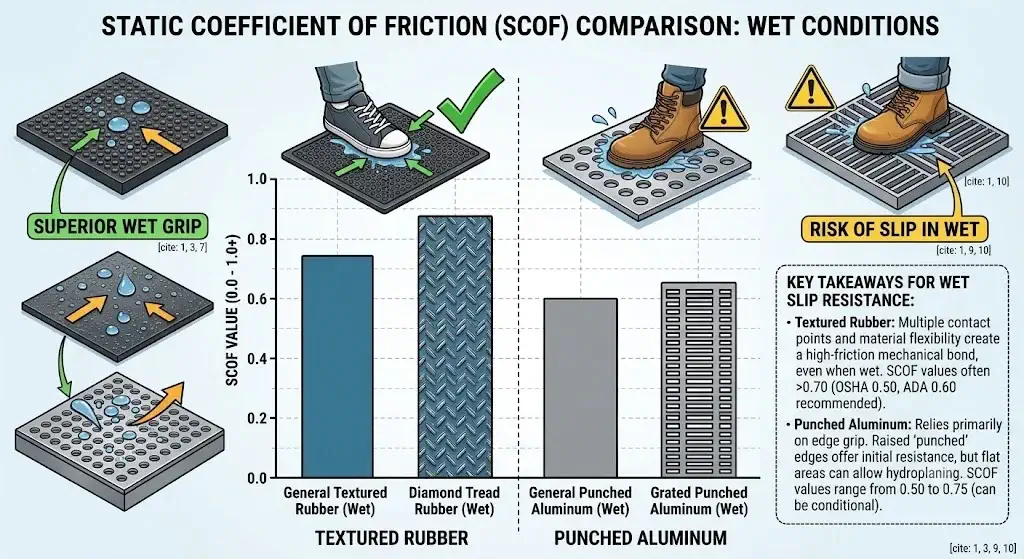
| Static COF (Wet Surface) | 0.85 to 0.90 (ASTM D2047 High Pass) | 0.60 to 0.68 (Slip Risk without Grit) |
| Maximum Load Capacity | 1,500 to 2,200+ lbs (Solid Core) | 700 to 850 lbs (Hollow Under-Ribs) |
| Acoustic Noise Dampening | < 45 dB (Silent Rubber Absorption) | 72 to 78 dB (Metallic Wheel Clatter) |
| Ideal Vertical Rise | 0.25 to 2.5 inches (Beveled Edges) | 1.0 to 6.0 inches (Adjustable Rakes) |
| Substrate Flexibility | Conforms to irregular pavers/slate | Rigid frame; requires shimming |
| Custom Trim Capability | Easily cut with utility knife | Requires miter saw & deburring |
| Weather & Salt Resistance | Impervious to ice melt; slight UV fading | 100% UV stable; corrodes from de-icing salts |
Traction Kinematics: Molded Rubber Outperforms Bare Aluminum in Wet Environments
Polyurethane caster wheels lose rotational drive when crossing slick metal surfaces in wet weather. When navigating a transition between the outdoors and an entryway, water tracked onto the ramp creates hydroplaning layers under small 4-inch front caster wheels. If the friction coefficient drops below 0.60, the occupant suffers uncontrolled spinout or directional deflection when accelerating over the doorway lip.
Frictional physics and tire traction variables demonstrate clear performance distinctions:
- Molded Micro-Groove Evacuation: High-density recycled rubber threshold ramps incorporate molded drainage channels that wick rain away from the wheel contact patch, maintaining a safe wet static friction rating of 0.85.
- Extruded Aluminum Rib Glazing: While grooved aluminum provides clean dry traction, smooth extruded ribs allow wet rubber tires to slide laterally across the grain under torque. For aluminum units, verify integrated punched grit surfaces or review our vetted choices for doorway threshold ramps with anti-slip coatings.
- Kinematic Inclines: Ensure your transition maintains acceptable incline limits by calculating run distances with our guide to the safe slope ratio for wheelchair ramps.
Environmental Resistance: Anodized Aluminum Resists Ultraviolet Degradation Better Than Rubber Compounds
Solar radiation and chemical de-icers attack synthetic and metal threshold structures differently over decades of exposure. Direct UV sunlight breaks down polymer elastomeric bonds in low-grade crumb rubber, resulting in gray chalking and surface crumbling after five to seven years in southern climates. In contrast, architectural 6061-T6 anodized aluminum is virtually impervious to solar embrittlement and thermal warpage.
Key environmental durability factors when choosing ramp materials include:
- De-icing Salt Chemical Reaction: Calcium chloride and rock salt corrode aluminum alloys through galvanic pitting, leaving white oxide deposits and weakening structural welds. Solid vulcanized rubber is completely inert to chemical salts and freeze-thaw cycles.
- Substrate Wear and Scratching: Sliding metal plates across finished hardwood, vinyl plank, or decorative stamped concrete scratches interior finishes. Rubber acts as a soft, non-marring cushion that locks against polished interior floors without mechanical fasteners.
- Stair Tread Stability: For exterior entryways requiring a combination of ramps and steps, secure human balance by learning how to mount outdoor metal handrails into concrete steps.
Solid Rubber Ramps Absorb Impact Noise and Withstand 2,200-Pound Bariatric Loads
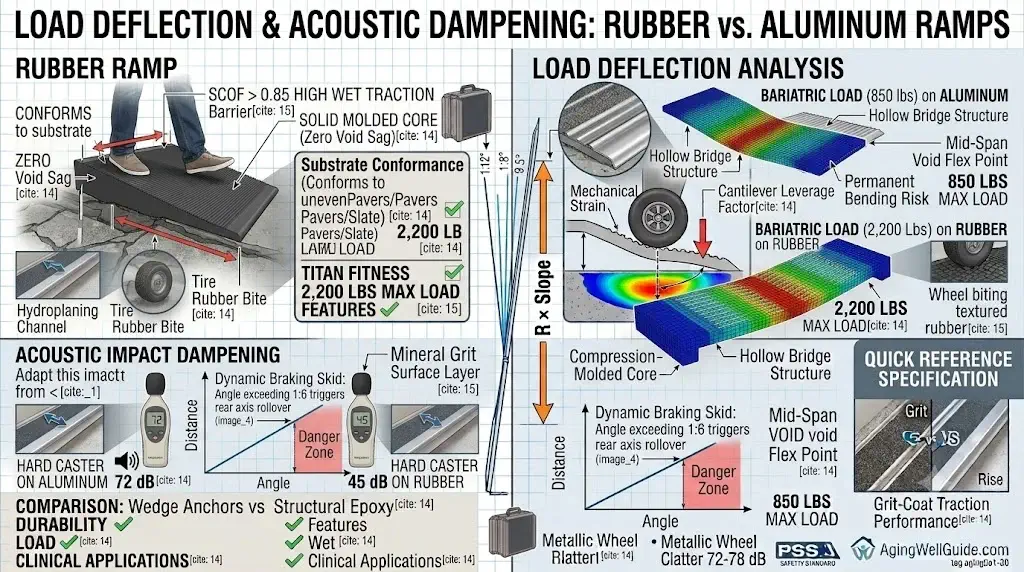
Structural load deflection dictates whether a threshold bridge can safely handle heavy bariatric power chairs. An occupied Class 3 power wheelchair combined with a bariatric user easily reaches 600 to 800 lbs. When that weight is concentrated onto two 3-inch wide drive tires crossing an aluminum bridge plate, the unreinforced hollow void beneath the aluminum can buckle and bow permanently.
Core Mechanical & Acoustic Distinctions
- Continuous Zero-Deflection Ground Support: Solid rubber features 100% material contact with the subfloor. Because there are no hollow chambers or thin sheet bridges, rubber ramps provide crush ratings up to 2,200 lbs with zero mid-span sagging.
- Acoustic Decibel Suppression: Aluminum threshold ramps resonate like drum skins when struck by hard wheelchair casters, producing loud 75-decibel metallic bangs that disrupt quiet households. Dense molded rubber absorbs mechanical shock waves, dampening noise levels below 45 decibels.
- Long-Span Multi-Fold Alternatives: For multi-step approaches where threshold ramps are too short, compare heavy-duty runways in our Titan Fitness multifold ramp review or check multi-step options in our roundup of portable folding wheelchair ramps.
Installation Flexibility Dictates That Rubber Cuts with Knives While Aluminum Requires Power Saws
Custom doorway dimensions rarely match factory-built ramp dimensions out of the box. Residential door jambs feature wooden trim profiles, stop moldings, and weather-stripping channels that require custom cutouts along the ramp edges. The ease with which a caregiver or contractor can modify the ramp in the field directly impacts final barrier-free accessibility.
Modifying and positioning these two materials requires distinct labor approaches:
- Scribing and Notching Rubber: A solid rubber ramp can be scored and cut using a standard heavy-duty utility knife and straightedge. Lubricating the utility knife blade with liquid dish soap allows you to notch around irregular door moldings cleanly without generating dust or metal chips.
- Cutting and Deburring Aluminum: Aluminum ramps mandate a circular saw fitted with a non-ferrous metal carbide blade or a reciprocating saw. The cut edge leaves razor-sharp metal flash and burrs that must be filed smooth to prevent tire punctures and foot lacerations.
- Transport Weight Consideration: A 2-inch rise rubber ramp weighs between 25 and 45 lbs, anchoring itself via pure gravitational mass. A comparable aluminum threshold ramp weighs only 6 to 10 lbs, making aluminum the far superior choice for temporary or travel applications.
Building an Integrated Whole-Home Mobility Ecosystem
Selecting the right material between rubber vs aluminum doorway ramps resolves painful threshold transitions at exterior entryways. To complete your barrier-free aging-in-place renovation, pair smooth doorway entries with these vetted medical mobility upgrades:
- Review tested models across top brands in our curated guide to doorway threshold ramps.
- Ensure legal incline compliance across exterior approaches with our guide to safe slope ratio for wheelchair ramps.
- Support sit-to-stand hip biomechanics in the living room by reviewing the best power lift recliners for seniors.
- Prevent nighttime roll-out accidents and secure bedroom transfers with sturdy bed assist rails with legs.
Frequently Asked Questions (FAQ)
Which threshold ramp material provides superior wet slip resistance?
Solid recycled rubber ramps provide superior wet traction, delivering a Static Coefficient of Friction (SCOF) of 0.85 to 0.90 under saturated conditions, compared to 0.60 to 0.68 for grooved aluminum ramps which risk wheel slip when wet unless coated with mineral grit.
Can rubber doorway ramps support heavy bariatric power wheelchairs?
Yes, dense compression-molded rubber ramps support bariatric loads exceeding 1,500 to 2,200 lbs because they rest solidly against the substrate without mid-span voids, whereas aluminum modular plates typically cap out at 700 to 850 lbs before experiencing permanent structural bending.
How do you trim a rubber doorway ramp to fit unusual door openings?
Rubber threshold ramps can be trimmed quickly using a utility knife with fresh carbide blades and a straight edge, cutting notches around door jambs. Aluminum ramps require a carbide-tipped metal blade on a circular or miter saw, creating sharp burrs that must be filed down.
Do aluminum doorway ramps make noise when crossed by mobility equipment?
Extruded aluminum ramps generate metallic reverberations and hollow rattling reaching 72 to 78 decibels when hard polyurethane caster wheels traverse them. Solid rubber absorbs kinetic impact vibrations, reducing pass-over noise to below 45 decibels.
