
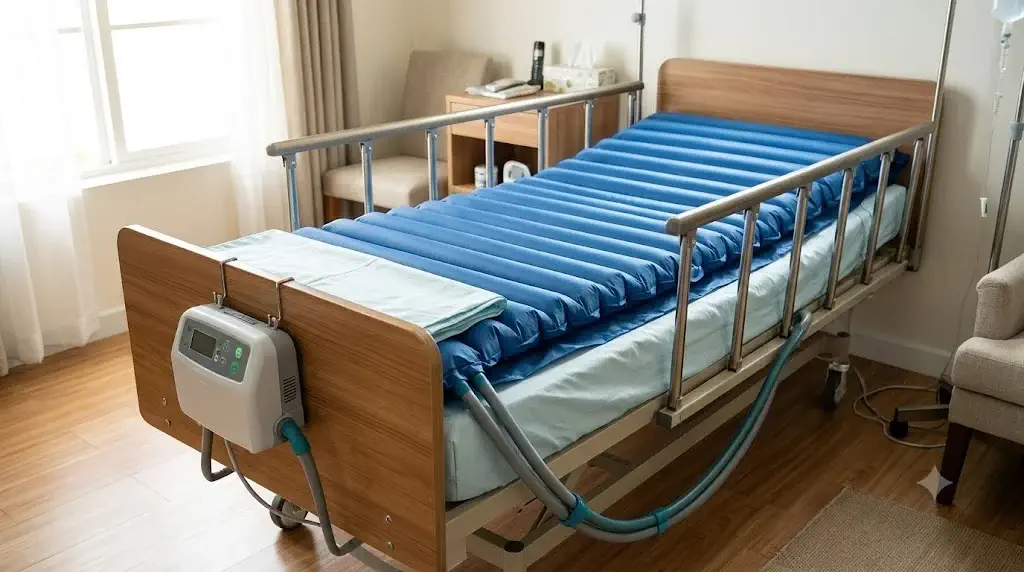
Best Alternating Pressure Air Mattresses for Bed Sore Relief
Executive Engineering Summary: Active Pressure Injury Mitigation
Identifying the best alternating pressure air mattresses for bed sore relief requires balancing air cell volume displacement, automated cycle frequency, and interface pressure redistribution. In bedbound seniors, unmitigated contact pressure exceeding 32 mmHg collapses capillary microcirculation within 2 hours, resulting in deep-tissue ischemia and decubitus ulceration. Medical-grade alternating air mattresses sequentially inflate and deflate interlaced tubular or bubble baffles every 6 to 12 minutes, restoring perfusion to the sacrum, heels, and scapula while managing moisture via low-air-loss vapor permeability.
- Ischemia Prevention Metric: Active cycle alternation periodically drops localized contact pressure to under 20 mmHg, preventing tissue necrosis over bony prominences.
- Air Cell Construction: High-performance 8-inch tubular systems provide deep immersion for Stage I–IV ulcer recovery, whereas 2.5-inch bubble overlays target early Stage I prevention.
- Microclimate Control: Ventilated low-air-loss top covers reduce cutaneous maceration by wicking away accumulated heat and shear moisture.
- Integrated Bedbound Safety: Pairing active pressure mattresses with sturdy bed assist rails with legs, verified hardware for securing rails to beds, and height-adjustable overbed tables for bedbound seniors establishes a comprehensive long-term care environment.
Quick Reference Specification: Best Alternating Pressure Air Mattresses for Bed Sore Relief
Selecting the best alternating pressure air mattresses for bed sore relief demands rigorous technical comparison of pump displacement, cycle timing, bladder height, and clinical staging capabilities. The benchmark matrix below evaluates primary therapeutic mattress classifications:
| Engineering Metric | Hospital-Grade Tubular System (8-Inch) | Clinical Overlay Bubble Pad (2.5-Inch) | Geriatric Clinical Significance |
|---|---|---|---|
| NPUAP/EPUAP Staging | Stage I, II, III, and IV Decubitus Ulcers | Stage I Prevention & Superficial Tissue Relief | Deep ulcers require high-volume air displacement to avoid bone bottoming |
| Air Cell Architecture | 16 to 20 Independent Nylon/TPU Baffles | 130 Heat-Sealed PVC Bubble Air Cells | Tubular baffles allow single-cell replacement if punctured |
| Cycle Alternation Timing | 6, 10, 15, or 20 Minutes (Selectable) | Fixed 6 or 12 Minutes Continuous | 10–12 minute intervals provide ideal reperfusion without sleep disturbance |
| Interface Pressure Range | 20 mmHg – 45 mmHg (Adjustable Dial) | 30 mmHg – 80 mmHg (Load Dependent) | Dropping below 32 mmHg allows capillary bed oxygen refilling |
| Low-Air-Loss Technology | Laser-ventilated micro-holes on sacral cells | Non-ventilated sealed vinyl surface | Continuous dry airflow manages skin microclimate and stops maceration |
| Emergency CPR Deflation | Instant mechanical pull-plug (< 15 seconds) | Slow tube disconnect (2 to 4 minutes) | Critical for emergency cardiac resuscitation flat surface protocols |
| Max Weight Capacity | 350 to 450 lbs (Bariatric Rated) | 300 lbs Maximum | Prevents heavier seniors from sinking through to the hard bed base |
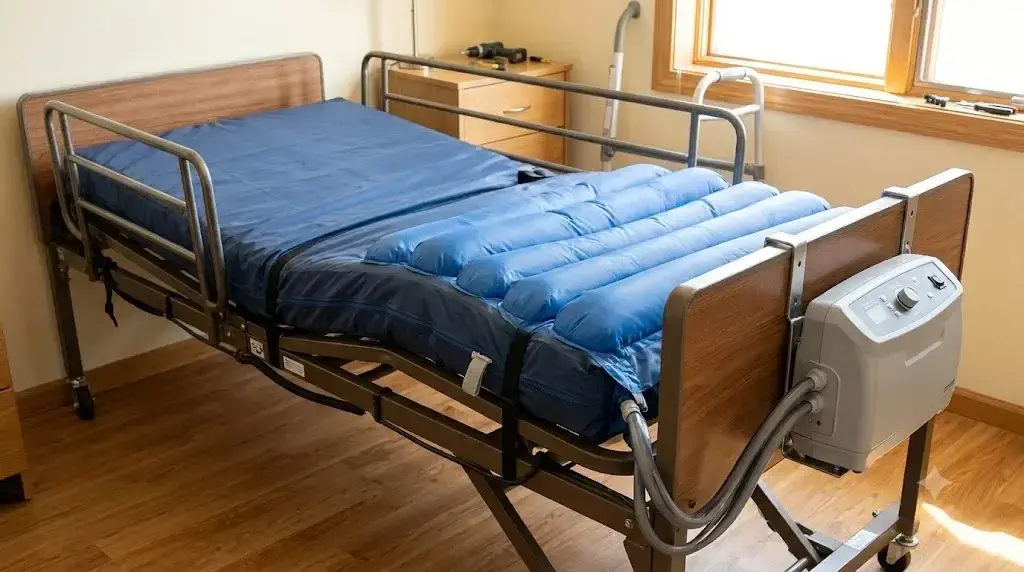
Mechanical perfusion: cutaway schematic of an 8-inch tubular alternating pressure mattress showing active deflation beneath the sacrum to restore capillary blood flow.
Capillary Interface Pressures Exceeding Thirty-Two Millimeters Trigger Tissue Ischemia
Bed sores—clinically classified as decubitus ulcers or pressure injuries—develop when prolonged external force compresses soft tissue between a bony skeleton and an unyielding mattress. In healthy adult tissue, capillary blood pressure averages between 20 mmHg and 32 mmHg. When static interface pressure on the skin exceeds this 32 mmHg threshold, capillary vessels collapse immediately, halting the transport of red blood cells, vital oxygen, and nutrients to dermis cells.
In frail seniors, this pathological cascade is significantly accelerated by three geriatric factors:
- Loss of Subcutaneous Adipose Cushioning: Muscle atrophy and fat thinning leave the sacrum, greater trochanters, and heels directly exposed to shear friction and bone-on-bed crushing.
- Impaired Lymphatic Drainage: Continuous vascular occlusion traps metabolic waste products in ischemic tissue, accelerating tissue necrosis within 90 to 120 minutes of unassisted immobility.
- Dermal Maceration: Microclimates saturated with sweat, wound drainage, or incontinence soften the stratum corneum, reducing skin shear tolerance by up to 60%.
Static foam or innerspring mattresses sustain contact pressures between 45 mmHg and 80 mmHg over prominent bones. Alternating pressure air mattresses resolve this issue by mechanically cycling support points: while Cell Bank A deflates to zero pressure, Cell Bank B bears the body weight. This intermittent relief allows blood vessels to reopen and re-oxygenate tissue before cellular death occurs.
Eight-Inch Tubular Bladders Provide Deeper Immersion Than Standard Bubble Pads
When investing in the best alternating pressure air mattresses for bed sore relief, caregivers must choose between two distinct structural designs: shallow bubble pad overlays and deep tubular replacement systems. Understanding their mechanical differences determines whether a mattress heals a wound or allows it to worsen.
Bubble Pad Overlays (2.5-Inch Profile): These pads feature an embossed grid of small diamond or circular air pockets constructed of medical PVC. While economical and lightweight, bubble pads offer minimal immersion depth. For patients weighing over 150 lbs, the deflating cells bottom out easily, allowing the patient’s pelvis to press into the underlying firm bed. Consequently, clinical guidelines restrict bubble pads strictly to Stage I prophylaxis and short-term post-surgical recovery.
Modular Tubular Systems (5- to 8-Inch Profile): These advanced systems utilize 16 to 20 heavy-duty cylindrical bladders made of woven nylon and thermoplastic polyurethane (TPU). The deep air volume provides true bodily immersion, distributing body weight over a large surface area. Additional clinical benefits include:
- Independent Cell Replacement: Individual baffled tubes connect to the main air manifold via quick-connect barb couplings. If a single tube punctures, it can be replaced in seconds without discarding the entire mattress.
- Static / Caregiver Transfer Mode: With the push of a button, the pump inflates all chambers simultaneously to maximum firmness. This creates a solid, stable surface for patient hygiene care, physical therapy, or wheelchair sliding transfers.
- Pillow Function: The head-end 3 to 4 tubular cells remain permanently inflated to prevent head motion sickness, vestibular disorientation, and sleep disruption during active cycles.
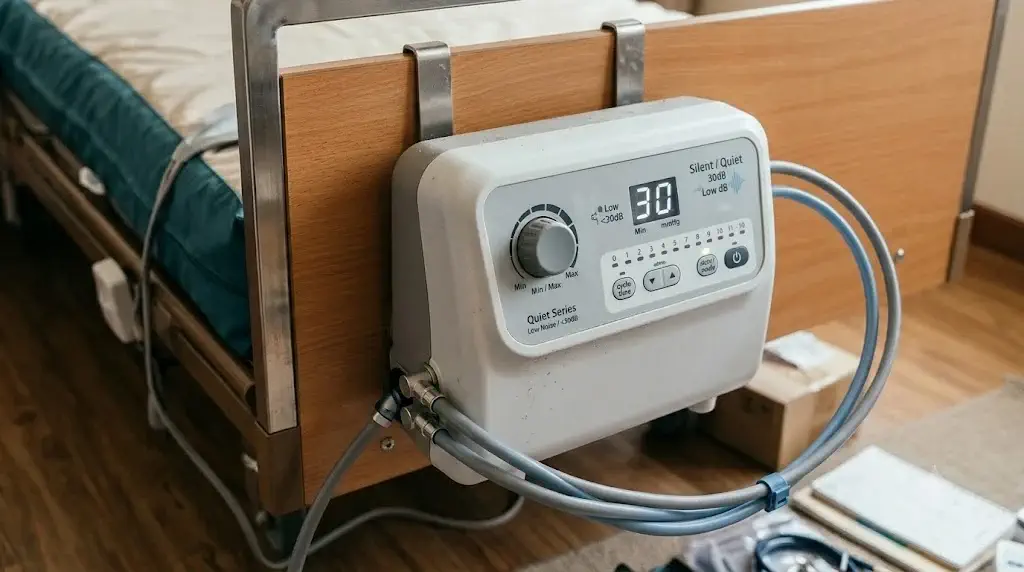
Pump calibration: medical compressor pump with variable pressure adjustment dial, cycle frequency controls, and low-pressure alarm indicators.
Top Medical Air Mattresses Deliver Whisper-Quiet Compression and Dynamic Reperfusion
Selecting the best alternating pressure air mattresses for bed sore relief requires choosing pumps engineered for near-silent operation (under 30 dB) to ensure uninterrupted nighttime sleep, combined with durable, waterproof, vapor-permeable polyurethane top covers. The three systems below represent the benchmark for home hospice, clinical hospital beds, and assisted living rooms:
1. Vive 8-Inch Alternating Pressure Mattress Replacement System
The Vive 8-Inch system is an authentic clinical-grade replacement mattress that sits directly on the bed deck without requiring an underlying mattress. Featuring 16 independent baffled air bladders infused with micro-vent low-air-loss ventilation, it gently circulates air across the patient’s skin to eliminate dampness. The ultra-quiet digital compressor pump cycles every 12 minutes, dropping contact pressure down to 20 mmHg to ensure rapid ulcer recovery and pain-free sleep.
2. Drive Medical Med-Aire Plus 8″ Low Air Loss Alternating Mattress
Drive Medical’s Med-Aire Plus is a benchmark institutional system engineered for severe skin breakdown. Utilizing 20 individual 8-inch deep air tubes composed of durable nylon/TPU, it features “cell-on-cell” engineering: the bottom 4 inches remain permanently inflated to prevent patient bottoming-out during sudden electrical blackouts. Its dual-pump compressor delivers 8 liters of air per minute with selectable 10, 15, and 20-minute cycle timers.
3. Vive Alternating Pressure Pad Overlay with Electric Pump
For elderly family members who are partially mobile but spend extended hours in bed, the Vive Bubble Pad Overlay provides accessible, preventative pressure relief. It rests easily on top of any standard twin, full, or hospital mattress, secured by long end flaps that tuck beneath the base. Its 130 heat-sealed air cells alternate on a continuous 6-minute cycle, ensuring quiet operation and gentle pressure changes that relieve early pressure points.
The Hand-Check Protocol Verifies Safe Sacral Decompression and Prevents Bottoming Out
Setting an alternating pressure mattress too firm will create painful pressure points, while setting it too soft causes the patient to “bottom out” directly against the bed deck. Caregivers should never rely entirely on the numbered dial settings on the pump, as occupant weight distribution varies widely depending on pelvic bone shape and body positioning.
Execute this clinical Hand-Check Verification Protocol every week or whenever patient positioning changes:
- Position the Patient: Place the patient in their primary resting posture (either supine on their back or in a semi-Fowler position with the head of the bed angled up to 30 degrees).
- Wait for Cycle Deflation: Monitor the pump indicator until the air cell bank directly beneath the patient’s sacrum/buttocks enters its deflated cycle.
- Slide Hand Beneath the Sacrum: Slide your flat hand (palm facing up) directly beneath the deflated air cell, directly under the patient’s sacral bone.
- Assess Clearance Gap: You should feel a cushion of air and be able to easily wiggle your fingers. If you feel the patient’s bony sacrum resting firmly on your hand or pressing into the hard mattress base, the mattress is bottoming out; increase the pump pressure knob by one increment. If the cell feels rigid and you cannot slide your hand in smoothly, lower the pressure knob.
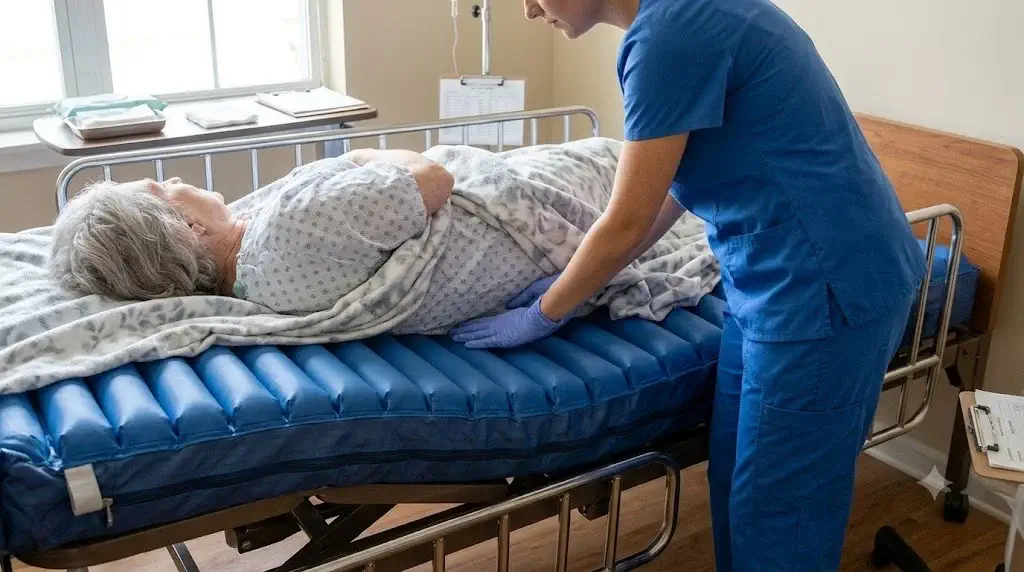
Caregiver check: conducting the 2-finger hand check protocol beneath the deflated sacral air cells to ensure the patient does not bottom out.
Increased Mattress Profile Demands Elevated Bed Assist Rails to Prevent Roll-Off Falls
Adding a 5-inch to 8-inch alternating air mattress significantly elevates the occupant’s resting height above the bedroom floor. Standard built-in hospital side rails or standard home bed frames that previously provided safe perimeter protection may now sit flush with the top of the inflated air cells. This creates a critical roll-off fall hazard for confused or uncoordinated seniors.
When converting a standard home bed or hospital frame to an active air system, caregivers must verify that assistive bed rails provide at least 7 to 9 inches of clearance above the top surface of the fully inflated mattress. If existing rails sit too low, install floor-anchored assist rails with adjustable height legs to ensure safe, solid leverage during ingress, egress, and nocturnal turning.
Furthermore, always engage the pump’s “Static Mode” prior to initiating any transfer. A shifting, undulating air mattress destabilizes senior foot placement and hand leverage, whereas a firm static surface gives patients the balance they need to transfer safely into a wheelchair or walker.
Frequently Asked Questions About Alternating Pressure Mattresses
How does an alternating pressure air mattress treat and prevent bed sores?
The best alternating pressure air mattresses for bed sore relief work by continuously cycling support zones through two alternating air circuits. Every 6 to 12 minutes, one set of chambers deflates while the other inflates. This drops contact pressure beneath bony prominences below 32 mmHg, allowing compressed capillaries to reopen and deliver oxygenated blood back to compromised skin cells.
What is the difference between bubble pad overlays and 8-inch tubular replacement mattresses?
Bubble pad overlays are shallow 2.5-inch pads that rest on top of existing beds, engineered primarily for Stage I prevention and lighter patients. Full 8-inch tubular replacement mattresses replace the standard mattress entirely, offering deep bodily immersion, independent cell replacement, low-air-loss moisture mitigation, and bariatric weight capacities suitable for treating advanced Stage II, III, and IV decubitus ulcers.
What pump cycle time is most effective for decubitus ulcer healing?
Clinical metrology studies establish that a 10-to-12-minute cycle time offers the optimal therapeutic window. It provides sufficient reperfusion time to reverse tissue ischemia while minimizing motion that could disturb senior sleep cycles or cause sensory discomfort.
Can an alternating pressure mattress be used on an adjustable home hospital bed?
Yes. Quality alternating air systems feature durable elastic or buckled anchor straps that secure the mattress firmly to articulating head and foot decks. When adjusting the head above 30 degrees, ensure the pump is calibrated slightly firmer to prevent the patient from bottoming out at the pivot crease.
