
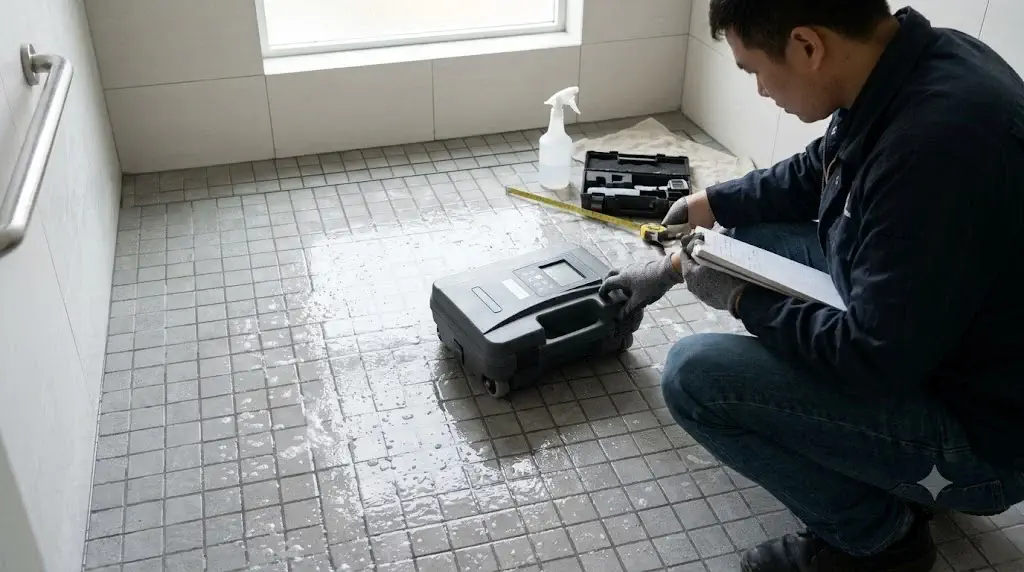
Shower Floor Friction Ratings: Dynamic Coefficient of Friction
Executive Engineering Summary: Wet Hydrodynamic Tribology
Understanding shower floor friction ratings dynamic coefficient of friction is the single most critical engineering benchmark for preventing catastrophic geriatric slip accidents. While the national baseline standard (ANSI A137.1 / A326.3) requires an operational DCOF of 0.42 for level interior commercial floors, residential curbless showers demand a significantly higher threshold of 0.55 to 0.60 DCOF. Hydrodynamic soap films drastically lower skin-to-tile micro-traction, necessitating rigorous metrological testing and structural grout channel integration.
- ANSI A326.3 Category D Compliance: Wet barefoot traffic zones require higher dynamic friction values than shod commercial corridors to counteract low skin shear resistance.
- SCOF vs. DCOF Distinction: Legacy static tests (ASTM C1028) measure start-from-stop adhesion; modern DCOF measures ongoing kinetic movement across a standardized 0.05% SLS surfactant aqueous film.
- Structural Grout Synergy: Small mosaic tile layouts (2×2-inch or smaller) increase grout grid density by over 400%, disrupting hydraulic plane formation and boosting physical grip.
- Holistic Fall Mitigation: High friction tile forms the baseline; comprehensive safety requires pairing traction-rated pans with prevent shower slips protocols and structurally anchored wall hardware.
Quick Reference Specification: Shower Floor Friction Ratings Dynamic Coefficient of Friction
The shower floor friction ratings dynamic coefficient of friction benchmark compares physical test methods, fluid dynamics, and minimum safety values across tile categories. The matrix below contrasts verified tribological performance levels, test apparatus parameters, and clinical safety ratings:
| Metrology Parameter | Standard Level Interior (Dry/Light Wet) | ANSI A326.3 Category D (Wet Barefoot Shower) | Clinical Senior High-Traction Specification |
|---|---|---|---|
| Target Dynamic Friction (DCOF) | ≥ 0.42 (ANSI A137.1 baseline) | ≥ 0.55 (Category D recommended) | ≥ 0.60 to 0.65 (High Geriatric Safety) |
| Legacy Static Metric (SCOF) | ≥ 0.60 (ASTM C1028 – Obsolete) | Not Applicable (Unreliable in wet soap) | Not Recommended (Misleading static seal) |
| Testing Apparatus & Slider | BOT-3000E with SBR vulcanized rubber | BOT-3000E with Neolite / SBR sensor | BOT-3000E calibrated with human skin simulants |
| Test Fluid Medium | 0.05% SLS (Sodium Lauryl Sulfate) | 0.05% SLS + Warm Water Solution | Body Wash Surfactant Viscosity Emulsions |
| German Ramp Equivalence (DIN) | R9 / Barefoot Class A (12°–18°) | R10 / Barefoot Class B (18°–24°) | R11 / Barefoot Class C (> 24° Slope Grip) |
| Optimal Surface Finish | Semi-polished or smooth matte ceramic | Unglazed porcelain or textured slip-resist | Unfinished quarry tile or 2×2″ micro-mosaics |
| Relative Slip Risk Profile | High in soapy wet conditions | Moderate-Low for active adults | Minimal for frail gait shuffling |
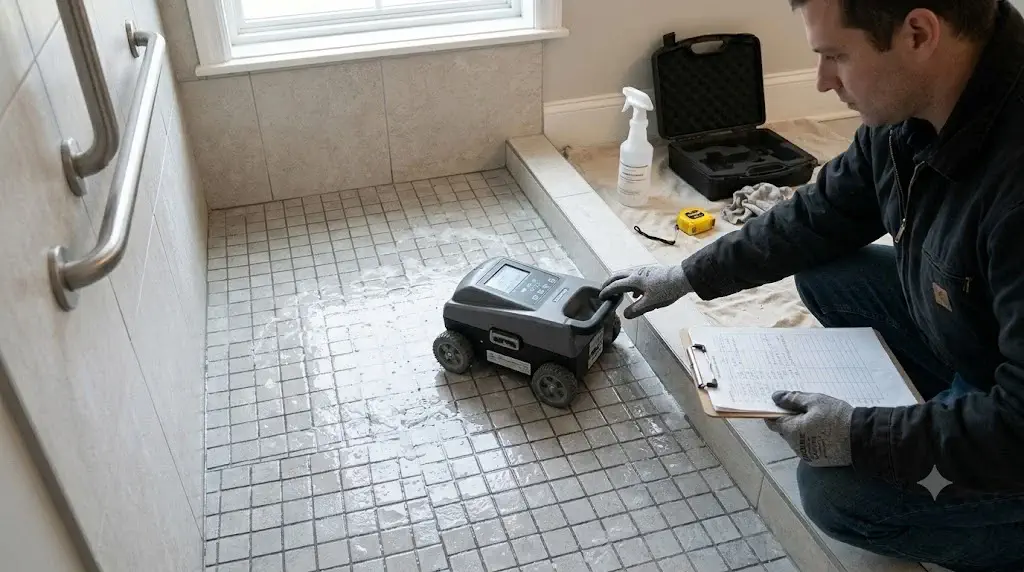
Tribological measurement in action: a digital BOT-3000E tribometer measuring dynamic coefficient of friction across wet, surfactant-coated shower floor tile.
Dynamic Friction Measurements Evaluate Kinetic Movement Across Moving Liquid Films
The physics of bathroom slips hinges upon the distinction between static friction (resistance to initial motion) and dynamic friction (resistance to ongoing kinetic sliding). For decades, architectural specifications relied upon ASTM C1028 to calculate Static Coefficient of Friction (SCOF). This legacy standard measured the horizontal force needed to yank a stationary 50-pound weighted Neolite sensor block from a dead rest on wet tile.
In wet bathroom environments, ASTM C1028 produced dangerously misleading metrics. Polished, smooth glazed ceramic tiles often scored an artificially high SCOF rating of 0.60 or above because the standing water formed a hydraulic suction bond with the stationary rubber pad. However, the moment a human foot began to slide, that suction bond ruptured instantly, causing hydrodynamic planing where kinetic friction dropped to near zero.
The tile industry permanently retired ASTM C1028 in favor of ANSI A137.1 / ANSI A326.3, known as the DCOF AcuTest. Unlike static tests, dynamic coefficient of friction measures the ratio of horizontal traction force to vertical downward force while an automated mechanical carriage actively moves across the tile surface at an established speed of 20 centimeters per second.
Aqueous Surfactant Solutions Collapse Kinetic Micro-Traction on Smooth Tile Glazes
Clean tap water exhibits a high surface tension of approximately 72 millinewtons per meter at room temperature. When a barefoot senior steps onto clean wet tile, the micro-roughness (asperities) of the ceramic surface can pierce through pure water film to establish mechanical contact with the epidermal ridges of the sole.
The introduction of standard soaps, body washes, and shampoos radically destabilizes this surface grip:
- Surface Tension Depression: Surfactants contain amphiphilic molecules (such as Sodium Lauryl Sulfate) that reduce water’s surface tension down to 25–30 mN/m, causing the liquid to wet out into an unbroken boundary layer.
- Hydrodynamic Lubrication: During dynamic heel-strike, the bather’s foot traps this surfactant mixture against smooth tile. Because the liquid cannot escape quickly enough, it generates hydrodynamic lift pressure that separates the foot completely from the tile floor.
- The Geriatric Friction Deficit: Older adults suffering from peripheral neuropathy, diminished proprioception, or arthritic knee joints cannot execute rapid neuromuscular corrections when traction drops. A sudden decline in kinetic friction below 0.35 DCOF results in immediate balance loss.
Because floor friction can vary during washing cycles, physical stabilization requires securely mounted sturdy grab bars positioned along all perimeter walls to catch balance loss before floor impact occurs.
ANSI A326.3 Standards Classify Wet Barefoot Zones Under Dedicated Category D Protocols
Contractors and interior remodelers frequently specify tiles based on the basic ANSI A137.1 commercial standard of 0.42 DCOF. However, the current comprehensive standard—ANSI A326.3 (American National Standard Test Method for Measuring Dynamic Coefficient of Friction of Hard Surface Flooring Materials)—establishes that 0.42 is merely a baseline for level interior spaces walked on with hard-soled footwear, such as grocery store aisles or hotel lobbies.
For residential and healthcare bathrooms, ANSI A326.3 defines distinct environmental use categories:
- Category A (Interior Dry): Flooring expected to remain dry during operation. Requires minimal DCOF < 0.42. Unsuitable for any shower or bathroom perimeter.
- Category B (Interior Wet): Flooring subject to occasional water tracking where shoes are worn. Baseline requirement of ≥ 0.42 DCOF.
- Category D (Interior Wet Barefoot): Dedicated residential curbless showers, institutional shower stalls, and wet locker rooms. Prescribes textured surfaces, micro-mosaics, or profiled finishes that deliver verified wet barefoot DCOF ratings of ≥ 0.55.
- Category E (Oils/Greases/Extreme Wet): Commercial kitchens and steep outdoor ramps requiring specialized anti-slip aggregate tiles exceeding 0.65 DCOF.
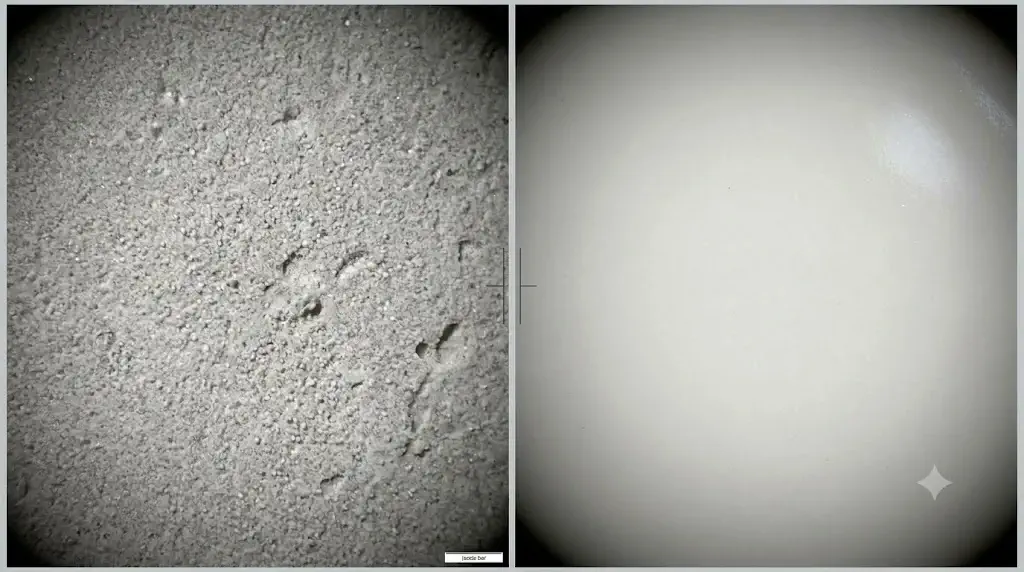
Microscopic comparison: textured non-slip porcelain with sharp micro-asperities (left) versus smooth glazed ceramic tile that promotes water hydroplaning (right).
Dense Mosaic Grout Grids Provide Geometric Mechanical Grip Across Shower Floors
Architectural tile sizing fundamentally governs wet shower floor friction. Large-format tiles (such as 12×24-inch or 24×24-inch rectified porcelain) create sleek aesthetics in contemporary bathrooms, but they introduce extensive uninterrupted planes of low-traction surface where water and soap cannot drain quickly away from the foot.
Installing small-format mosaic tiles alters the tribological equation through geometric shear channels:
- Fluid Dispersion Channels: Every grout line serves as a miniature drainage reservoir. When bare skin steps onto a mosaic surface, the water and soapy surfactant are forced laterally into the recessed grout joints, allowing epidermal contact directly with the tile edges.
- Mechanical Edge Interlocking: The physical perimeter of 1×1-inch or 2×2-inch tiles acts as hundreds of micro-traction edges across the footbed. This mechanical interlocking prevents lateral skidding even if the individual tile glaze has a marginal DCOF rating of 0.45.
- Epoxy vs. Cementitious Grout Friction: Cementitious sanded grouts provide an abrasive, aggregate-rich texture that maximizes foot traction. Non-porous epoxy grouts resist mold and chemical degradation, but installers must ensure the grout joints remain slightly recessed (1.0mm to 1.5mm) below the tile face rather than striking flush.
When anchoring assistive devices into these dense tile grids, consult our comprehensive review of ADA grab bar fasteners to prevent cracking delicate mosaic substrates.
Mineral Scale and Soap Scum Accumulation Degrades Factory DCOF Ratings Over Time
A common misconception in aging-in-place remodeling is that factory tile friction ratings remain permanent across the lifecycle of the bathroom. Laboratory testing confirms that a textured porcelain tile rated at an outstanding 0.62 DCOF at installation can degrade below 0.38 DCOF within 12 to 18 months of regular residential use if subjected to improper maintenance.
Three environmental mechanisms contribute to chronic floor friction decay:
- Calcium Carbonate Mineralization: In geographic regions with hard municipal water, evaporating shower spray leaves micro-crystalline calcium and magnesium deposits. These hard mineral scales fill the microscopic valleys (valleys of roughness) of textured porcelain, turning abrasive anti-slip finishes into smooth stone planes.
- Fatty Acid Soap Scum Glazing: Traditional bar soaps contain animal fats and vegetable oils that react with hard water minerals to form insoluble stearate films. This microscopic waxy coating seals over tile asperities, dramatically increasing hydroplaning potential.
- Polymer Floor Wax Contamination: Housecleaning crews mistakenly using general-purpose floor waxes or mop-and-shine chemicals in curbless bathrooms create a dangerous, ultra-slick acrylic film over wet shower zones.
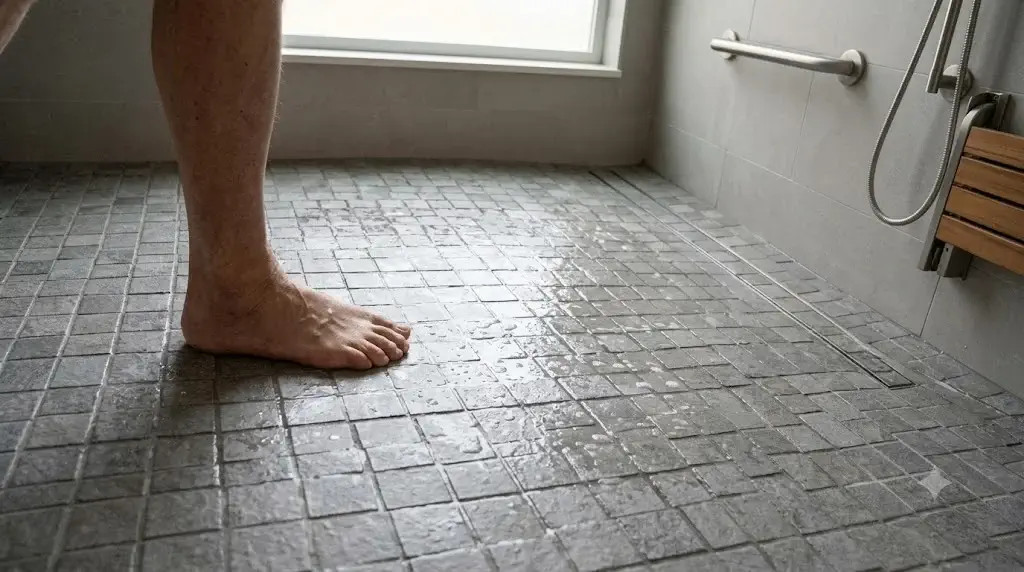
Geometric slip prevention: a 2×2-inch matte unglazed mosaic tile shower pan channeling soapy water away through recessed grout joints.
Comparative Flooring Evaluations Define Specific Bathroom Trade-offs
Selecting flooring for an aging-in-place bathroom requires balancing slip prevention physics against hygienic cleanability and wheelchair rolling ease:
- Exceptional kinetic friction in wet soapy conditions (DCOF 0.58–0.65).
- Hundreds of physical grout edges break hydraulic hydroplaning films.
- Conforms easily to compound multidirectional slopes around center drains.
- Highly durable porcelain body resists scratching and abrasive cleaning.
- Trade-off: Higher installation labor and extensive grout cleaning upkeep.
- Modern luxury aesthetic with minimal, easy-to-clean grout joints.
- Smooth rolling transit for heavy shower wheelchairs and commodes.
- Lower initial tile setting labor across flat subfloor framing.
- Critical Failure: Fails to disperse surfactant water planes during bathing.
- High Slip Risk: Barefoot friction drops into the danger zone (< 0.35 DCOF).
Frequently Asked Questions About Shower Floor Friction Ratings
What is the minimum safe DCOF rating for an accessible senior shower floor?
The shower floor friction ratings dynamic coefficient of friction framework dictates a minimum DCOF of 0.55 or higher under ANSI A326.3 Category D (Interior Wet Barefoot). While standard building codes accept 0.42 DCOF for dry commercial retail floors, wet surfactant environments demand at least 0.55 to 0.60 to prevent catastrophic slip trauma in older adults.
Why did the tile industry replace SCOF ASTM C1028 with the DCOF AcuTest standard?
The tile industry retired ASTM C1028 because static coefficient of friction tests only measured the force needed to begin moving from a dead stop. Smooth, wet glazed tiles created artificial suction with the rubber testing foot, recording artificially high safety scores. The modern DCOF ANSI A326.3 standard utilizes an automated BOT-3000E tribometer to measure real-world kinetic friction while the sensor actively glides across a 0.05% SLS soapy fluid film.
Do mosaic tile grout lines compensate for tiles with low intrinsic DCOF ratings?
Yes. Installing 1×1-inch or 2×2-inch mosaic tiles increases grout joint density by over 400% compared to large-format tiles. These recessed cementitious grout lines act as drainage channels that allow pooled water and soapy lather to squeeze out from beneath the foot, providing mechanical edge bite that significantly offsets low tile glaze friction.
How does soapy surfactant solution alter ceramic tile friction curves?
Soap, body washes, and shampoos introduce surfactant compounds that drastically lower the surface tension of water from 72 mN/m down to under 30 mN/m. This generates an unbroken hydrodynamic lubricating layer between bare skin and the floor. On smooth tile, this hydrodynamic boundary layer reduces effective friction by up to 50%, transforming compliant tiles into dangerous slip surfaces.
