
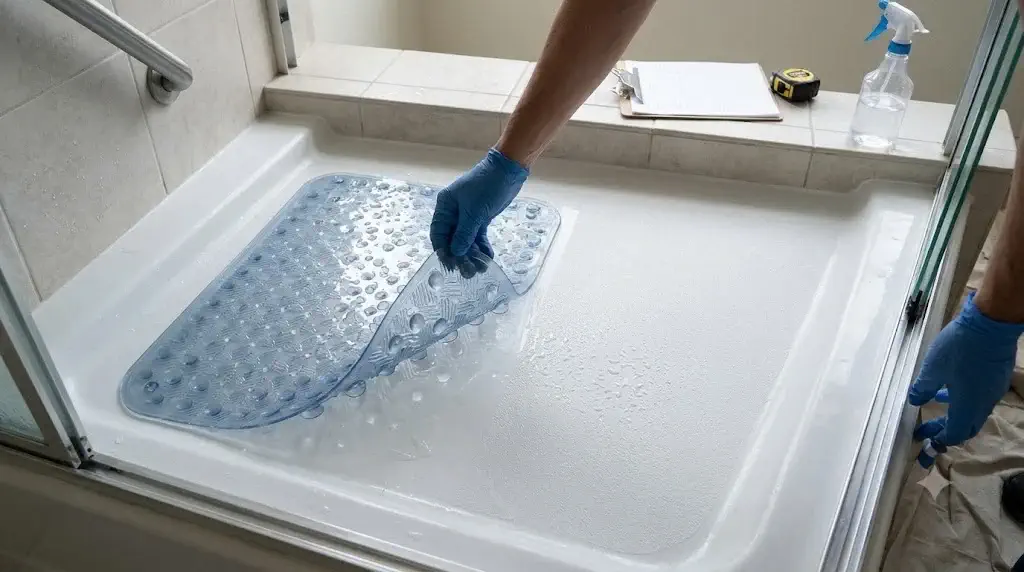
Heavy-Duty Suction Mats vs. Permanent Non-Skid Coatings
Executive Engineering Summary: Traction Device Comparison
Weighing heavy duty suction mats vs permanent non skid coatings is a critical decision in residential fall prevention and geriatric home modification. While heavy-duty vinyl mats provide quick, zero-labor slip resistance on ultra-smooth acrylic bathtubs, their dependence on mechanical vacuum cups introduces high failure rates on textured tile and creates dangerous edge-curling trip hazards. Permanent aggregate coatings chemically bond to the floor substrate, delivering continuous 0.60+ DCOF wet traction without bacterial harboring or raised transition lips.
- Vacuum Cavitation Failure: Suction-backed mats fail catastrophically on slate, stone, or tile grout lines because air bypasses the cup seals, eliminating lateral shear resistance under moving foot loads.
- Frail Gait Trip Edge Dynamics: Curling vinyl edges create an abrupt vertical lip up to 3/8-inch high, catching shuffling toes and directly violating ADA zero-threshold standards.
- Biofilm Colonization: The warm, dark underside of bath mats harbors rapid colonies of Serratia marcescens and Pseudomonas aeruginosa, turning the bottom of the tub into a slick microbial biofilm.
- Comprehensive Slip Defense: Floor friction is only one component of aging in place; pair floor treatments with non-skid shower upgrades to build a complete fall-prevention barrier.
Quick Reference Specification: Heavy Duty Suction Mats vs Permanent Non Skid Coatings
The heavy duty suction mats vs permanent non skid coatings benchmark compares friction levels, physical trip risks, chemical resistance, and long-term maintenance costs. The engineering matrix below contrasts their performance across wet shower parameters:
| Engineering Parameter | Heavy-Duty Suction Bath Mat (TPE/PVC) | Permanent Non-Skid Aggregate Coating | Geriatric Fall Prevention Impact |
|---|---|---|---|
| Wet Dynamic Friction (DCOF) | 0.45 to 0.52 (on top textured mat surface) | 0.62 to 0.75 (Embedded silica/glass beads) | Coatings exceed ANSI A326.3 wet barefoot standards |
| Substrate Shear Stability | Volatile; slides on textured tile or grout | Permanent 100% molecular/chemical bond | Mat dislodgement causes sudden lateral slips |
| Trip Hazard Profile | High (1/4″ to 3/8″ curled lip edge) | Zero (Seamless < 0.05″ micro-aggregate) | Coatings prevent tripping for seniors with shuffling gaits |
| Biofilm & Bacterial Growth | Rapid fungal/mold harboring under suction cups | Inhibited; seamless non-porous finish | Underside mold turns mat backs into slip hazards |
| Substrate Compatibility | Smooth enameled cast iron & acrylic only | Fiberglass, acrylic, porcelain, stone, cast iron | Coatings cover all common bathroom floor substrates |
| Cleaning & Maintenance | Must be lifted, hung, and bleached weekly | Cleaned normally with non-abrasive soap sprays | Daily mat removal is difficult for seniors with limited mobility |
| 5-Year Cost of Ownership | $120 – $200 (Replaced every 6 to 12 months) | $45 – $120 (Single DIY or pro application) | Permanent coatings provide superior long-term value |
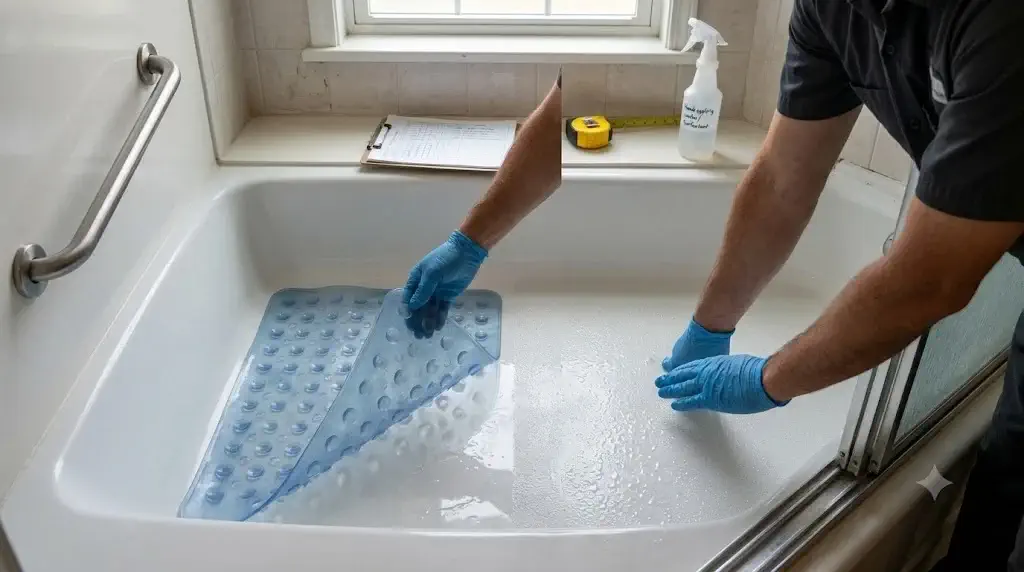
Direct surface comparison: a removable vinyl suction bath mat showing edge lift versus a seamless transparent aggregate non-skid coating on a shower floor.
Atmospheric Vacuum Suction Cups Require Mirror-Smooth Substrates to Maintain Sealing
Suction cup adhesion depends on Boyle’s Law of gas pressure. When an individual steps down onto a bath mat, air and water are forced out from beneath the flexible cup concave cup profile. The elastomer edges reform an airtight perimeter seal, creating a low-pressure vacuum chamber inside that holds the mat firmly against the higher ambient atmospheric pressure of the bathroom.
In real-world showers, this vacuum seal fails predictably over time:
- Substrate Surface Irregularity: The moment a suction cup bridges an uneven tile surface, grout line, or textured fiberglass slip-pattern, atmospheric air leaks into the vacuum chamber. Without pressure differentials, suction drops to zero, and the cup detaches completely.
- Surfactant Fluid Infiltration: Soaps, shampoos, and bath oils contain surfactant molecules that break water surface tension. When soapy water washes under the mat, it lubricates the contact perimeter, allowing the mat to hydroplane sideways under lateral foot forces.
- Polymer Hardening Under Hot Water: Hot water cycles leach phthalates and plasticizers out of PVC and vinyl mats. As the elastomer cups stiffen and lose flexibility, they can no longer compress flat or maintain airtight perimeter seals.
This mechanical failure mode mirrors the safety risks documented in our engineering analysis of suction vs screw-in safety, proving that suction seals are inherently unreliable in wet bathing zones.
Perimeter Edge Curling Creates Abrupt Vertical Lips That Cause Fall Accidents
Physical therapists identify transition obstacles as one of the most common environmental triggers for in-home falls. Healthy young adults lift their feet several inches when walking, easily clearing small bathroom thresholds. By contrast, older adults experiencing arthritis, post-stroke weakness, Parkinsonian tremors, or fear-of-falling gait modifications often shuffle their feet, clearing the floor by less than 1/4 inch.
Removable bath mats introduce severe perimeter hazards:
- Differential Heat Warping: Continuous exposure to hot shower water causes the top surface of vinyl mats to expand faster than the cooler suction-cup underside, producing permanent upward edge curl.
- Trip Edge Formation: A curled mat edge creates an unyielding 3/8-inch vertical obstruction across the center of the tub or shower entrance.
- Toe Catch Dynamics: When a shuffling foot catches under this lip, the senior’s momentum pivots their center of mass forward over an unanchored, moving obstacle, resulting in severe fall impact against tub walls or fixtures.
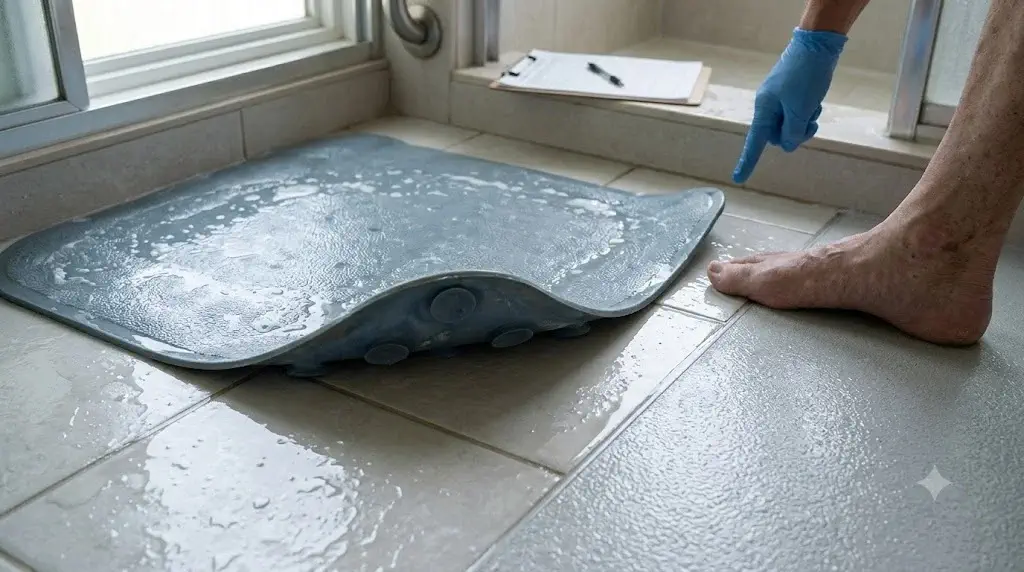
Trip hazard in detail: a curled vinyl suction mat creating an abrupt vertical barrier that snags shuffling feet during shower transfers.
Anaerobic Moisture Traps Harbor Dangerous Pink Mold and Pseudomonas Biofilms
The underside of a suction bath mat creates an ideal breeding ground for microbial growth. Each individual suction cup acts as a stagnant reservoir, trapping body oils, exfoliated skin flakes, soap residue, and warm water. Deprived of airflow and light, this environment allows rapid microbial colonization within 48 to 72 hours of installation.
Two dominant bacterial strains form heavy colonies beneath neglected mats:
- Serratia marcescens (Pink Mold): An opportunistic airborne bacterium that feeds on fatty deposits from soap and shampoo. It forms a slick, gelatinous pink film that destroys the mechanical friction between the suction cups and the tub surface.
- Pseudomonas aeruginosa: A resilient pathogen that secretes extracellular polymeric substances (EPS) to form tough slime coats. These biofilms present direct infection risks for seniors with minor foot abrasions or diabetic foot ulcers.
Preventing this slippery microbial film requires bathers to peel up the mat, wash it with dilute chlorine bleach, and hang it to dry after every single shower—a demanding chore that is unrealistic for seniors with limited balance, chronic back pain, or impaired dexterity.
Permanent Polymer Coatings Anchor Suspended Micro-Aggregates Directly into Floor Enamels
Permanent non-skid treatments eliminate both suction-cup hydroplaning and trip-inducing edges by chemically integrating traction directly onto the floor substrate. Modern anti-slip systems fall into two main chemical categories: cross-linked topical resin coatings and microscopic chemical etching treatments.
Topical coatings use clear, two-part polyurethane or water-based acrylic-epoxy resins infused with rounded, transparent aggregate particles (such as micronized glass spheres, synthetic silica, or aluminum oxide). When cured onto cast iron, acrylic, fiberglass, or porcelain, this matrix creates a textured surface that scores 0.62 to 0.75 DCOF under BOT-3000E testing, fully satisfying the shower floor friction ratings dynamic coefficient of friction standard for Category D wet barefoot environments
Because the coating adds less than 0.05 inches of thickness, it forms a seamless, zero-threshold finish that cannot catch shuffling feet or roll out of place. Furthermore, because water drains naturally off the open surface, there are no trapped cavities to harbor mold or bacterial biofilms.
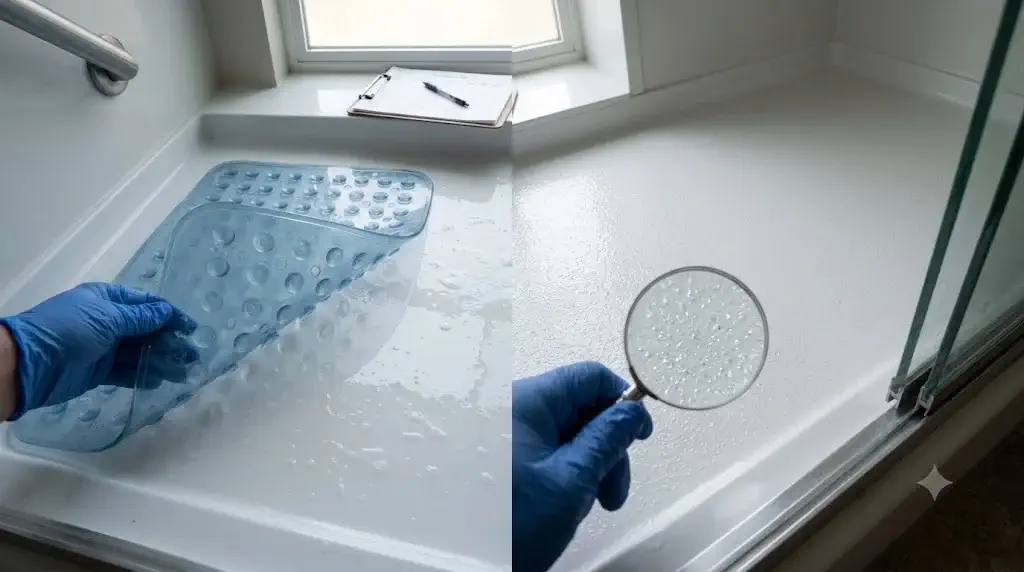
Micro-texture profile: magnified view of clear suspended silica aggregate embedded in an acrylic shower floor, delivering barefoot grip without trapped moisture.
Lifecycle Financial Analyses Favor Permanent Coatings Over Repeated Mat Replacements
While a heavy-duty vinyl suction mat appears inexpensive with a low upfront price tag of $15 to $35, its short operational lifespan creates recurring expenses. Due to plasticizer degradation, edge warping, and stubborn mold staining, safety guidelines recommend replacing vinyl mats every 6 to 12 months. Over a 5-year aging-in-place span, replacement costs regularly total $150 to $200, alongside the ongoing chore of cleaning underneath the mat.
In contrast, a high-grade DIY permanent non-skid coating kit costs between $45 and $85, while professional refinishing ranges from $150 to $300. Once applied and allowed to cure for 24 to 48 hours, these cross-linked resin surfaces remain durable for 3 to 7 years with ordinary bathroom cleaning sprays, delivering a superior return on investment alongside safer, worry-free traction.
Comparative Hardware Trade-Offs Detail Distinct Application Strengths
Selecting between temporary suction equipment and permanent chemical coatings requires weighing immediate usability against long-term fall risks:
- Zero installation time; ready to use immediately out of the packaging.
- Inexpensive upfront retail purchase price ($15 – $35).
- Fully portable for travel, temporary rentals, or short-term rehab.
- Critical Flaw: Can slide abruptly on textured surfaces and grout joints.
- Fall Risk: Curled edges catch the toes of shuffling seniors.
- Sanitation: Traps water and forms slimy mold underneath.
- Delivers continuous high friction (0.62–0.75 DCOF) across the entire floor.
- Seamless, flat profile eliminates edge-curling trip hazards.
- Bonds directly to fiberglass, acrylic, tile, and enameled steel.
- Zero trapped water cavities, preventing bacterial biofilm build-up.
- Cleans easily using standard non-abrasive bathroom cleaners.
- Trade-off: Requires thorough surface prep and 24 to 48 hours of curing time.
Frequently Asked Questions About Shower Traction Hardware
Why do heavy-duty suction mats slide on textured shower floors?
The heavy duty suction mats vs permanent non skid coatings dynamic centers on vacuum integrity. Suction cups require perfectly flat, non-porous surfaces to keep their airtight seals. When applied to textured floors, slip-resistant patterns, or tile grout lines, air and soapy water leak beneath the cup perimeter. This breaks the vacuum seal, allowing the mat to slide sideways under foot pressure.
Are suction bath mats considered a trip hazard for seniors?
Yes. Physical therapy fall audits classify suction bath mats as common in-home trip hazards. As hot water leaches plasticizers out of the vinyl over time, the edges begin to curl upward. This curled border creates an abrupt 1/4-inch to 3/8-inch vertical obstacle that easily catches the toes of seniors with shuffling gait patterns.
How does a permanent non-skid coating maintain DCOF slip resistance?
Permanent anti-slip coatings incorporate suspended aggregate particles (such as silica, synthetic grit, or rounded glass beads) within a clear resin base. These micro-asperities pierce through soapy water films, providing consistent 0.62 to 0.75 DCOF traction across the floor without relying on vacuum cups or introducing raised tripping edges.
Can permanent non-skid coatings damage fiberglass or acrylic shower tubs?
When you use water-based polyurethane or acrylic coatings formulated specifically for bathtubs, permanent coatings will not harm acrylic or fiberglass finishes. However, avoid harsh industrial, solvent-heavy epoxies designed for concrete floors, as their chemical solvents can soften or discolor delicate acrylic shower pans.
