
What Are the Most Common Healthy Eating Mistakes After 50?
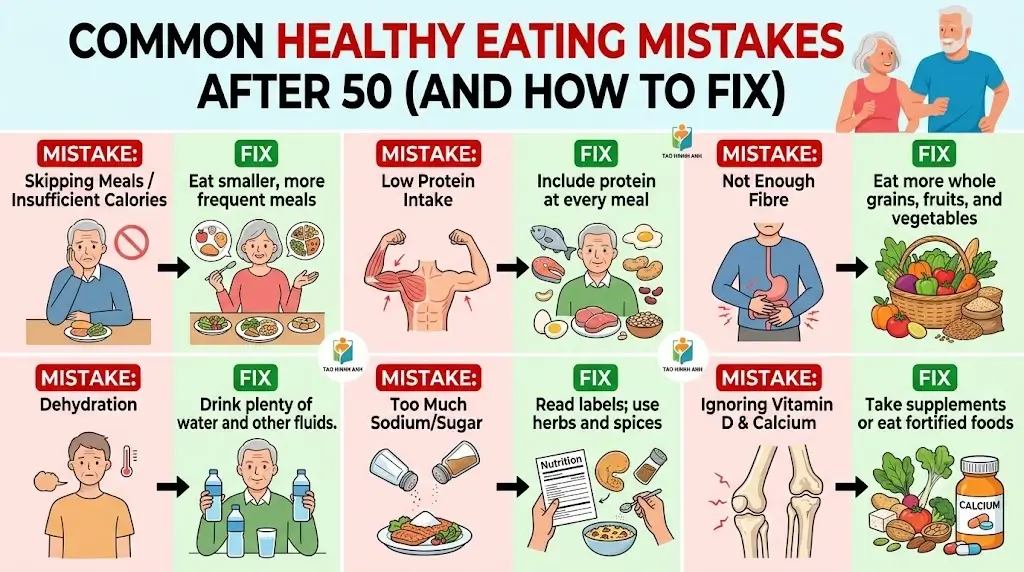
| Mistake | Better approach |
|---|---|
| Eating fewer calories without improving food quality | Prioritize nutrient-dense foods |
| Not eating enough protein | Include a protein food regularly throughout the day |
| Eating too few vegetables and fruits | Add produce to meals and snacks |
| Choosing mostly refined grains | Make more grains whole grains |
| Ignoring fiber | Include vegetables, fruits, legumes, whole grains, nuts, and seeds |
| Drinking too little | Build fluids into daily routines |
| Relying heavily on packaged convenience foods | Compare sodium, added sugar, saturated fat, and nutrient content |
| Following overly restrictive diets | Choose a balanced pattern that is realistic to maintain |
| Ignoring appetite or chewing problems | Adapt food texture, preparation, and meal frequency |
| Trying to change everything at once | Make a few repeatable food shifts |
Editorial Notice: AgingWellGuide provides evidence-aligned health and nutrition information. Our guides are grounded in clinical guidelines from the National Institute on Aging (NIA) and USDA. This content is for educational purposes and does not replace individualized medical advice.
Why Can Healthy Eating Become More Important After 50?
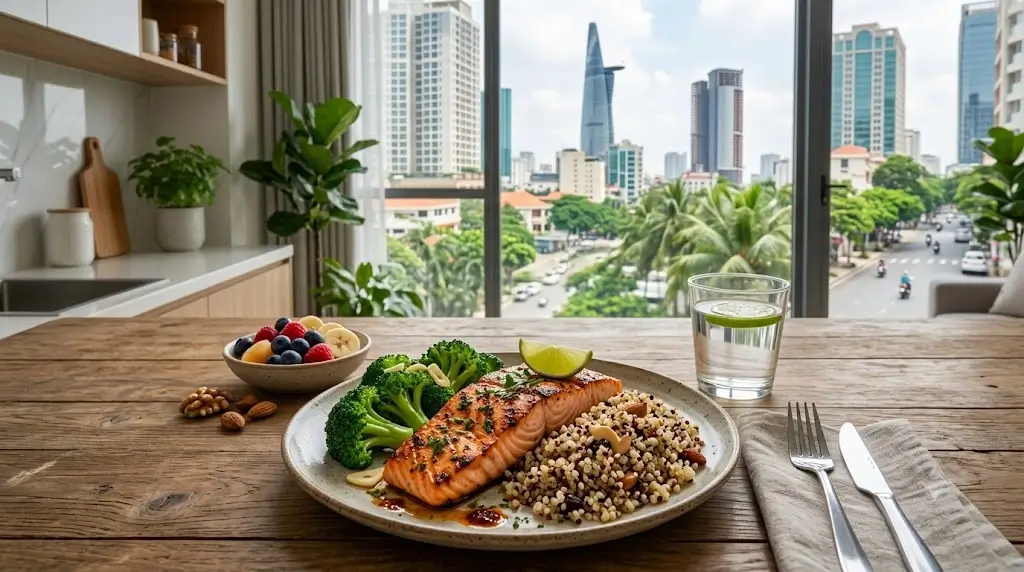
Healthy eating matters at every age, but the relationship between calories and nutrients can change as people get older.
MedlinePlus notes that some older adults may need fewer calories while still needing enough nutrients, and some may need more protein.
That makes food quality increasingly important. A smaller calorie budget can make it easier to fall short on important nutrients if meals consist mostly of foods that provide calories without much nutritional value.
NIA describes this as the importance of choosing nutrient-dense foods that provide substantial nutrition without excessive calories.
Is Eating Too Little a Healthy Eating Strategy After 50?
Not necessarily. Simply cutting food intake can create a problem if it also reduces protein, fiber, vitamins, minerals, or other nutrients.
Some people intentionally eat very small meals because they are concerned about weight. Others may unintentionally eat less because appetite, mobility, chewing, taste, or access to food has changed.
NIA notes that unintentional weight loss can occur when appetite decreases, shopping becomes difficult, or chewing and swallowing become challenging.
A better question than “How little can I eat?” is:
“How can I make the food I do eat more nutritious?”
What Is the Mistake of Focusing Only on Calories?
Calories matter, but calories alone do not describe the nutritional quality of a food.
Two foods can contain similar calories while providing very different amounts of protein, fiber, vitamins, minerals, and other nutrients.
For older adults, NIA recommends emphasizing nutrient-dense foods across the major food groups rather than focusing only on calorie totals.
A more useful comparison is:
| Instead of asking… | Also ask… |
|---|---|
| How many calories? | What nutrients does this provide? |
| Is this low-fat? | What are the protein, fiber, sodium, and added-sugar levels? |
| Is this low-carb? | What foods am I replacing? |
| Is this diet restrictive? | Can I meet my nutritional needs on it? |
Is Not Eating Enough Protein a Common Mistake After 50?

It can be. Protein becomes particularly important to pay attention to because some older adults may need more protein while their overall calorie needs may decrease.
A practical approach is to include a protein food at regular meals rather than trying to make up for a low-protein day at dinner.
Examples include:
- Fish and seafood
- Eggs
- Chicken or turkey
- Lean meats
- Greek yogurt and other dairy foods
- Fortified soy foods
- Beans and lentils
- Tofu
- Nuts and seeds
NIA specifically recommends foods such as seafood, dairy or fortified soy products, beans, peas, and lentils as ways to include protein throughout the day. To learn how to select and prepare these foods efficiently, see our practical guide on how to get more protein from everyday foods.
Clinical Renal Caution: While adequate protein prevents sarcopenia, older adults with Chronic Kidney Disease (CKD) or reduced kidney function must consult their nephrologist or renal dietitian before increasing protein intake to avoid excess filtration burden.
Is Skipping Protein at Breakfast a Problem?
Breakfast does not have to be a high-protein meal, but routinely eating a breakfast made almost entirely of refined carbohydrates can make it harder to distribute protein across the day.
Instead of relying only on toast, sweet cereal, pastries, or juice, consider combinations such as:
- Eggs + whole-grain toast + fruit
- Greek yogurt + berries + oats
- Oatmeal + milk or fortified soy beverage + nuts
- Whole-grain toast + peanut butter + fruit
- Vegetable omelet + whole-grain toast
The point is not to eliminate familiar breakfast foods. It is to make the meal more nutritionally complete. For quick, senior-friendly breakfast ideas, check out our guide to healthy breakfast ideas for older adults.
Is Eating Too Few Vegetables and Fruits a Common Mistake?
Yes. Vegetables and fruits provide fiber, vitamins, minerals, and other beneficial compounds while contributing relatively few calories.
NIA recommends variety across vegetables and fruits and encourages adding sliced or chopped produce to meals and snacks.
Easy additions include:
- Berries with breakfast
- Fruit with lunch
- Frozen vegetables with dinner
- Leafy greens in sandwiches
- Beans and vegetables in soups
- Cut vegetables with hummus
- Fruit and nuts as a snack
Frozen and pre-cut produce can be especially useful when shopping, chopping, or food preparation is difficult.
Is Avoiding All Carbohydrates a Healthy Strategy After 50?
No. Carbohydrates are found in nutrient-rich foods such as fruits, vegetables, whole grains, beans, and dairy foods as well as in refined foods and added sugars.
The more useful distinction is between different carbohydrate-containing foods rather than treating all carbohydrates as the same.
| Choose more often | Limit more often |
|---|---|
| Vegetables | Sugary drinks |
| Whole fruit | Candy |
| Beans and lentils | Highly refined sweets |
| Oatmeal | Pastries |
| Whole-grain bread | Refined snack foods |
| Brown rice and other whole grains | Large amounts of refined grains |
NIA recommends that at least half of grain foods be whole grains and notes that whole grains provide fiber and other nutrients.
Is Ignoring Fiber a Common Healthy Eating Mistake?
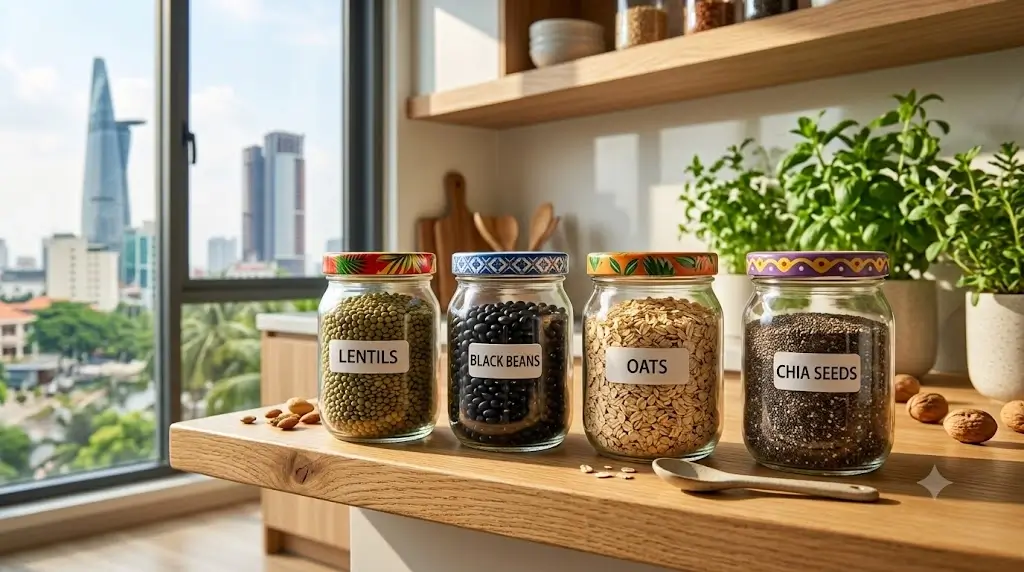
Yes. Fiber can become easy to overlook when meals are built mainly around meat, refined grains, dairy, and packaged foods.
Good everyday sources include:
- Beans
- Lentils
- Vegetables
- Whole fruits
- Whole grains
- Nuts
- Seeds
NIA notes that many older adults do not consume recommended amounts of dietary fiber.
Rather than relying on one high-fiber food, build several sources into the normal diet. For a step-by-step roadmap to increasing intake comfortably, see How to Add More Fiber to Your Diet After 50.
Is Drinking Too Little Water a Common Mistake After 50?
It can be. Some people experience a reduced sense of thirst as they age, which can make it easier to drink too little. Certain medications can also affect fluid needs.
Practical habits include:
- Keep water within reach.
- Drink with meals.
- Carry a reusable bottle.
- Drink regularly instead of relying entirely on thirst.
- Choose water more often than sugary drinks.
Clinical Fluid Restriction Caution: While hydration is critical, individuals with congestive heart failure (CHF), end-stage renal disease, or severe hyponatremia must follow the specific daily fluid volume prescribed by their medical team rather than forcing extra liquids.
For practical strategies focused specifically on making hydration easier, see Easy Ways to Drink More Water After 50.
Is “Low-Fat” Automatically a Healthier Choice?
No. “Low-fat” describes one characteristic of a food; it does not automatically describe the entire nutritional profile.
NIA specifically cautions that some foods labeled low-fat can be high in added sugar.
When comparing products, look beyond the front-of-package claim. Check:
- Added sugars
- Saturated fat
- Sodium
- Protein
- Fiber
- Serving size
- Ingredient list
NIA recommends reading the Nutrition Facts label as a whole rather than judging a food from one nutrient or marketing claim.
Is Eating Too Much Processed Food a Common Mistake?
It can be when packaged foods gradually displace more nutrient-dense choices.
Convenience foods are not automatically unhealthy. Frozen vegetables, canned beans, whole-grain packaged foods, yogurt, canned fish, and other convenient foods can fit into a healthy eating pattern.
The issue is what the overall pattern looks like.
MedlinePlus recommends limiting foods that provide many calories with relatively few nutrients, such as chips, candy, baked goods, soda, and alcohol.
A practical approach is to improve the convenience-food choices rather than trying to eliminate all packaged food.
Is Eating Too Much Sodium a Common Mistake After 50?
It can be, particularly when meals rely heavily on processed, packaged, restaurant, or prepared foods.
NIA recommends reducing sodium and suggests using herbs and citrus such as lemon juice to add flavor.
Useful swaps include:
- Use herbs instead of automatically adding salt.
- Compare sodium levels on similar packaged foods.
- Choose lower-sodium versions when practical.
- Use beans with less sodium when available.
- Rinse canned foods when appropriate.
- Use lemon, garlic, herbs, spices, or vinegar for flavor.
The objective is not bland food. It is to build flavor without depending entirely on salt.
Is Avoiding All Fat a Healthy Eating Mistake?
Yes, if it results in eliminating foods containing beneficial unsaturated fats.
Fat is an important part of a balanced diet, and NIA identifies oils and foods containing unsaturated fats as part of healthy eating patterns.
Examples include:
- Olive or canola oil
- Avocados
- Nuts
- Seeds
- Fatty fish
The practical goal is to pay attention to the type and amount of fat rather than treating all dietary fat as undesirable.
Is Skipping Meals a Good Way to Eat Less After 50?
Not automatically. Skipping meals can be particularly unhelpful if it causes you to miss protein, vegetables, fruit, whole grains, or other nutrient-dense foods.
Some people naturally prefer fewer meals, while others function better with regular meals and snacks. The important consideration is whether the overall pattern supplies enough nutrition.
NIA notes that healthy eating should provide the nutrients needed while fitting an individual’s calorie needs.
If appetite is low, smaller nutritious meals and snacks can sometimes be more practical than trying to eat three large meals.
Is Following a Very Restrictive Diet a Common Mistake?
It can be. A highly restrictive eating pattern may remove foods or food groups without adequately replacing the nutrients they provide.
NIA states that there is insufficient evidence to recommend calorie-restriction or fasting diets broadly, particularly regarding their effectiveness and safety in older adults.
If you are considering a major dietary change, especially because of a health condition or medication, discuss it with an appropriate healthcare professional.
A sustainable healthy eating pattern generally works better when it can be followed consistently and still provides adequate nutrition.
Is Eating the Same Foods Every Day a Problem?
It can reduce dietary variety.
Repeating a few convenient meals is not inherently unhealthy. However, a narrow diet can make it harder to obtain the broad range of nutrients supplied by different food groups.
NIA recommends eating a variety of foods across and within the food groups.
Instead of completely changing your menu, rotate:
- Different vegetables
- Different fruits
- Different protein foods
- Different whole grains
- Different nuts and seeds
- Different dairy or fortified alternatives
Can Eating Alone Affect Healthy Eating After 50?
Yes, for some people. Eating alone can reduce motivation to cook and can make meals feel less important.
NIA identifies eating alone as one of the roadblocks some older adults experience and suggests social meals or cooking with others as potential solutions.
Practical options include:
- Cook a larger batch and portion leftovers.
- Share a meal with family or friends.
- Plan one social meal each week.
- Use simple meals that still feel enjoyable.
- Keep several convenient nutritious foods available.
The objective is to make healthy eating easier and more appealing, not to make every meal elaborate. For single-person kitchen strategies, explore our guide to healthy meal planning for one person.
Is Ignoring Chewing or Swallowing Difficulty a Mistake?

Yes. If food becomes difficult or uncomfortable to chew or swallow, simply telling yourself to “eat healthier” does not solve the underlying barrier.
MedlinePlus identifies chewing and swallowing difficulties as factors that can make healthy eating harder for older adults.
Dysphagia Safety Guidance: Swallowing problems require clinical evaluation. If you or a loved one experiences coughing or choking while eating, consult a physician or speech-language pathologist for personalized food texture recommendations (such as IDDSI levels) to reduce aspiration risk.
Potentially easier foods can include:
- Soft cooked vegetables
- Oatmeal
- Yogurt
- Eggs
- Soups
- Soft beans and lentils
- Soft cooked fish
- Fruit prepared in an appropriate texture
Persistent swallowing difficulty should be discussed with a healthcare professional rather than managed only by changing foods yourself.
Is Ignoring Appetite Changes a Healthy Eating Mistake?
Yes. A persistent loss of appetite can make it difficult to consume enough nutrients.
Possible contributors include medications, changes in taste or smell, dental problems, illness, mood, or other health issues. NIA and MedlinePlus both identify these types of barriers.
Practical food strategies can include:
- Smaller meals more frequently
- Nutritious snacks
- More appealing flavors and textures
- Easy-to-prepare foods
- Eating socially when possible
A persistent or unexplained appetite change deserves medical attention rather than simply forcing yourself to eat.
Is Making Healthy Eating Too Complicated a Mistake?
Yes. A complicated diet can fail even when the nutritional theory behind it sounds good.
NIA recommends considering preparation time, budget, and practical roadblocks when planning meals.
A simpler system may be:
- Choose a protein food.
- Add a vegetable or fruit.
- Choose a whole grain or other fiber-rich food.
- Add a suitable source of healthy fat when appropriate.
- Choose water or another suitable beverage.
Repeat that basic structure with different foods rather than creating a completely new meal every day.
Is Trying to Eat Perfectly a Common Mistake?
Yes. Healthy eating does not require every meal to be perfect.
NIA’s guidance emphasizes an overall healthy eating pattern with variety and nutrient-dense foods, while also allowing occasional treats.
A sustainable approach leaves room for foods you enjoy while making nutrient-dense choices the foundation of most meals.
The useful question is not: “Did I eat perfectly today?”
It is: “Does my usual eating pattern provide the foods and nutrients I need?”
What Are the Biggest Healthy Eating Mistakes to Fix First?
If you recognize several mistakes, do not try to correct all of them simultaneously.
| Priority | Start with | Simple change |
|---|---|---|
| 1 | Inadequate overall nutrition | Make meals more nutrient-dense |
| 2 | Low protein intake | Add a protein food to regular meals |
| 3 | Low produce intake | Add one fruit or vegetable to an existing meal |
| 4 | Low fiber intake | Choose more legumes and whole grains |
| 5 | Low fluid intake | Keep water visible and drink with meals |
| 6 | High sodium or added sugar | Compare labels and make simple substitutions |
| 7 | Overly complicated eating plan | Simplify the meal routine |
How Can You Turn These Mistakes Into Simple Habits?
| If you currently… | Try instead… |
|---|---|
| Skip breakfast or eat a very small breakfast | Add a protein-rich food and fruit |
| Eat mostly white bread or white rice | Replace some choices with whole grains |
| Rarely eat beans | Add beans or lentils to one meal each week, then increase gradually |
| Drink mostly sweetened beverages | Choose water more often |
| Eat few vegetables | Add frozen or pre-cut vegetables |
| Rely heavily on packaged foods | Compare labels and add fresh, frozen, or minimally processed foods |
| Follow rigid diet rules | Focus on a sustainable overall pattern |
| Find cooking difficult | Use simple meals and convenient nutritious ingredients |
How Can You Build a Better Eating Pattern After 50?
Start with the foods that form the foundation of your meals.
- Vegetables: include different colors and types.
- Fruits: favor whole fruit regularly.
- Whole grains: make at least half of grain choices whole grains.
- Protein foods: include seafood, poultry, eggs, beans, lentils, dairy, fortified soy foods, nuts, or seeds as appropriate.
- Dairy or fortified alternatives: choose nutrient-rich options that fit your needs.
- Healthy fats: include sources such as nuts, seeds, avocados, and plant oils.
- Fluids: drink regularly and avoid relying entirely on thirst.
These principles align with NIA and USDA guidance for healthy eating as people age. For a broader framework covering the overall eating pattern, see Healthy Eating After 50: Complete Guide.
Healthy Eating Mistake Checklist
- ☐ Am I getting enough nutritious food rather than simply eating fewer calories?
- ☐ Do my regular meals contain a protein food?
- ☐ Do I eat vegetables and fruits regularly?
- ☐ Do I choose whole grains often enough?
- ☐ Do I get fiber from several food sources?
- ☐ Do I drink enough fluids for my individual needs?
- ☐ Do I rely heavily on sugary drinks or highly processed snacks?
- ☐ Do I check sodium, added sugar, saturated fat, protein, and fiber on food labels?
- ☐ Am I unnecessarily avoiding entire food groups?
- ☐ Is my eating plan realistic for my budget and energy level?
- ☐ Can I comfortably chew and swallow the foods I am choosing?
- ☐ Has my appetite changed noticeably?
- ☐ Am I trying to make every meal perfect?
Frequently Asked Questions
What is the biggest healthy eating mistake after 50?
There is no single mistake that applies to everyone. A common problem is focusing on eating less without paying enough attention to nutrient density, protein, fiber, fluids, and overall dietary variety.
Do you need fewer calories after 50?
Some people may need fewer calories as they age, but calorie needs vary. The important point is that fewer calories should not mean fewer nutrients.
Should older adults eat more protein?
Some older adults may need more protein, but individual needs vary. Including protein foods regularly throughout the day is a practical starting point.
Is skipping meals bad after 50?
Not automatically. The important consideration is whether the overall eating pattern provides adequate nutrition. Skipping meals can become a problem if it consistently leads to inadequate food or nutrient intake.
Should you avoid carbohydrates after 50?
No. Choose carbohydrate-rich foods based on their overall nutritional value. Vegetables, fruits, legumes, and whole grains can all be part of a healthy eating pattern.
Should you avoid all fat after 50?
No. The type and amount of fat matter. Unsaturated fats from foods such as nuts, seeds, avocados, fish, and plant oils can fit into a healthy eating pattern.
Is low-fat food always healthier?
No. A low-fat label does not describe the food’s entire nutritional profile. Some low-fat products can contain substantial added sugar. Read the Nutrition Facts label and ingredient list.
How much fiber should older adults eat?
Fiber needs vary, but many older adults do not consume recommended amounts. Good sources include vegetables, fruits, legumes, whole grains, nuts, and seeds.
Why is hydration important after 50?
Some older adults experience less thirst, making it easier to drink too little. Regular fluid intake can therefore be useful. Individual needs vary, especially when medications or health conditions affect fluid balance.
Should you follow a fasting or calorie-restriction diet after 50?
Do not assume that a restrictive eating pattern is appropriate simply because it is popular. NIA states that there is insufficient evidence to recommend calorie-restriction or fasting diets broadly, particularly regarding effectiveness and safety in older adults.
What if you have trouble chewing healthy foods?
Adapt the texture and preparation method rather than abandoning nutritious foods. Soft cooked vegetables, soups, yogurt, eggs, beans, and other appropriately textured foods may be easier to eat. Persistent chewing or swallowing problems should be discussed with a healthcare professional.
What if you have little appetite?
Try smaller nutritious meals or snacks and make food more appealing through variety, flavor, color, and texture. A persistent or unexplained loss of appetite should be discussed with a healthcare professional.
The Bottom Line
Healthy eating after 50 is less about following a perfect diet and more about avoiding patterns that gradually reduce nutritional quality.
The biggest improvements usually come from practical changes:
- Choose nutrient-dense foods instead of focusing only on calories.
- Include protein regularly.
- Eat a variety of vegetables and fruits.
- Choose whole grains more often.
- Include fiber-rich foods.
- Drink fluids regularly.
- Watch sodium, added sugar, and saturated fat.
- Do not unnecessarily eliminate entire food groups.
- Adapt meals when cooking, chewing, appetite, or mobility becomes a barrier.
- Build a routine you can actually maintain.
The best eating pattern is not the most restrictive one. It is the one that consistently provides the nutrients you need while fitting your health needs, preferences, budget, and daily life.
Editorial Methodology
This guide uses an evidence-first approach based primarily on guidance from the National Institute on Aging, MedlinePlus, and USDA MyPlate. It focuses on broad healthy-eating patterns and practical barriers rather than prescribing a specific diet. Individual medical conditions, medications, dietary restrictions, and fluid or nutrient requirements can change what is appropriate for a particular person.
Sources
- National Institute on Aging (NIA) — Healthy Eating As You Age: Know Your Food Groups
- National Institute on Aging (NIA) — Healthy Meal Planning: Tips for Older Adults
- National Institute on Aging (NIA) — How Much Should I Eat? Quantity and Quality
- National Institute on Aging (NIA) — Overcoming Roadblocks to Healthy Eating
- National Institute on Aging (NIA) — How To Read Food and Beverage Labels
- National Institute on Aging (NIA) — Maintaining a Healthy Weight
- National Institute on Aging (NIA) — Calorie Restriction and Fasting Diets
- MedlinePlus — Nutrition for Older Adults
- USDA MyPlate — Healthy Eating for Older Adults
Editorial standard: AgingWellGuide independently develops healthy eating resources tailored specifically to adults aged 50 and older. We prioritize whole-food nutrition, effortless kitchen workflows, and clinical safety considerations.
