
Quick Answer
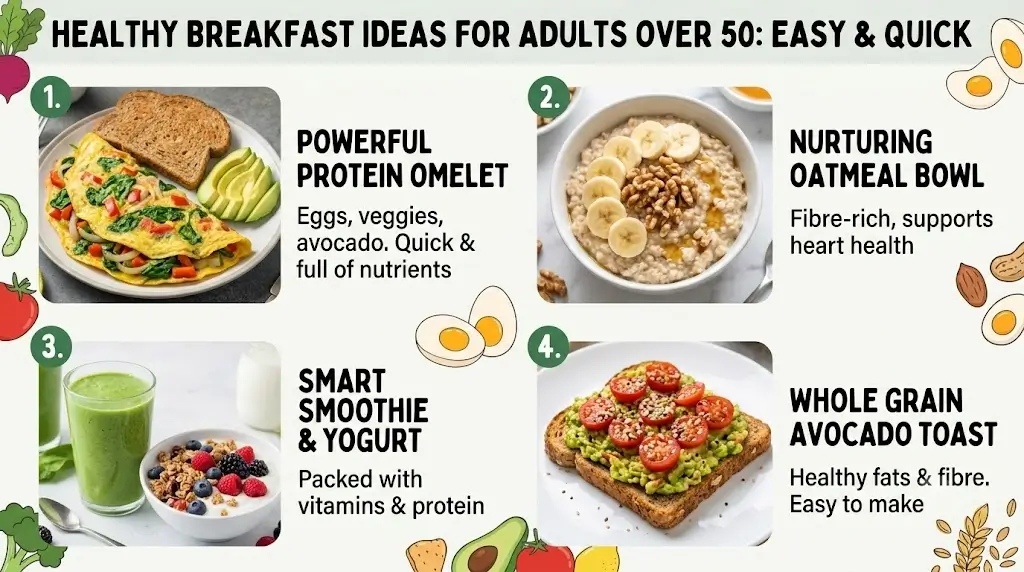
A simple healthy breakfast after 50 can follow this formula:
Protein food + fruit or vegetables + whole grain or another nutrient-dense carbohydrate.
Good combinations include:
- Greek yogurt + berries + nuts
- Eggs + spinach + whole-grain toast
- Oatmeal + milk + banana + nuts
- Cottage cheese + fruit + whole-grain toast
- Vegetable omelet + whole-grain toast
- Whole-grain toast + nut butter + banana
- Smoothie with yogurt, fruit, spinach, and milk or a fortified alternative
- Overnight oats + yogurt + berries
The exact portion should reflect individual appetite, energy needs, activity level, and overall diet. There is no single breakfast size that is appropriate for every adult over 50.
Editorial Notice: AgingWellGuide provides evidence-aligned health and nutrition information. Our guides are grounded in clinical guidelines from the National Institute on Aging (NIA) and USDA. This content is for educational purposes and does not replace individualized medical advice.
What Makes a Breakfast Healthy After 50?
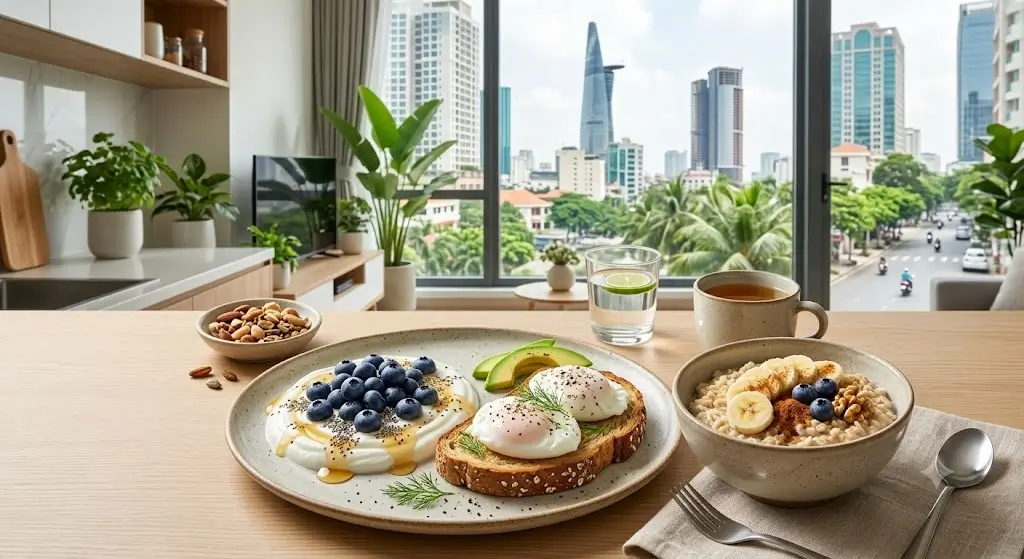
A healthy breakfast does not require a special “over-50” food. Instead, it should contribute useful nutrients to the overall eating pattern.
Useful breakfast components include:
| Component | Examples | Why it can be useful |
|---|---|---|
| Protein | Eggs, Greek yogurt, cottage cheese, milk, tofu, beans | Helps make the meal more substantial and contributes protein |
| Fruit | Berries, banana, orange, apple, melon | Provides fiber and other nutrients |
| Vegetables | Spinach, tomatoes, peppers, mushrooms | Adds nutrients, fiber, and variety |
| Whole grains | Oatmeal, whole-grain toast, whole-grain cereal | Provides carbohydrates and can contribute fiber |
| Healthy fats | Nuts, seeds, nut butter, avocado | Adds flavor and energy |
| Beverage | Water, milk, unsweetened beverages | Supports the day’s fluid intake |
NIA recommends choosing a variety of nutrient-dense foods across vegetables, fruits, grains, protein foods, dairy or fortified alternatives, and oils.
What Are the Best Healthy Breakfast Ideas for Adults Over 50?
| Breakfast idea | Main strengths | Best for |
|---|---|---|
| Greek yogurt, berries, and nuts | Protein, fruit, fiber, healthy fats | Fast no-cook breakfast |
| Eggs, spinach, and whole-grain toast | Protein, vegetables, whole grains | Simple hot breakfast |
| Oatmeal with milk, banana, and nuts | Whole grains, fruit, protein, fiber | Warm breakfast |
| Vegetable omelet with whole-grain toast | Protein, vegetables, whole grains | Higher-protein breakfast |
| Cottage cheese and fruit | Protein and fruit | Minimal preparation |
| Whole-grain toast with nut butter and banana | Whole grains, fruit, protein-containing food | Quick breakfast |
| Yogurt and fruit smoothie | Protein, fruit, convenient preparation | People who prefer drinks |
| Overnight oats with yogurt and berries | Whole grains, protein, fruit | Make-ahead breakfast |
These combinations are based on the same food-group principles NIA uses in its sample menus and healthy meal-planning guidance.
What Is a Good High-Protein Breakfast After 50?

Choose a recognizable protein food and build the rest of breakfast around it.
Good options include:
- Eggs with vegetables and whole-grain toast
- Greek yogurt with berries and nuts
- Cottage cheese with fruit
- Oatmeal prepared with milk and topped with nuts
- Tofu scramble with vegetables
- Smoothie made with yogurt, fruit, and milk or a fortified alternative
Clinical Renal Caution: Older adults diagnosed with Chronic Kidney Disease (CKD) or reduced glomerular filtration should avoid sudden, excessive increases in dietary protein. Follow the precise daily protein targets prescribed by your nephrologist or renal dietitian.
What Are the Best Breakfast Foods for Fiber?
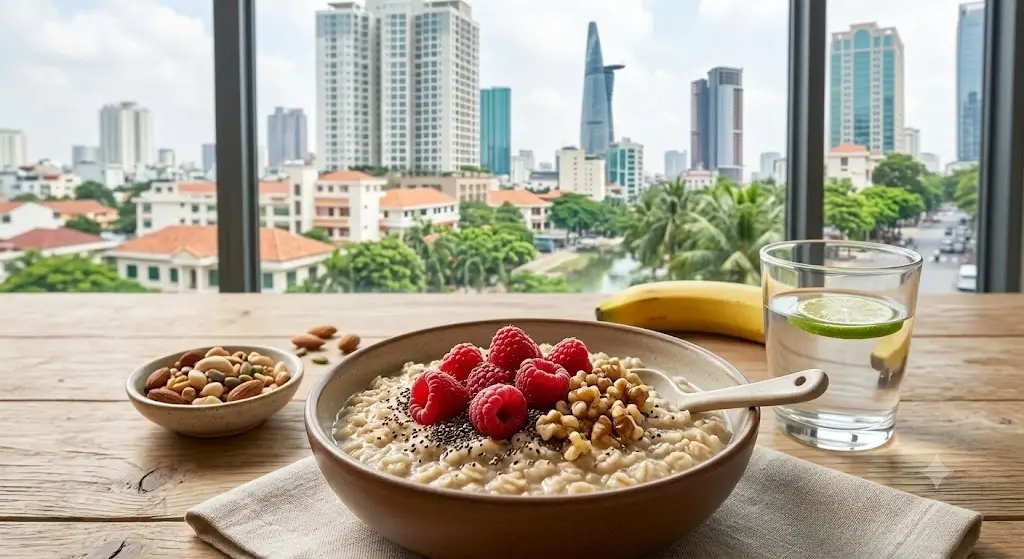
Breakfast can be an easy opportunity to include fiber-rich foods.
Useful choices include:
- Oatmeal
- Whole-grain bread
- Whole-grain cereal with limited added sugar
- Berries
- Apples and pears
- Bananas
- Nuts and seeds
- Chia or flax seeds
Combining several of these foods can make breakfast more filling while contributing fiber to the day’s diet. For a step-by-step roadmap to increasing roughage safely, see our comprehensive guide on how to add more fiber to your diet after 50.
Are Eggs a Healthy Breakfast for Adults Over 50?
Eggs can be a practical protein food for breakfast. They are inexpensive, versatile, and quick to prepare.
Instead of eating eggs alone, pair them with nutrient-dense foods such as:
- Spinach
- Tomatoes
- Peppers
- Whole-grain toast
- Fruit
- Potatoes or other appropriate carbohydrates
NIA includes eggs among the protein foods that can be part of a healthy eating pattern for older adults.
Is Oatmeal a Good Breakfast After 50?
Yes. Oatmeal can provide a useful whole-grain base for breakfast.
Instead of relying on sweetened oatmeal alone, build it into a more complete meal. Examples:
- Oatmeal + milk + berries + walnuts
- Oatmeal + banana + peanut butter
- Oatmeal + yogurt + berries
- Oatmeal + apple + cinnamon + nuts
At least half of the grains in a healthy eating pattern should generally be whole grains, according to NIA’s food-group guidance.
What Are Good Breakfast Ideas With Yogurt?
Yogurt is useful because it requires little preparation and can be combined with several other foods.
| Base | Add | Result |
|---|---|---|
| Greek yogurt | Berries + nuts | Simple protein-rich bowl |
| Plain yogurt | Banana + oatmeal | Soft breakfast bowl |
| Greek yogurt | Fruit + whole-grain cereal | Quick breakfast |
| Yogurt | Spinach + fruit | Smoothie base |
When purchasing flavored yogurt, compare the Nutrition Facts label for added sugars and protein.
What Are Easy No-Cook Breakfast Ideas for Older Adults?
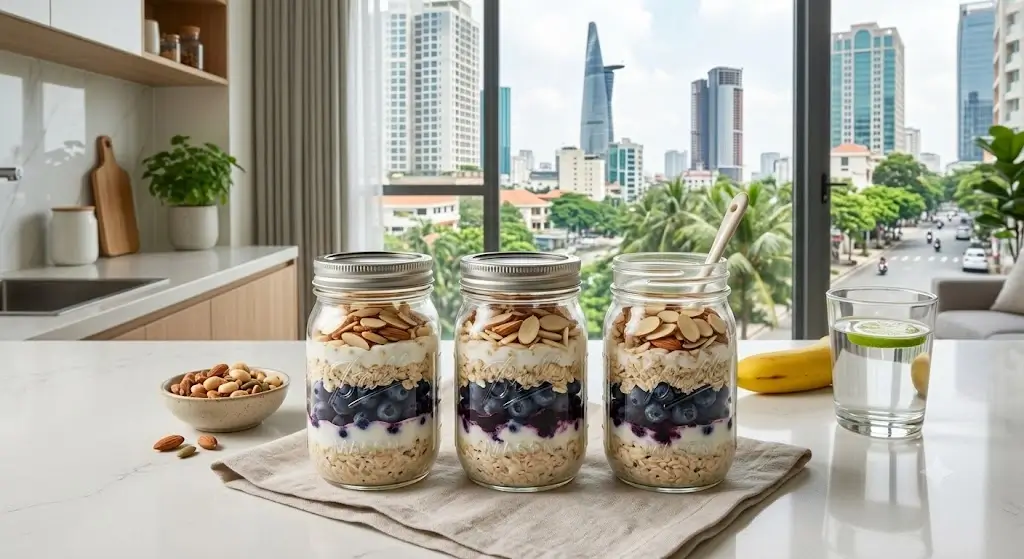
Not every healthy breakfast needs a stove.
Good no-cook combinations include:
- Greek yogurt + berries + nuts
- Cottage cheese + fruit
- Whole-grain toast + nut butter + banana
- Overnight oats + yogurt + berries
- Whole-grain cereal + milk + fruit
- Fruit + yogurt + nuts
No-cook meals can be especially useful on mornings when standing, chopping, or cooking feels physically demanding.
What Are Quick Breakfast Ideas That Take About Five Minutes?
NIA notes that some healthy meals can be prepared in as little as five minutes.
Practical options include:
- Greek yogurt bowl: yogurt + berries + nuts.
- Toast breakfast: whole-grain toast + nut butter + banana.
- Egg breakfast: prepared eggs + whole-grain toast + fruit.
- Oatmeal: quick oats + milk + banana + nuts.
- Cottage cheese bowl: cottage cheese + fruit + whole-grain toast.
The key is keeping the ingredients ready so breakfast requires assembly rather than extensive cooking.
What Are Good Make-Ahead Breakfast Ideas?
Make-ahead breakfasts can reduce morning decisions and preparation.
Useful options include:
- Overnight oats
- Hard-cooked eggs prepared ahead
- Portioned yogurt and fruit
- Prepared smoothie ingredients
- Pre-portioned oatmeal ingredients
- Breakfast egg cups with vegetables
To keep make-ahead breakfasts fresh and easy to grab, consider using ergonomic, lightweight glassware or plastic; see our tested picks for the best meal prep containers for older adults.
What Are Good Breakfast Ideas for Adults Over 50 Who Live Alone?
The best breakfasts for one person use ingredients that can be finished before they spoil.
Good choices include:
- Single-serving yogurt bowls
- Two-egg vegetable scramble
- Oatmeal with fruit and nuts
- Toast with nut butter and fruit
- Small smoothies
- Cottage cheese with fruit
Frozen berries, frozen vegetables, shelf-stable oats, eggs, and yogurt can make one-person breakfast planning easier because they provide flexibility without requiring a large amount of fresh food. For an organized weekly shopping and portioning strategy, review our guide to healthy meal planning for one person.
What Are Good Breakfast Ideas for Two Older Adults?
Breakfast for two can use a shared base with individually adjusted portions.
| Shared breakfast | Possible variation |
|---|---|
| Oatmeal | Different fruit or nut toppings |
| Eggs and vegetables | Different portions of toast or vegetables |
| Yogurt bowls | Different fruit and topping combinations |
| Smoothies | Different serving sizes |
| Whole-grain toast | Different spreads or toppings |
This approach keeps preparation shared while allowing each person to eat an amount appropriate for their appetite and overall needs.
What Are Good Breakfasts for a Small Appetite?
If a person has a small appetite, a very large breakfast may not be practical.
Smaller combinations can include:
- Greek yogurt + berries
- One egg + whole-grain toast
- Cottage cheese + fruit
- Small oatmeal + milk + nuts
- Half a sandwich + fruit
The goal should be nutrient density rather than simply increasing food volume. Persistent poor appetite or unintended weight changes warrant discussion with an appropriate healthcare professional rather than relying only on breakfast changes.
What Are Good Breakfasts for People With Limited Cooking Ability?
When cooking ability is limited, remove unnecessary physical steps.
Useful strategies include:
- Choose foods that require little chopping.
- Keep frequently used foods within easy reach.
- Use pre-cut fruit or vegetables when appropriate.
- Choose lightweight dishes and cookware.
- Use appliances that reduce active preparation.
- Keep no-cook backup breakfasts available.
NIA specifically recommends pre-cut produce when slicing and chopping are difficult and encourages people to consider preparation time when planning meals.
What Are Good Breakfasts for Chewing Difficulties?
Dysphagia Safety Guidance: Individuals experiencing swallowing difficulties (dysphagia) or chewing impairments should follow the specific food texture levels (such as pureed, minced, or moist) prescribed by a speech-language pathologist or clinical dietitian to prevent choking and pulmonary aspiration.
Texture can be adapted without abandoning nutrient-dense foods. Potentially easier options include:
- Greek yogurt
- Oatmeal
- Soft eggs
- Cottage cheese
- Soft fruit
- Smoothies
- Soft cooked vegetables
Are Smoothies a Good Breakfast After 50?
They can be. A smoothie becomes more useful as a meal when it contains more than fruit juice and fruit alone.
A practical structure is:
Fruit or vegetables + protein food + liquid + optional fiber-rich ingredients.
Examples include:
- Greek yogurt + berries + spinach + milk
- Banana + yogurt + peanut butter + milk
- Spinach + berries + yogurt + fortified soy beverage
Glycemic Note: Blending whole fruits breaks down physical plant structures, which can accelerate carbohydrate absorption. Adults managing Type 2 diabetes or insulin resistance should pair smoothie fruits with unsweetened Greek yogurt, protein, or healthy fats to blunt post-meal blood glucose spikes.
How Can You Make Breakfast Lower in Added Sugar?
Start by reducing the number of heavily sweetened ingredients.
| Instead of relying heavily on… | Try… |
|---|---|
| Sweetened breakfast cereal | Whole-grain cereal with fruit |
| Sweetened flavored yogurt | Plain yogurt with berries or banana |
| Pastries | Whole-grain toast with nut butter and fruit |
| Sugary coffee drinks | Unsweetened coffee or another lower-added-sugar beverage |
| Syrup-heavy oatmeal | Fruit, cinnamon, nuts, or seeds |
NIA recommends choosing foods and beverages with little to no added sugar as part of a healthy eating pattern.
What Are Good Breakfasts With Whole Grains?
Whole grains can provide fiber and other nutrients.
Breakfast options include:
- Oatmeal
- Whole-grain toast
- Whole-grain cereal
- Overnight oats
- Whole-grain English muffin
- Whole-grain breakfast wrap
Pairing a whole grain with protein and produce generally creates a more complete meal than eating the grain alone.
How Can You Add More Fruit and Vegetables to Breakfast?
The easiest method is to attach produce to a breakfast you already eat.
| Existing breakfast | Simple addition |
|---|---|
| Oatmeal | Banana, berries, or apple |
| Eggs | Spinach, peppers, or tomatoes |
| Yogurt | Berries or sliced fruit |
| Toast | Banana or berries on the side |
| Smoothie | Spinach or other vegetables |
NIA recommends adding chopped or sliced fruits and vegetables to meals and snacks and suggests pre-cut options when preparation is difficult.
What Breakfast Foods Should Adults Over 50 Limit?
There is no requirement to completely eliminate a particular breakfast food. The more useful approach is to avoid making highly processed, heavily sweetened, or high-sodium foods the foundation of breakfast every day.
Pay particular attention to:
- Breakfast pastries
- Sugary cereals
- Sweetened beverages
- Highly processed breakfast meats
- Very large portions of refined-grain foods
- Foods high in added sugars or sodium
NIA recommends limiting foods and beverages high in added sugars, saturated fats, and sodium while emphasizing nutrient-dense choices.
How Should Breakfast Portions Be Determined After 50?
There is no universal breakfast portion for everyone over 50.
Energy requirements vary with age, sex, body size, and physical activity. NIA notes that calorie needs differ between individuals and that older adults should focus on nutrient-dense foods while staying within their appropriate overall energy needs.
Instead of following a rigid breakfast calorie target, consider:
- Appetite
- Activity level
- Overall daily food intake
- Protein needs
- Fruit and vegetable intake
- Personal dietary preferences
Major changes to calorie intake or weight goals should be discussed with a qualified healthcare professional.
How Can Breakfast Fit Into a Healthy Eating Pattern After 50?
Breakfast is one meal within the larger daily and weekly eating pattern. A strong breakfast does not compensate for an otherwise poor diet, and an occasional less nutritious breakfast does not make the overall diet unhealthy.
Focus on the pattern:
- Choose a variety of nutrient-dense foods.
- Include protein foods regularly.
- Eat vegetables and fruits throughout the day.
- Choose whole grains regularly.
- Limit excess added sugar, saturated fat, and sodium.
- Drink appropriate fluids.
For the broader dietary framework, see Healthy Eating After 50: Complete Guide.
How Can You Build a 7-Day Breakfast Rotation?
A seven-day breakfast rotation does not require seven completely different recipes.
| Day | Breakfast |
|---|---|
| Monday | Greek yogurt + berries + walnuts |
| Tuesday | Eggs + spinach + whole-grain toast |
| Wednesday | Oatmeal + banana + milk + nuts |
| Thursday | Cottage cheese + fruit + whole-grain toast |
| Friday | Vegetable omelet + whole-grain toast |
| Saturday | Smoothie with yogurt, berries, spinach, and milk |
| Sunday | Overnight oats + yogurt + berries |
Ingredients can overlap across the week. For example, berries can be used in yogurt, oatmeal, and smoothies, while spinach can appear in eggs and smoothies. This reduces shopping complexity without making every breakfast identical.
How Can You Make Healthy Breakfasts Easier to Maintain?
Create a small breakfast system rather than relying on motivation every morning.
- Choose three reliable breakfasts.
- Keep their core ingredients available.
- Prepare one or two components ahead.
- Keep a no-cook backup.
- Rotate fruit and toppings for variety.
- Review the system once a week.
A breakfast routine becomes much easier when the ingredients are visible, accessible, and easy to assemble.
Healthy Breakfast Ideas by Goal
| If you want… | Try… |
|---|---|
| A quick breakfast | Greek yogurt + berries + nuts |
| A hot breakfast | Eggs + vegetables + whole-grain toast |
| A make-ahead option | Overnight oats + yogurt + fruit |
| More protein | Eggs, Greek yogurt, cottage cheese, tofu |
| More fiber | Oatmeal + fruit + nuts or seeds |
| A no-cook option | Yogurt + fruit + nuts |
| A portable breakfast | Fruit + yogurt or whole-grain toast + nut butter |
| A small breakfast | Yogurt + berries or one egg + toast |
| A budget-friendly breakfast | Oatmeal + banana + peanut butter |
Healthy Breakfast Checklist for Adults Over 50
- ☐ I have several easy breakfast options.
- ☐ I include a protein food regularly.
- ☐ I include fruit or vegetables.
- ☐ I choose whole grains regularly.
- ☐ I keep added sugar under control.
- ☐ I compare labels on packaged breakfast foods.
- ☐ I keep simple no-cook options available.
- ☐ I have ingredients for low-energy mornings.
- ☐ I avoid buying more fresh food than I can use.
- ☐ I adjust portions to my individual appetite and needs.
- ☐ I include appropriate fluids with my morning routine.
- ☐ I vary foods across the week.
Frequently Asked Questions
What is the healthiest breakfast for adults over 50?
There is no single healthiest breakfast for everyone. A practical breakfast combines a protein food with fruit or vegetables and a whole grain or other nutrient-dense carbohydrate when appropriate.
What should adults over 50 eat for breakfast?
Good options include eggs, Greek yogurt, oatmeal, fruit, vegetables, whole-grain toast, cottage cheese, nuts, seeds, and smoothies made with nutrient-dense ingredients.
Is oatmeal good for adults over 50?
Yes. Oatmeal can provide a whole-grain base and can be combined with fruit, milk or yogurt, nuts, and seeds.
Are eggs good for breakfast after 50?
Yes. Eggs are a convenient protein food and can be paired with vegetables, whole grains, and fruit.
What is a good high-protein breakfast after 50?
Greek yogurt with berries and nuts, eggs with vegetables and whole-grain toast, cottage cheese with fruit, and oatmeal prepared with milk and nuts are practical choices.
What is a good breakfast for someone with a small appetite?
Smaller nutrient-dense meals such as Greek yogurt with berries, an egg with whole-grain toast, or a small oatmeal with milk and nuts can be practical.
What is a good breakfast if you do not like cooking?
Choose no-cook combinations such as Greek yogurt with fruit and nuts, cottage cheese with fruit, or whole-grain toast with nut butter and banana.
Are smoothies healthy for older adults?
They can be. A smoothie is more nutritionally complete when it combines produce with a protein food and an appropriate liquid rather than relying primarily on fruit juice.
Should breakfast be high in protein after 50?
Including protein at breakfast can be a practical way to distribute protein across the day. The appropriate total amount depends on the individual’s needs.
What breakfast foods should adults over 50 avoid?
No particular food must automatically be avoided. However, it is generally useful not to make highly sweetened, highly processed, or high-sodium breakfast foods the foundation of the diet.
How can I prepare breakfast ahead of time?
Overnight oats, prepared egg dishes, portioned yogurt, and preassembled smoothie ingredients can reduce morning preparation.
Final Takeaway
Healthy breakfast after 50 does not need to be complicated. Start with a simple combination of protein, produce, and a whole grain or other nutrient-dense carbohydrate.
Eggs with vegetables and whole-grain toast, Greek yogurt with berries and nuts, oatmeal with milk and fruit, cottage cheese with fruit, and yogurt-based smoothies are all practical options.
The most important factor is consistency. Choose breakfasts that fit your appetite, budget, cooking ability, preferences, and daily schedule. Keep several reliable options available so that eating well does not require making a new decision every morning.
A good breakfast is not about finding one perfect food. It is about making nutrient-dense choices easy enough to repeat as part of an overall healthy eating pattern.
Editorial Methodology
This guide uses an evidence-first approach based primarily on National Institute on Aging (NIA) nutritional guidance, USDA Dietary Guidelines for Americans, and geriatric dietetic principles. It emphasizes whole-food nutrition, manageable morning preparation routines, and clear clinical safety parameters for older adults managing metabolic, renal, or swallowing limitations.
Sources
- National Institute on Aging (NIA) — Healthy Meal Planning: Tips for Older Adults
- National Institute on Aging (NIA) — Healthy Eating As You Age: Know Your Food Groups
- National Institute on Aging (NIA) — How Much Should I Eat? Quantity and Quality
- National Institute on Aging (NIA) — Overcoming Roadblocks to Healthy Eating
- U.S. Department of Agriculture (USDA) / HHS — Dietary Guidelines for Americans
- National Library of Medicine / MedlinePlus — Dietary Proteins & Fiber
Editorial standard: AgingWellGuide independently develops healthy eating resources tailored specifically to adults aged 50 and older. We prioritize whole-food nutrition, effortless kitchen workflows, and clinical safety considerations.
