
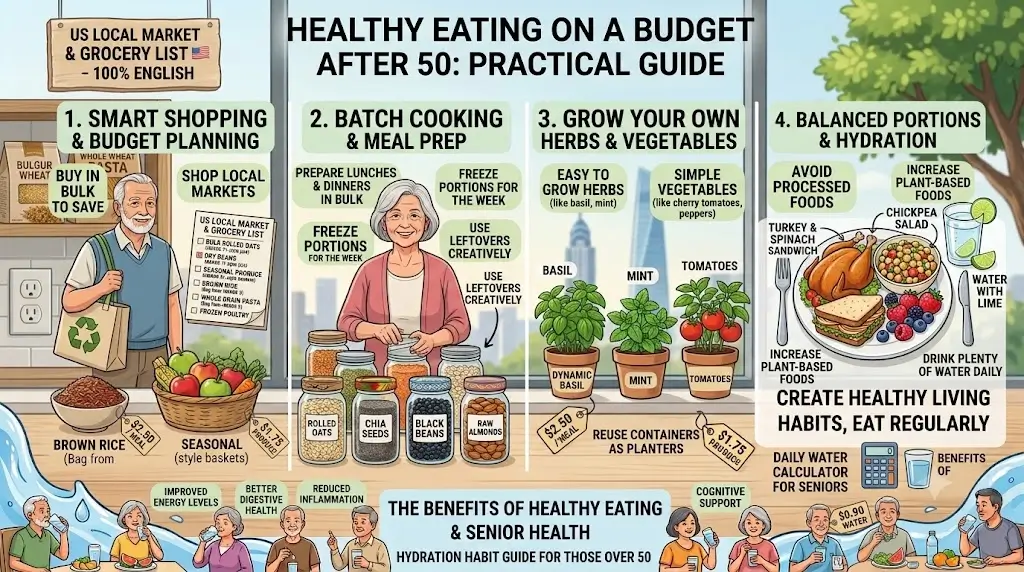
For many older adults, the challenge is not knowing which foods are healthy. It is balancing nutrition with grocery prices, household size, appetite, cooking ability, and the risk of food spoiling before it is eaten.
Quick answer: The best budget-friendly foods after 50 include beans, lentils, eggs, oats, brown rice, whole-grain foods, seasonal produce, frozen vegetables and fruit, canned fish, yogurt, and other affordable protein foods. Plan meals around foods that can be used multiple ways, compare unit prices rather than package prices, choose store brands when the product is comparable, and avoid buying more perishable food than you can realistically eat.
Can You Eat Healthy After 50 on a Budget?
Yes. A healthy eating pattern can be built around relatively inexpensive foods.
The goal is not to purchase the most expensive version of every food. It is to get the most nutritional value from the money available.
The National Institute on Aging recommends planning meals in advance, making a shopping list, looking for budget-friendly foods, and considering preparation time. USDA MyPlate similarly recommends planning around a food budget, comparing unit prices, using beans and canned or frozen vegetables to stretch food dollars, and buying larger quantities only when the food can be stored and used before it is wasted.
| Budget challenge | Practical response |
|---|---|
| Fresh produce spoils quickly | Buy smaller amounts and use frozen produce |
| Meat is expensive | Use eggs, beans, lentils, fish, poultry, and other affordable protein foods |
| Single-person household | Choose foods that can be portioned or frozen |
| Large packages create waste | Compare unit price and expected usable amount |
| Healthy convenience foods cost more | Keep simple pantry and freezer meals available |
What Are the Cheapest Healthy Foods to Buy After 50?
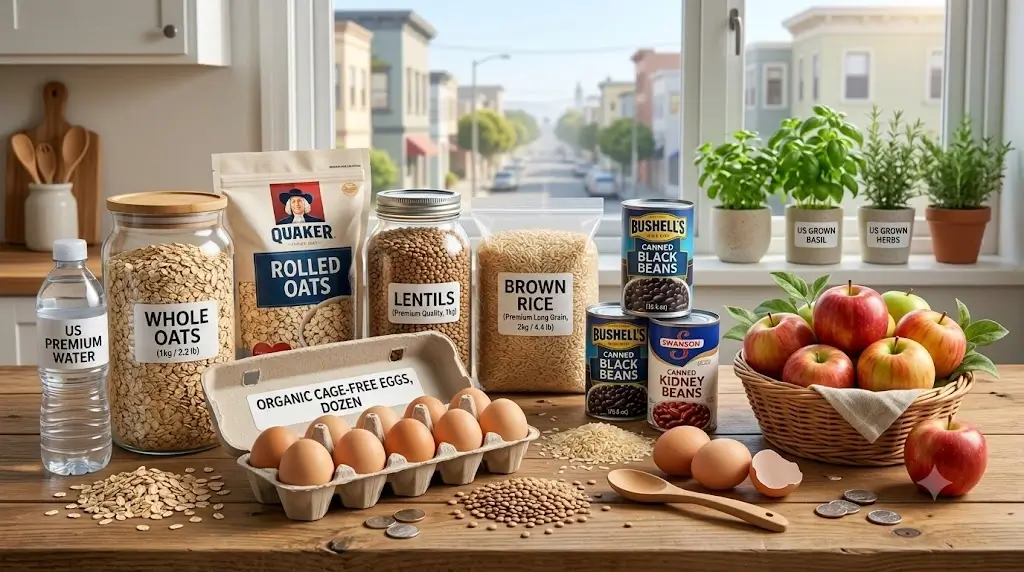
Start with inexpensive staple foods that provide substantial nutrition and can be used in several meals.
| Food | Why it can be useful | Ways to use it |
|---|---|---|
| Oats | Affordable whole-grain staple | Breakfast, overnight oats |
| Beans | Affordable source of protein and fiber | Soup, bowls, salads, wraps |
| Lentils | Protein- and fiber-containing staple | Soup, stew, grain bowls |
| Eggs | Versatile protein food | Breakfast, sandwiches, bowls |
| Brown rice | Versatile whole-grain staple | Bowls, side dishes, leftovers |
| Frozen vegetables | Longer storage and portion flexibility | Soups, stir-fries, eggs, bowls |
| Seasonal fruit | Can be less expensive when abundant | Breakfast, snacks, yogurt bowls |
| Plain yogurt | Versatile dairy food | Breakfast, snacks, sauces |
| Canned fish | Convenient protein option | Salads, sandwiches, bowls |
Prices vary substantially by region, store, brand, package size, and season, so there is no single list of foods that will always be cheapest.
Which Protein Foods Are Best for a Tight Food Budget?
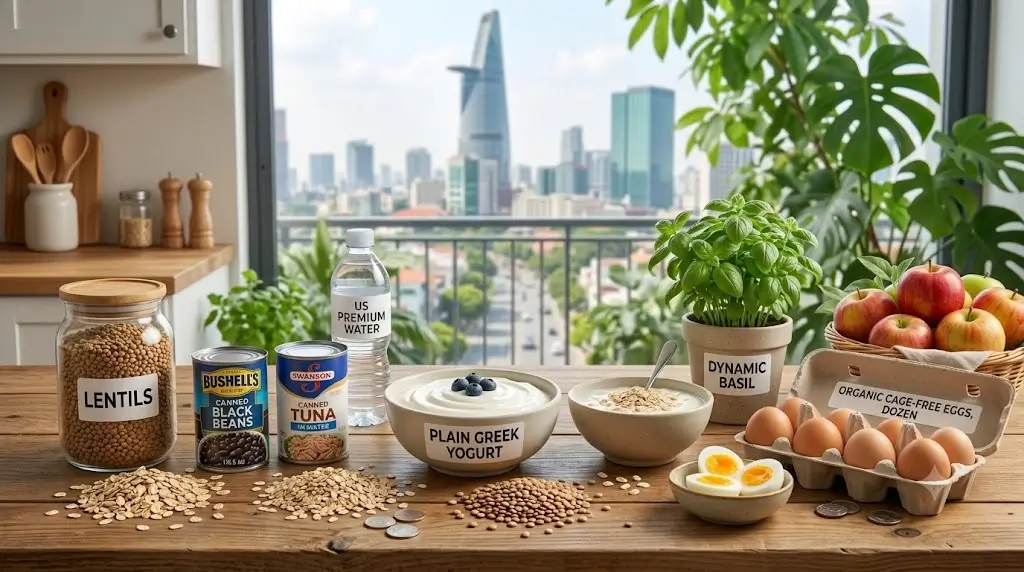
Look beyond meat. Beans, lentils, eggs, dairy foods, tofu, canned fish, and other protein foods can help create affordable meals.
NIA specifically recommends including foods such as seafood, dairy or fortified soy products, beans, peas, and lentils as part of an eating pattern that provides protein throughout the day. To learn how to integrate these sources effectively, see our practical guide on how to get more protein from everyday foods.
| Protein food | Budget advantage | Easy use |
|---|---|---|
| Beans | Pantry-friendly and versatile | Chili, soup, bowls |
| Lentils | Dry lentils store well | Soup and stew |
| Eggs | Flexible for several meals | Scramble, omelet, sandwich |
| Plain yogurt | Can serve as breakfast or snack | Fruit and oat bowl |
| Tofu | Can replace some higher-cost protein foods | Stir-fry and bowls |
| Canned fish | Long storage life | Salad or sandwich |
| Chicken | Can be stretched across multiple meals | Soup, wrap, bowl |
Clinical Sodium Warning: Canned tuna, salmon, and beans are excellent budget proteins, but regular versions often contain excessive sodium. Older adults with hypertension or heart conditions should select “Low-Sodium” or “No Salt Added” varieties and rinse canned beans under cold water to eliminate up to 40% of surface sodium.
Are Beans and Lentils Good Budget Foods After 50?
Yes. Beans and lentils can be particularly useful because they provide protein and fiber and can be incorporated into many inexpensive meals. For tips on adding these to familiar dishes gradually, see how to get more fiber from everyday foods.
Examples include:
- Bean and rice bowls
- Lentil soup
- Bean chili
- Lentil and vegetable stew
- Bean salad
- Bean and vegetable wraps
Dry beans can be economical when you have the time and equipment to prepare them. Canned beans offer greater convenience and may be preferable when preparation time or physical effort is a concern.
Are Frozen Fruits and Vegetables Healthy on a Budget?
Frozen fruits and vegetables can be a practical budget choice, particularly when fresh produce is expensive or likely to spoil before it is eaten.
USDA MyPlate notes that frozen fruits and vegetables can provide a way to keep produce available longer, and recommends comparing prices across fresh, frozen, canned, and pantry options.
When buying canned vegetables, look for options labeled low-sodium or no-salt-added when appropriate. For canned fruit, options packed in water or 100% fruit juice can be preferable to products with substantial added sugar.
Is Fresh Produce Always Better Than Frozen?
No. The best choice depends on price, storage, availability, and how quickly the food will be eaten.
| Option | Best when… |
|---|---|
| Fresh | You can use it before it spoils and the price is reasonable |
| Frozen | You need flexible portions or longer storage |
| Canned | You need shelf-stable convenience |
| Seasonal | Local supply makes the food less expensive |
Healthy eating does not require every fruit or vegetable to be fresh.
How Can You Save Money at the Grocery Store After 50?
Plan before shopping, compare unit prices, use sales strategically, and buy only what you will actually use.
1. Check What You Already Have
Look through the refrigerator, freezer, and pantry before making the shopping list.
2. Build Meals Around What Needs to Be Used
If vegetables or cooked foods are approaching the end of their useful storage period, make them part of the next meal.
3. Compare Unit Prices
The largest package is not automatically the cheapest option. Compare the unit price shown on the shelf label.
4. Compare Brands
Store-brand products can sometimes cost less than name-brand equivalents. Compare the ingredient list, nutrition information, package size, and actual price rather than assuming one brand is better.
5. Shop Seasonal Produce
Produce that is abundant and in season may offer better value.
6. Use Sales Strategically
Sales are most useful when the food is something you already eat and can store safely.
7. Avoid Buying Food Just Because It Is on Sale
A discounted food that gets thrown away is not a savings.
NIA specifically recommends checking store advertisements, considering sale items, using coupons when available, considering store brands, and looking for reasonably priced fruits and vegetables.
Why Is Unit Price More Important Than Package Price?
Unit price lets you compare products of different package sizes more accurately.
For example, a larger container may have a lower price per ounce but may not be the better purchase if you cannot use it before it spoils.
Consider both:
- Price per unit
- Expected amount you will actually use
- Storage life
- Freezer suitability
- Household size
The cheapest purchase is not necessarily the lowest-cost purchase after food waste is considered.
How Can You Reduce Food Waste When Eating Healthy?
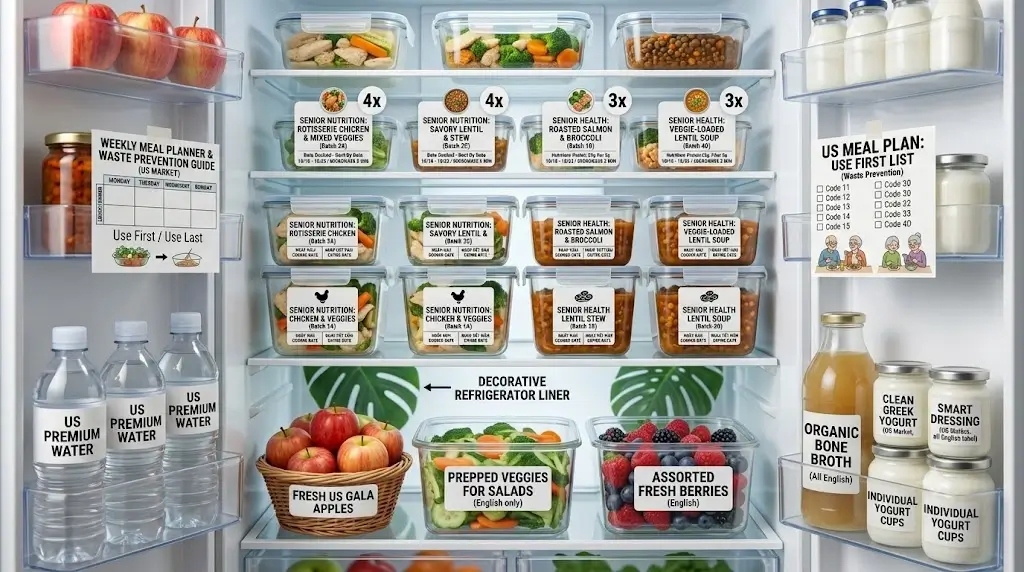
Food waste is one of the biggest hidden costs of cooking for one or two people.
Use these strategies:
- Buy smaller quantities of highly perishable foods.
- Freeze foods before they spoil when appropriate.
- Use frozen vegetables when fresh produce is difficult to finish.
- Choose ingredients that work in several meals.
- Plan leftovers before cooking.
- Keep track of foods that repeatedly go unused.
- Store foods appropriately in durable, airtight containers; see our guide to the best meal prep containers for older adults.
- Check your refrigerator before shopping.
USDA MyPlate specifically cautions against buying larger quantities of foods that will ultimately be thrown away.
How Can You Make One Grocery Trip Cover Several Meals?
Choose ingredients with multiple uses.
| Ingredient | Meal 1 | Meal 2 | Meal 3 |
|---|---|---|---|
| Eggs | Breakfast | Vegetable scramble | Egg sandwich |
| Beans | Rice bowl | Soup | Salad |
| Chicken | Grain bowl | Wrap | Soup |
| Frozen vegetables | Eggs | Stir-fry | Soup |
| Oats | Hot oatmeal | Overnight oats | Yogurt topping |
| Plain yogurt | Breakfast bowl | Snack | Sauce or topping |
This strategy reduces the number of different ingredients you need to buy while keeping meals from becoming completely repetitive.
How Can You Eat Healthy Without Buying Expensive “Health Foods”?
You do not need specialty products labeled “superfood,” “detox,” “high-protein,” or “healthy” to build a nutritious eating pattern. Falling for overpriced dietary gimmicks is one of the most frequent common healthy eating mistakes after 50.
Start with ordinary foods:
- Oats
- Beans
- Lentils
- Eggs
- Vegetables
- Fruit
- Whole grains
- Plain yogurt
- Nuts and seeds
- Fish
NIA emphasizes variety and nutrient-dense foods across vegetables, fruits, grains, protein foods, dairy products or fortified alternatives, and oils rather than requiring a specialized diet.
What Foods Are Usually Worth Buying in Bulk?
Buy larger quantities mainly when the food stores well and you are confident you will use it.
| Usually more suitable for larger quantities | Use more caution |
|---|---|
| Dry beans | Fresh berries |
| Lentils | Large packages of salad greens |
| Oats | Large amounts of fresh herbs |
| Brown rice | Highly perishable dairy products |
| Canned foods | Large quantities of fresh produce |
| Frozen vegetables | Foods you rarely eat |
Bulk buying only saves money when the food is used rather than discarded.
How Can Seniors Save Money on Healthy Breakfasts?
Breakfast can be nutritious and inexpensive by leaning on pantry staples. For more morning inspiration, see our healthy breakfast ideas for older adults.
Oatmeal Bowl
Use oats with fruit, plain yogurt, and nuts or seeds.
Eggs and Toast
Pair eggs with whole-grain toast and a piece of fruit.
Yogurt and Fruit
Combine plain yogurt with fruit and oats.
Peanut Butter and Banana Toast
Use whole-grain toast with peanut butter and banana.
These meals rely on relatively simple ingredients that can be purchased in different quantities and reused throughout the week.
How Can Seniors Save Money on Healthy Lunches?
Bean and Rice Bowl
Combine beans, brown rice, vegetables, and a small amount of avocado or another suitable fat source.
Lentil Soup
Make a batch and portion it for later meals.
Chicken Wrap
Use leftover chicken, vegetables, and a whole-grain wrap.
Egg and Vegetable Sandwich
Use eggs and vegetables with whole-grain bread.
Bean Salad
Combine beans with vegetables and a simple dressing.
How Can Seniors Save Money on Healthy Dinners?
Inexpensive dinners do not have to be complicated. For low-prep evening recipes, check our collection of healthy dinner ideas for adults over 50.
Chicken and Vegetable Rice Bowl
Use a modest amount of chicken with vegetables and brown rice.
Bean Chili
Beans, vegetables, tomatoes, and seasonings can produce multiple servings.
Lentil and Vegetable Stew
Lentils provide a useful base for an inexpensive one-pot meal.
Fish With Frozen Vegetables
Pair fish with a frozen vegetable and a whole grain or potato.
Vegetable and Egg Skillet
Eggs and vegetables can form a quick dinner with whole-grain toast or another suitable carbohydrate.
How Can You Make Healthy Meals Cheaper Without Making Them Less Nutritious?
Substitute expensive ingredients with less expensive foods that serve a similar role in the meal.
| Instead of always buying… | Consider using… |
|---|---|
| Fresh berries year-round | Frozen berries or seasonal fruit |
| Meat at every meal | Beans, lentils, eggs, tofu, or fish for some meals |
| Pre-cut fresh vegetables exclusively | Whole vegetables or frozen vegetables when practical |
| Individual packaged snacks | Whole fruit, oats, nuts, or yogurt |
| Restaurant meals | Simple batch-prepared meals at home |
The goal is not to choose the cheapest possible food. It is to find affordable foods that still contribute useful nutrients and fit your eating pattern.
Should You Buy Store Brands to Save Money?
Store brands can be a useful way to lower grocery costs when the product meets your needs.
Compare:
- Unit price
- Serving size
- Protein and fiber
- Sodium
- Added sugars
- Ingredients
- Package size
For basic foods such as oats, beans, frozen vegetables, canned tomatoes, rice, and some dairy products, brand name is often less important than the product’s nutrition information, price, and usability.
How Can You Save Money Without Giving Up Convenience?
Use convenience selectively rather than eliminating it completely.
- Frozen vegetables instead of chopping large quantities of fresh vegetables
- Canned beans instead of cooking dried beans every time
- Pre-washed greens when preparation is physically difficult
- Frozen fruit for smoothies or yogurt bowls
- Prepared whole grains when the time savings justify the cost
- Simple canned fish for quick lunches
NIA notes that pre-cut produce can be useful when chopping is difficult and that meal planning should take preparation time into account.
Dysphagia Texture Adaptation: Older adults with swallowing difficulties can use low-cost staples like canned split pea soup, well-mashed canned beans, or cooked oatmeal to maintain soft-food consistency without buying high-priced specialized pureed foods.
How Can Older Adults on a Fixed Income Eat Well?
Start by setting the food budget first, then build the shopping list around affordable staples.
NIA specifically recognizes budget limitations as a roadblock to healthy eating and recommends establishing what you can afford to spend, checking sales, considering store brands, and looking for inexpensive produce.
USDA also maintains federal food-plan estimates based on different spending levels and nutrient-dense foods, providing a broader framework for understanding food costs.
Depending on eligibility and location, nutrition-assistance programs (such as SNAP or Senior Farmers’ Market Nutrition Program) may also be worth investigating rather than trying to solve a tight food budget entirely through grocery substitutions.
What Is a Simple $50 Grocery Strategy?
Do not treat a specific dollar amount as a universal food budget. Grocery prices vary significantly by location, household size, dietary requirements, and food prices.
Instead, divide whatever weekly amount is available into practical categories:
| Category | Examples |
|---|---|
| Protein | Eggs, beans, lentils, yogurt, fish, poultry |
| Produce | Seasonal fresh produce plus frozen vegetables |
| Grains | Oats, rice, whole-grain bread, pasta |
| Pantry | Canned beans, tomatoes, fish, seasonings |
| Flexible foods | Foods already on sale or available at good unit prices |
The actual allocation should change according to local prices and individual nutritional needs.
How Can You Make a Cheap Grocery List Healthier?
Use a short checklist before leaving the store:
- ☐ At least two affordable protein foods
- ☐ Several vegetables, including frozen options if useful
- ☐ Several fruits or other affordable produce
- ☐ One or two whole-grain staples
- ☐ A dairy or fortified alternative if appropriate
- ☐ Foods for several simple meals
- ☐ Foods that can be frozen or stored if necessary
- ☐ No unnecessary foods purchased solely because they are discounted
How Can You Eat Healthy After 50 Without Spending Hours Cooking?
Use a small number of repeatable meal formats.
| Meal format | Formula |
|---|---|
| Breakfast bowl | Oats + fruit + yogurt + nuts |
| Grain bowl | Whole grain + protein + vegetables |
| Soup | Beans or lentils + vegetables + grain |
| Wrap | Protein + vegetables + whole-grain wrap |
| Egg meal | Eggs + vegetables + whole grain |
Changing seasonings and ingredients keeps these formats from becoming repetitive while preserving a simple shopping system.
What Are the Biggest Budget Mistakes After 50?
Buying Only the Cheapest Food
Price matters, but nutritional value matters too. The cheapest item is not automatically the best choice.
Buying Large Packages Automatically
Large packages can create waste if you cannot use the food.
Ignoring Unit Prices
Package price alone makes comparison difficult.
Buying Too Much Fresh Produce
Fresh food that spoils before it is eaten provides poor value.
Buying Expensive Convenience Foods for Every Meal
Convenience has value, but relying entirely on individually packaged foods can increase costs.
Buying Foods You Do Not Actually Enjoy
A theoretically healthy food that remains uneaten is wasted money.
Ignoring Preparation Ability
A food that requires difficult chopping, lifting, or cooking may not be a practical purchase even if it has a low shelf price.
How Does Living Alone Change Grocery Shopping After 50?
One-person households need to pay particular attention to package size, perishability, leftovers, and freezer use.
Instead of buying seven completely different dinners, buy ingredients that can be reused. For an end-to-end framework, check our comprehensive guide on healthy meal planning for one person.
For example, one package of frozen vegetables can appear in eggs, soup, and a grain bowl. Beans can be used in a salad, soup, and rice bowl. A batch of cooked chicken can become lunch and dinner without requiring another major cooking session.
Can Healthy Eating on a Budget Still Include Treats?
Yes. Healthy eating does not require eliminating every less-nutritious food.
The overall eating pattern matters more than one snack or occasional treat. A practical budget should also account for foods that make eating enjoyable and sustainable.
The priority is to make nutrient-dense foods the foundation of the diet while keeping discretionary foods within the available food and calorie budget.
How Can Caregivers Help an Older Adult Eat Well on a Budget?
When helping an older adult shop or prepare food, focus on actual barriers rather than simply telling the person to “eat healthier.”
- Check which foods are already in the home.
- Help build a short repeatable grocery list.
- Look for affordable foods the person actually enjoys.
- Choose package sizes that match household needs.
- Prepare extra portions when practical.
- Freeze appropriate portions for later.
- Check refrigerator and pantry storage regularly.
NIA suggests that caregivers can help by shopping together, preparing healthier versions of familiar foods, cooking extra, packaging individual portions, and checking refrigerators and pantries for expired foods.
How Can You Build a Healthy Budget Grocery Routine?
- Set the food budget. Know approximately how much is available before shopping.
- Check the kitchen. Use foods already on hand before buying duplicates.
- Choose several meal formats. Avoid planning seven completely unrelated meals.
- Select affordable protein foods. Include beans, lentils, eggs, dairy or fortified alternatives, fish, poultry, or other suitable choices.
- Add produce strategically. Combine seasonal fresh foods with frozen or canned options.
- Choose whole-grain staples. Oats, rice, bread, pasta, and other grains can form the base of affordable meals.
- Compare unit prices. Do not rely only on package prices.
- Plan leftovers. Give extra food a destination before cooking it.
- Freeze when appropriate. Prevent usable food from becoming waste.
- Review what was wasted. Adjust the next grocery trip accordingly.
Healthy Eating on a Budget After 50: Decision Guide
| If your main problem is… | Try… |
|---|---|
| High meat costs | Use beans, lentils, eggs, tofu, fish, and poultry in rotation |
| Fresh produce waste | Buy smaller amounts and use frozen produce |
| High grocery prices | Compare unit prices and store brands |
| Cooking fatigue | Use simple meal formats and convenient ingredients |
| Living alone | Buy flexible ingredients and freeze portions |
| Limited food budget | Build meals around affordable staple foods |
| Too many leftovers | Prepare components instead of oversized recipes |
| Food waste | Plan around foods already in the kitchen |
What Is the Best Way to Eat Healthy on a Budget After 50?
Use a “staples first” strategy.
Keep affordable basics such as beans, lentils, oats, eggs, whole grains, frozen vegetables, fruit, and other foods that fit your preferences available. Then add sale items and seasonal foods around those staples.
This approach is more sustainable than trying to buy the cheapest version of every item or relying on expensive foods marketed specifically as “healthy.”
Healthy eating after 50 is ultimately about the pattern of foods eaten over time. NIA recommends variety across food groups and emphasizes nutrient-dense choices while limiting excess added sugars, saturated fat, and sodium.
Frequently Asked Questions
How can I eat healthy after 50 on a budget?
Build meals around affordable staples such as beans, lentils, eggs, oats, whole grains, frozen vegetables, seasonal fruit, yogurt, and other suitable protein foods. Plan before shopping and compare unit prices.
What are the cheapest healthy foods for older adults?
Beans, lentils, oats, eggs, rice, frozen vegetables, seasonal produce, and other basic whole or minimally processed foods can be economical choices, although prices vary by location.
Is healthy eating expensive?
It can become expensive if you rely heavily on specialty products, restaurant meals, or individually packaged convenience foods. A nutritious eating pattern can also be built around relatively inexpensive staples.
Are frozen vegetables good for seniors?
Yes. Frozen vegetables can be practical because they can be stored longer and used in portions, which can reduce waste.
Are canned vegetables healthy?
Canned vegetables can fit into a healthy eating pattern. When appropriate, compare sodium levels and consider low-sodium or no-salt-added options.
Are beans a good budget protein?
Yes. Beans provide protein and fiber and can be used in soups, salads, bowls, wraps, and other meals.
Are lentils cheaper than meat?
Lentils can be an economical protein-containing food, but actual savings depend on local prices and the type of meat being compared.
Should older adults buy store brands?
Store brands can reduce grocery costs when the product meets your needs. Compare unit price, ingredients, nutrition information, and package size.
Is buying in bulk always cheaper?
No. Bulk buying is useful only when the food stores well and will actually be consumed before it is wasted.
How can I save money on fresh produce?
Buy seasonal produce, compare fresh and frozen prices, purchase only amounts you can use, and freeze suitable foods before they spoil.
How can someone living alone eat healthy cheaply?
Choose flexible ingredients, smaller quantities of perishable foods, frozen produce, pantry staples, and foods that can be used in several different meals.
How can I reduce food waste?
Check your kitchen before shopping, plan around foods that need to be used, buy realistic quantities, freeze appropriate portions, and give leftovers a planned use.
What is a cheap healthy breakfast after 50?
Oatmeal with fruit and yogurt, eggs with whole-grain toast, or plain yogurt with fruit and oats are simple examples.
What is a cheap healthy lunch after 50?
Bean-and-rice bowls, lentil soup, egg sandwiches, bean salads, and chicken wraps can be practical options.
What is a cheap healthy dinner after 50?
Bean chili, lentil stew, chicken and vegetable rice bowls, fish with frozen vegetables, and vegetable-and-egg skillets are examples.
How can I get enough protein without spending a lot?
Use a variety of affordable protein foods such as beans, lentils, eggs, yogurt, tofu, fish, poultry, and other foods that fit your dietary needs.
Do older adults need expensive supplements to eat healthy?
Not necessarily. Supplements are not a substitute for a varied diet, and individual supplementation needs should be discussed with a qualified healthcare professional when appropriate.
What should I buy first when money is tight?
Prioritize foods that contribute useful nutrients and can form several meals, such as affordable protein foods, vegetables, fruit, whole grains, and practical pantry staples.
Can healthy eating include canned and frozen foods?
Yes. Frozen and canned foods can make healthy eating more affordable and practical, especially when fresh foods are expensive or spoil quickly.
How can I save money without eating the same meal every day?
Prepare flexible ingredients rather than one large finished meal. For example, beans, chicken, vegetables, and grains can each be used in several different meal combinations.
Should I avoid all processed foods to save money?
No. Processing covers a broad range of foods. The more useful approach is to consider the overall nutritional value, cost, convenience, and role of the food in your diet.
What if healthy food is difficult to prepare?
Use frozen vegetables, canned beans, pre-washed produce, simple appliances, and other convenient options when they reduce physical effort enough to make healthy eating practical.
Can I eat healthy if I have a very limited food budget?
Yes, although choices may require more planning. Beans, lentils, oats, eggs, grains, frozen vegetables, seasonal produce, and other affordable staples can form the foundation of many meals.
Does eating healthy after 50 require a special diet?
Not generally. Healthy eating patterns can be adapted to individual preferences, budget, culture, appetite, and health needs.
Where can older adults find additional food-budget assistance?
Depending on eligibility and location, federal, state, and community nutrition-assistance programs may be available. USDA and other government nutrition resources can help identify programs and budgeting tools.
Final Verdict
Eating healthy after 50 does not require an expensive grocery cart.
The most effective budget strategy is to build meals around affordable nutrient-dense staples, especially beans, lentils, eggs, whole grains, vegetables, fruit, and other practical protein foods. Use frozen and canned foods when they improve value or reduce waste, compare unit prices, shop sales strategically, and avoid buying quantities that will spoil.
For people living alone, the biggest savings may come from reducing waste rather than simply finding the lowest sticker price. Choose ingredients that can appear in several meals, prepare manageable portions, and freeze what you will not eat soon.
Bottom line: A sustainable food budget after 50 is built around affordable staples + adequate variety + smart shopping + low food waste. You do not need premium “health foods” to create a nutritious eating pattern.
Editorial Methodology
This guide uses an evidence-first approach based primarily on National Institute on Aging (NIA) healthy eating standards and USDA MyPlate budget guidelines. Recommendations focus on accessible, nutrient-dense whole foods and practical shopping behavior rather than rigid caloric formulas or expensive commercial health products.
Sources and Editorial Basis
- National Institute on Aging (NIA) — Healthy Meal Planning: Tips for Older Adults
- National Institute on Aging (NIA) — Overcoming Roadblocks to Healthy Eating
- National Institute on Aging (NIA) — Healthy Eating As You Age: Know Your Food Groups
- National Institute on Aging (NIA) — How Much Should I Eat? Quantity and Quality
- National Institute on Aging (NIA) — Healthy Aging Tips for the Older Adults in Your Life
- USDA MyPlate — Healthy Eating on a Budget
- USDA MyPlate — Shop Smart
- USDA Food and Nutrition Service (FNS) — USDA Food Plans
This article provides general nutrition and budgeting information and is not individualized medical or financial advice.
