
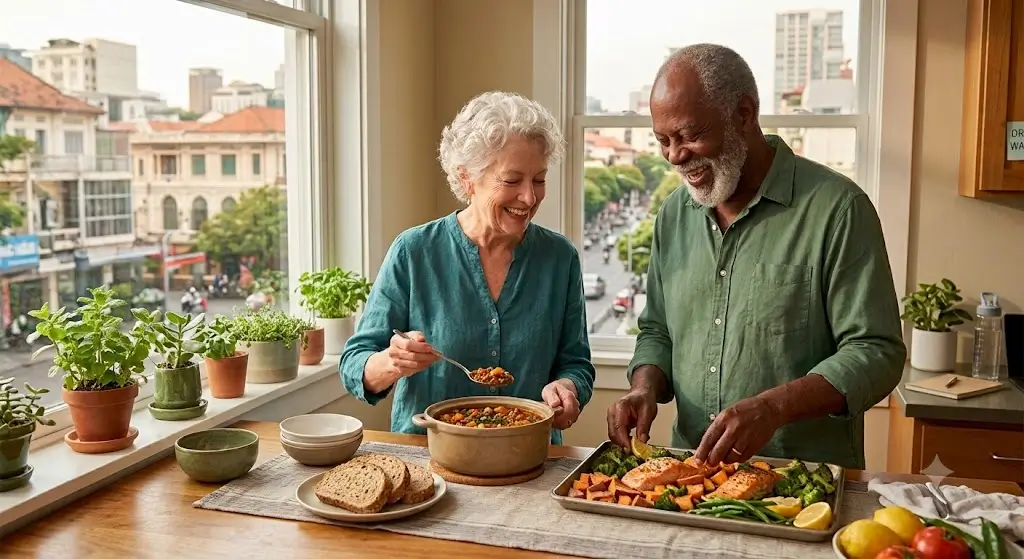
As cooking needs change with age, dinner also needs to work in real life. That means considering preparation time, standing, chopping, lifting, cleanup, appetite, household size, budget, and the ability to store leftovers safely.
This guide focuses specifically on dinner ideas for adults over 50. It is not a medical diet or a prescription for individual calorie or nutrient needs.
What Makes a Healthy Dinner for Adults Over 50?
A practical dinner can be built from four components:
- Protein: seafood, poultry, eggs, beans, lentils, tofu, yogurt, or other protein foods.
- Vegetables and/or fruit: fresh, frozen, or canned options can all contribute.
- Whole grain or other fiber-rich carbohydrate: brown rice, quinoa, oats, whole-grain pasta, potatoes, beans, or other whole-food choices.
- Healthy fat: foods such as avocado, nuts, seeds, or olive oil when appropriate.
NIA recommends choosing a variety of nutrient-dense foods across the food groups and including protein foods such as seafood, poultry, eggs, beans, peas, lentils, nuts, seeds, and soy products. NIA also recommends limiting excess sodium, added sugars, and saturated fat.
Editorial Notice: AgingWellGuide provides evidence-aligned health and nutrition information. Our guides are grounded in clinical guidelines from the National Institute on Aging (NIA) and USDA. This content is for educational purposes and does not replace individualized medical advice.
What Are the Best Healthy Dinner Ideas for Adults Over 50?
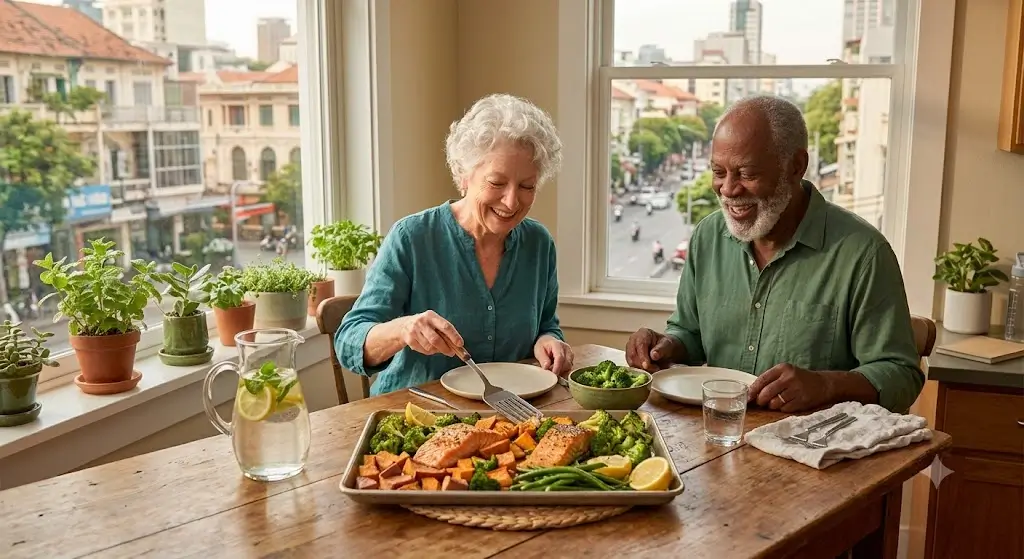
There is no single best dinner. The most useful choices are meals that combine nutrition with a preparation method you can realistically repeat.
1. Roasted Salmon With Sweet Potato and Vegetables
Pair salmon with roasted sweet potato and vegetables such as broccoli, green beans, or Brussels sprouts.
This dinner combines seafood, vegetables, and a fiber-containing carbohydrate in one simple sheet-pan-style meal. Salmon is also among the seafood options highlighted by NIA for its protein and omega-3 fatty acids.
Make it easier: use frozen vegetables and pre-cut sweet potatoes when chopping is difficult.
2. Chicken, Brown Rice, and Roasted Vegetables
Combine cooked chicken with brown rice and two vegetables. Add herbs, lemon juice, garlic, or a small amount of olive oil for flavor.
This is a flexible dinner that can be prepared in batches and used for several meals.
3. Lentil and Vegetable Soup
Cook lentils with vegetables, tomatoes, onions, carrots, and seasonings for a filling one-pot dinner.
Lentils provide both protein and fiber, while vegetables increase the variety of plant foods in the meal.
4. Whole-Grain Pasta With Turkey and Tomato Sauce
Combine whole-grain pasta with lean ground turkey, tomato sauce, spinach, mushrooms, or another vegetable.
For a lower-sodium approach, compare prepared sauces and choose an option with less sodium when available. Herbs, garlic, onions, and other seasonings can add flavor without relying entirely on salt.
5. Black Bean and Vegetable Tacos
Fill whole-grain or corn tortillas with black beans, tomatoes, lettuce, peppers, avocado, and a small amount of cheese if desired.
Beans can contribute both protein and fiber, while vegetables add color, texture, and additional nutrients.
6. Baked Chicken With Potatoes and Green Beans
Serve baked chicken with potatoes and green beans or another vegetable.
This is a useful dinner when simplicity matters. The ingredients are familiar, easy to portion, and adaptable to different seasonings.
7. Tofu and Vegetable Stir-Fry With Brown Rice
Combine tofu with vegetables such as broccoli, carrots, mushrooms, peppers, or snap peas. Serve with brown rice.
Use a lower-sodium sauce or make a simple sauce from ingredients such as garlic, ginger, citrus, and a modest amount of soy sauce.
8. Turkey and Bean Chili
Combine lean ground turkey, beans, tomatoes, peppers, onions, and spices in a large pot.
Chili works particularly well for batch cooking because individual portions can be refrigerated or frozen for later meals.
9. Vegetable and Egg Frittata
Combine eggs with vegetables such as spinach, mushrooms, tomatoes, onions, or peppers.
Serve with whole-grain toast and fruit or a simple side salad.
10. Baked White Fish With Quinoa and Vegetables
Pair a mild white fish with quinoa and cooked vegetables. Lemon, herbs, and pepper can provide flavor without requiring a complicated sauce.
11. Chickpea and Vegetable Grain Bowl
Combine chickpeas, quinoa or brown rice, roasted vegetables, leafy greens, and avocado or another healthy-fat source.
This is a useful plant-forward dinner that can be assembled from prepared components.
12. Chicken and Vegetable Soup
Combine chicken with vegetables and a whole grain such as barley or brown rice.
A soup can be particularly useful when a softer, warm dinner is easier to eat than a dry meal.
What Are Good High-Protein Dinner Ideas After 50?
Protein is an important part of a healthy eating pattern for older adults. NIA recommends including protein foods throughout the day rather than relying on a single meal. For more whole-food strategies, explore how to get more protein from everyday foods.
| Dinner | Main protein source |
|---|---|
| Salmon + sweet potato + vegetables | Salmon |
| Chicken + brown rice + vegetables | Chicken |
| Lentil vegetable soup | Lentils |
| Turkey and bean chili | Turkey + beans |
| Tofu vegetable stir-fry | Tofu |
| Egg and vegetable frittata | Eggs |
| Chickpea grain bowl | Chickpeas |
| Fish + quinoa + vegetables | Fish |
Protein needs vary from person to person. The dinner ideas above are food-based examples, not a recommendation for a specific daily protein target.
Clinical Renal Caution: While maintaining muscle mass is critical, adults diagnosed with Chronic Kidney Disease (CKD) should adhere to their nephrologist’s or renal dietitian’s specific protein and potassium limits to avoid overburdening filtration function.
What Are Good High-Fiber Dinner Ideas?
Fiber-rich foods can be incorporated naturally into dinner through beans, lentils, vegetables, fruits, whole grains, nuts, and seeds.
- Lentil and vegetable soup
- Black bean tacos with vegetables
- Chickpea grain bowls
- Turkey and bean chili
- Salmon with sweet potato and vegetables
- Chicken with brown rice and vegetables
- Tofu stir-fry with brown rice
- Whole-grain pasta with vegetables and turkey
Using more than one fiber source in a meal can be easier than trying to obtain fiber from a single food. To see how simple daily swaps work across all meals, check our guide on how to get more fiber from everyday foods.
What Are Easy Healthy Dinner Ideas That Take Little Time?
When time or energy is limited, simplify the number of cooking steps.
| Dinner | Shortcut |
|---|---|
| Chicken grain bowl | Use cooked chicken, microwaveable whole grains, and frozen vegetables |
| Bean tacos | Use canned beans and pre-cut vegetables |
| Salmon and vegetables | Use frozen vegetables and a simple baked fish preparation |
| Egg frittata | Use pre-washed greens and already-chopped vegetables |
| Lentil soup | Use canned lentils or prepared lower-sodium soup when appropriate |
| Tofu bowl | Use pre-cooked grains and frozen vegetables |
NIA specifically suggests using pre-cut fruits and vegetables when slicing and chopping are challenging and recommends considering preparation time when planning meals.
What Are Good One-Pot Dinner Ideas for Adults Over 50?
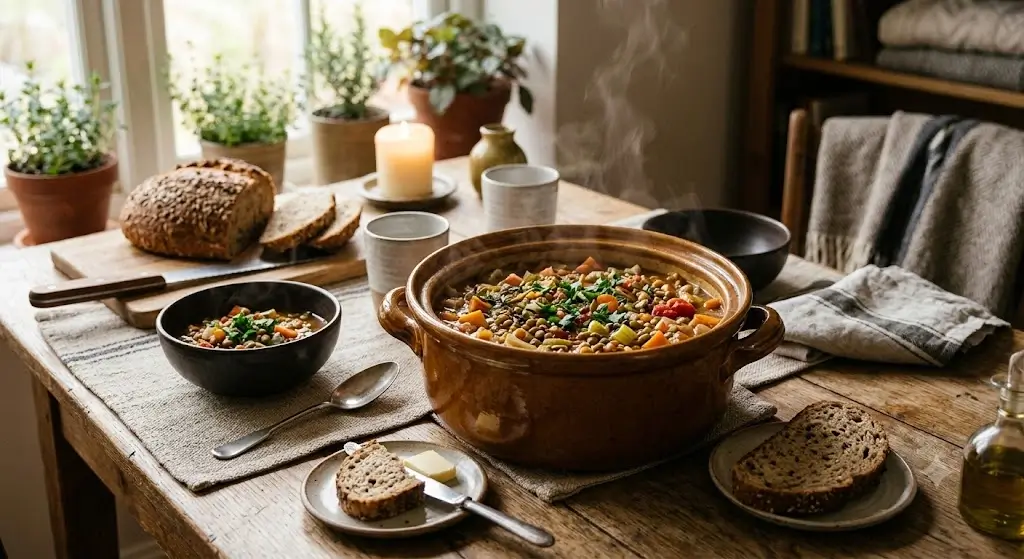
One-pot meals can reduce the number of pans, utensils, and cleanup steps required.
- Lentil vegetable soup
- Chicken and vegetable stew
- Turkey and bean chili
- Chicken and brown-rice skillet
- Bean and vegetable pasta
- Chickpea and tomato stew
- Vegetable and lentil curry
The advantage is primarily workflow: one cooking vessel can simplify preparation and cleanup. It does not automatically make a meal healthier, so the ingredients still matter.
What Are Good Sheet-Pan Dinner Ideas?
Sheet-pan dinners can simplify cooking because protein and vegetables can often be cooked together.
- Salmon + broccoli + sweet potato
- Chicken + carrots + potatoes
- White fish + zucchini + potatoes
- Chicken + peppers + onions
- Tofu + broccoli + cauliflower
Use pre-cut vegetables when that makes preparation easier. Keep the pan manageable to lift, particularly if heavy cookware is difficult to handle.
What Are Good Healthy Dinners for One Person?
Cooking for one does not require making a completely different meal every night. A better strategy is to prepare components that can be recombined.
For example:
- Cook several portions of chicken.
- Prepare a small batch of brown rice or another grain.
- Keep several vegetables available.
- Use different seasonings to change the flavor.
- Freeze portions that will not be eaten within the recommended refrigerator-storage period.
A chicken-and-rice bowl can become a salad the following day, while cooked vegetables can be added to eggs or soup. For a complete step-by-step solo strategy, see our guide to healthy meal planning for one person.
What Are Good Healthy Dinners for Two Adults Over 50?
For two people, use a shared base and adjust portions or toppings according to individual preferences.
| Shared base | Possible variations |
|---|---|
| Chicken grain bowl | Different vegetables or sauces |
| Fish and vegetables | Different grain or potato portions |
| Bean tacos | Different toppings |
| Soup | Different sides or portion sizes |
| Frittata | Different vegetable or cheese additions |
This reduces the amount of cooking required while allowing each person to adjust the meal to their appetite and preferences.
How Can Dinner Be Easier With Limited Mobility?
A healthy dinner plan should account for the physical work required to prepare it.
| Challenge | Practical adaptation |
|---|---|
| Long periods of standing | Choose one-pot, sheet-pan, or no-cook components |
| Chopping | Use pre-cut or frozen vegetables |
| Heavy cookware | Use smaller, lighter cookware and prepare manageable batches |
| Frequent trips around the kitchen | Organize commonly used ingredients within easy reach |
| Cleanup fatigue | Choose meals using fewer pans and utensils |
| Low-energy evenings | Keep simple backup meals available |
The goal is not to eliminate cooking. It is to remove unnecessary physical steps so that preparing a nutritious dinner remains practical.
How Can You Make Healthy Dinner Recipes Easier?
Start with ingredients rather than complicated recipes.
A simple formula is:
Protein + vegetables + fiber-rich carbohydrate + flavor.
Examples:
- Salmon + broccoli + sweet potato + lemon
- Chicken + spinach + brown rice + herbs
- Beans + peppers + corn + avocado
- Tofu + broccoli + brown rice + ginger
- Lentils + carrots + tomatoes + herbs
This approach makes it easier to substitute ingredients based on price, availability, preferences, and cooking ability.
What Are Good Healthy Dinner Ideas for Low-Energy Days?
Keep several meals that require very little active cooking, or pivot to nutrient-dense options from our guide on easy healthy snacks for older adults.
- Prepared lower-sodium soup + whole-grain toast + fruit
- Pre-cooked chicken + microwaveable brown rice + frozen vegetables
- Greek yogurt + fruit + oats + nuts
- Bean and avocado whole-grain wrap
- Eggs + whole-grain toast + pre-washed greens
- Hummus + vegetables + whole-grain pita
Convenience foods can be useful when they make a healthy meal more achievable. Compare Nutrition Facts labels when appropriate, particularly for sodium and added sugars.
How Can You Add More Vegetables to Dinner?
You do not need a separate vegetable side dish every night. Vegetables can be incorporated directly into the main meal.
- Add spinach to pasta sauce.
- Add peppers and onions to tacos.
- Add broccoli to stir-fries.
- Add carrots and celery to soup.
- Add mushrooms to eggs.
- Add roasted vegetables to grain bowls.
- Add frozen vegetables to soups and stews.
NIA’s food-group guidance suggests that vegetables and fruits can make up about half of the dish, while emphasizing variety and appropriate overall food-group intake.
What Whole Grains Work Well at Dinner?
Useful options include:
- Brown rice
- Quinoa
- Barley
- Whole-wheat pasta
- Whole-grain bread
- Oats used in savory dishes
- Whole-grain tortillas
NIA recommends making at least half of the grains consumed whole grains. Whole grains can also provide fiber and other nutrients.
How Can You Keep Dinner Lower in Sodium?
Flavor does not have to come primarily from salt. Relying excessively on sodium-laden packaged dinners is among the most frequent common healthy eating mistakes after 50.
Try:
- Lemon or lime juice
- Garlic
- Fresh or dried herbs
- Black pepper
- Onion
- Ginger
- Vinegar
- Unsalted nuts or seeds
When buying canned beans, soups, sauces, frozen meals, or other packaged ingredients, compare sodium levels on the Nutrition Facts label. NIA specifically recommends reducing sodium and using herbs and citrus such as lemon juice for flavor.
How Can You Make Dinner Healthier Without Making It More Complicated?
Small changes are often easier to maintain than completely redesigning dinner.
| Instead of | Try |
|---|---|
| Refined grain every night | Whole-grain version when practical |
| Large amount of processed meat | Chicken, fish, eggs, beans, lentils, or tofu |
| Heavy salty sauce | Herbs, citrus, garlic, or a lower-sodium alternative |
| Vegetables only as a side | Add vegetables to the main dish |
| Sugary beverage | Water or another suitable low-added-sugar beverage |
NIA recommends a varied eating pattern emphasizing nutrient-dense foods while limiting excess added sugar, saturated fat, and sodium.
How Should You Plan a Week of Healthy Dinners?
A simple weekly rotation can reduce decision fatigue. For a broader template, see our complete roadmap on how to build a healthy meal plan after 50.
| Day | Dinner |
|---|---|
| Monday | Salmon + sweet potato + broccoli |
| Tuesday | Chicken + brown rice + vegetables |
| Wednesday | Lentil vegetable soup + whole-grain toast |
| Thursday | Turkey and bean chili |
| Friday | Tofu vegetable stir-fry + brown rice |
| Saturday | Black bean tacos + vegetables + avocado |
| Sunday | Whole-grain pasta + turkey + tomato sauce + vegetables |
You can repeat ingredients across several meals to reduce grocery waste and preparation time.
How Can Leftovers Make Healthy Dinners Easier?
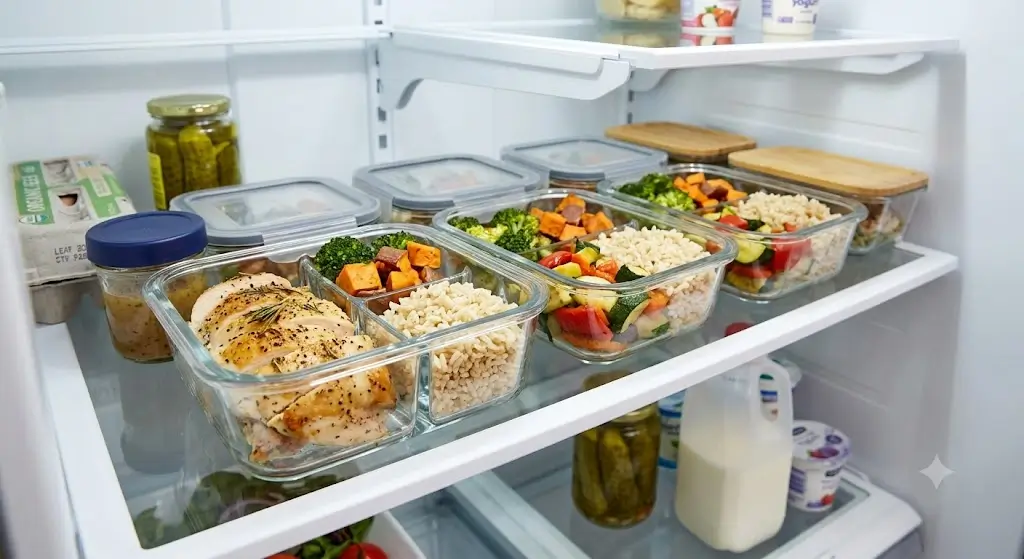
Cooking extra portions can turn one dinner into several meals. NIA specifically suggests cooking extra and packaging leftovers into individual servings for later use.
For example:
- Roasted chicken → sandwich or grain bowl
- Cooked salmon → salad or rice bowl
- Lentil soup → second dinner or lunch
- Turkey chili → tacos or grain bowl
- Cooked vegetables → eggs, pasta, or soup
To safely pack batch-cooked meals, use airtight glassware with easy-snap latches; see our reviewed best meal prep containers for older adults.
USDA Leftover Storage Rule: Perishable leftovers must be refrigerated within 2 hours of cooking (or within 1 hour if the room temperature exceeds 90°F). Store leftovers in shallow containers and consume within 3 to 4 days.
How Should Leftovers Be Reheated?
Food Safety Warning: Because immune defenses decline with age, older adults are at higher risk for foodborne illnesses. USDA FSIS guidelines mandate that all reheated cooked leftovers must reach an internal temperature of at least 165°F (74°C) verified with a food thermometer.
USDA FSIS recommends reheating cooked leftovers to at least 165°F. In a microwave, stir, cover, and rotate food as appropriate to promote even heating.
Only reheat the amount you plan to eat when practical. Repeated reheating can reduce food quality even when food remains safe when handled correctly.
What If Dinner Needs to Be Softer or Easier to Eat?
Choose naturally soft foods or modify cooking methods rather than assuming every dinner needs a particular texture.
Dysphagia Texture Guidance: Adults experiencing chewing or swallowing impairments should consult a speech-language pathologist. Choose minced, moist, or pureed textures (such as slow-cooked stews or pureed vegetable soups) to eliminate choking hazards and pulmonary aspiration.
Examples of naturally softer dinners include:
- Lentil soup
- Soft-cooked vegetables
- Eggs
- Tender fish
- Beans
- Oat-based savory dishes
- Soft grain bowls
- Stews
If a person has a diagnosed swallowing problem, food texture and liquid consistency should follow the recommendations of the appropriate healthcare professional.
What Are Good Healthy Dinner Ideas on a Budget?
Healthy dinners do not require expensive specialty ingredients.
Budget-friendly staples include:
- Beans
- Lentils
- Eggs
- Oats
- Brown rice
- Potatoes
- Frozen vegetables
- Canned tomatoes
- Whole-grain pasta
- Chicken bought in larger packages and portioned for later meals
NIA recommends planning ahead and creating a shopping list to help stay within a food budget.
What Dinner Mistakes Should Adults Over 50 Avoid?
- Making every dinner complicated: complexity can make healthy eating harder to sustain.
- Ignoring protein: build dinner around a meaningful protein food rather than treating it as an afterthought.
- Relying on processed foods every night: convenience foods can help, but variety matters.
- Forgetting vegetables: add them directly to soups, bowls, pasta, tacos, and stir-fries.
- Using too much sodium for flavor: herbs, citrus, garlic, and spices can add variety.
- Cooking portions that create unnecessary waste: match batch size to household size and storage capacity.
- Ignoring physical effort: choose meals that match current cooking ability.
Healthy Dinner Checklist for Adults Over 50
- ☐ Include a protein food.
- ☐ Add vegetables, fruit, or both.
- ☐ Include a fiber-rich carbohydrate or whole grain when appropriate.
- ☐ Use healthy-fat sources when appropriate.
- ☐ Limit excess sodium, added sugars, and saturated fat.
- ☐ Use herbs, spices, garlic, or citrus for flavor.
- ☐ Keep frozen or pre-cut vegetables available.
- ☐ Have at least two low-effort backup dinners.
- ☐ Cook extra when leftovers will realistically be used.
- ☐ Refrigerate perishable leftovers promptly.
- ☐ Reheat leftovers thoroughly before eating.
- ☐ Choose dinner portions according to individual appetite and needs.
Frequently Asked Questions
What is the healthiest dinner for someone over 50?
There is no single healthiest dinner for everyone. A practical pattern is a protein food plus vegetables or fruit, a fiber-rich carbohydrate or whole grain, and an appropriate source of healthy fat.
What is a good high-protein dinner after 50?
Salmon with vegetables, chicken with brown rice, turkey and bean chili, tofu stir-fry, lentil soup, and egg-based vegetable dishes are practical food-based choices.
What is a good easy dinner for adults over 50?
Chicken with microwaveable brown rice and frozen vegetables, lentil soup, bean tacos, salmon with frozen vegetables, or eggs with whole-grain toast are simple options.
What should dinner include after age 50?
A useful starting point is protein, vegetables or fruit, and a fiber-rich carbohydrate or whole grain. The exact amount depends on individual needs and the rest of the day’s food.
Are potatoes healthy for adults over 50?
Potatoes can fit into a healthy eating pattern. Preparation matters, as does what accompanies them. Baked or roasted potatoes paired with protein and vegetables can make a balanced dinner.
Are pasta dinners healthy after 50?
They can be. Try whole-grain pasta with vegetables and a protein source such as beans, lentils, chicken, seafood, or lean turkey. Watch the sodium and saturated-fat content of sauces and toppings.
What is a healthy dinner for one person?
Grain bowls, soups, frittatas, bean tacos, chicken-and-vegetable meals, and fish with vegetables are easy to portion for one. Preparing components instead of large complete recipes can reduce food waste.
What is a healthy dinner for two?
Sheet-pan fish and vegetables, chicken grain bowls, bean tacos, lentil soup, and vegetable frittatas can all be prepared for two with portions adjusted to individual appetites.
How can an older adult make dinner with less effort?
Use pre-cut or frozen vegetables, prepared grains, simple proteins, one-pot recipes, sheet-pan meals, and leftovers. Reducing chopping, standing, lifting, and cleanup can make healthy cooking more sustainable.
Can older adults eat dinner leftovers?
Yes, provided they are handled safely. USDA FSIS recommends refrigerating perishable leftovers within two hours, or one hour above 90°F, and generally using refrigerated leftovers within three to four days.
How should leftover dinner be reheated?
USDA FSIS recommends reheating leftovers to at least 165°F. Microwave foods should be stirred, covered, and rotated as appropriate for even heating.
What if an older adult has dietary restrictions?
Use the dinner framework as a starting point and substitute foods that fit the person’s dietary requirements. A diagnosed medical condition may require individualized dietary advice from a qualified healthcare professional.
The Bottom Line
Healthy dinners after 50 do not need to be complicated. Build meals around a protein food, add vegetables or fruit, include a fiber-rich carbohydrate or whole grain, and use healthy fats when appropriate.
The most sustainable dinner routine is one that also respects real-world limitations. Frozen vegetables, pre-cut produce, simple recipes, one-pot meals, batch cooking, and safe leftovers can all reduce the work required to eat well.
Most importantly, think in terms of a pattern rather than a perfect meal. Variety across the week matters more than making every dinner identical.
Editorial Methodology
This guide uses an evidence-first approach based primarily on National Institute on Aging nutrition guidance and USDA Food Safety and Inspection Service food-safety guidance. Nutrition information is presented for general education and is not individualized medical or dietary advice.
Sources
- National Institute on Aging (NIA) — Healthy Meal Planning: Tips for Older Adults
- National Institute on Aging (NIA) — Healthy Eating As You Age: Know Your Food Groups
- National Institute on Aging (NIA) — Healthy Aging Tips for Older Adults
- National Institute on Aging (NIA) — Healthy Eating, Nutrition, and Diet
- USDA Food Safety and Inspection Service — Leftover Food Safety
- USDA Food Safety and Inspection Service — Safe Reheating Methods
Editorial standard: AgingWellGuide independently develops healthy eating resources tailored specifically to adults aged 50 and older. We prioritize whole-food nutrition, effortless kitchen workflows, and clinical safety considerations.
