
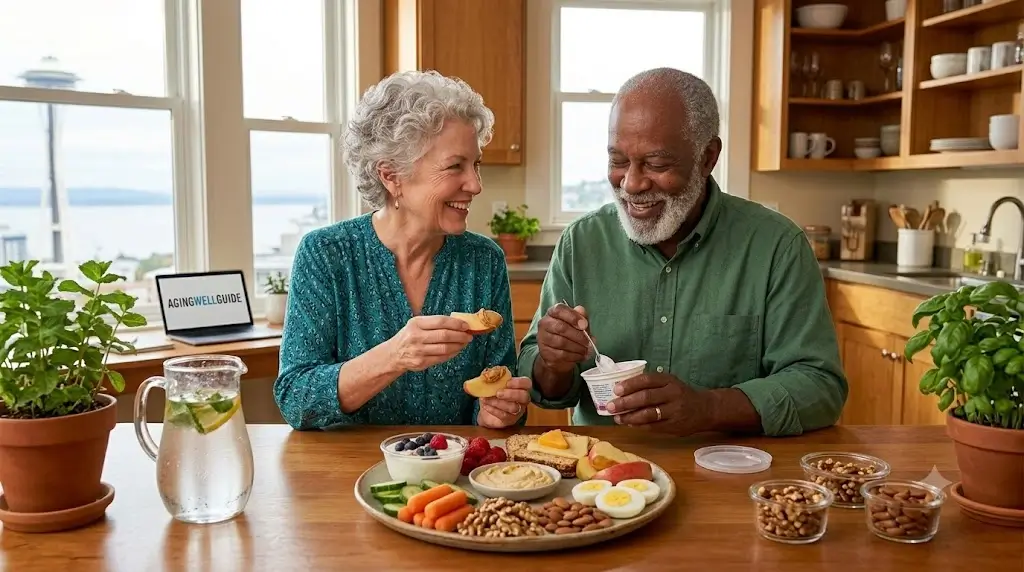
This guide focuses on easy healthy snack ideas that require little cooking and can work for adults 50 and older, including people who live alone, have limited cooking energy, or prefer small portions.
What Are the Best Easy Healthy Snacks for Older Adults?
Some of the simplest options are:
- Fruit and plain yogurt
- Apple or banana with peanut butter
- Baby carrots and hummus
- Unsalted nuts and fruit
- Whole-grain crackers with cheese
- Cottage cheese with fruit
- Whole-grain toast with nut butter
- Hard-cooked egg with whole-grain toast
- Oatmeal with berries and nuts
- Hummus with whole-grain pita and vegetables
NIA’s healthy eating guidance specifically includes fruit and yogurt, baby carrots with hummus, celery with natural peanut butter, whole-grain crackers with cheese, and unsalted nuts among practical snack choices for older adults.
Editorial Notice: AgingWellGuide provides evidence-aligned health and nutrition information. Our guides are grounded in clinical guidelines from the National Institute on Aging (NIA) and USDA. This content is for educational purposes and does not replace individualized medical advice.
What Makes a Snack Healthy for an Older Adult?
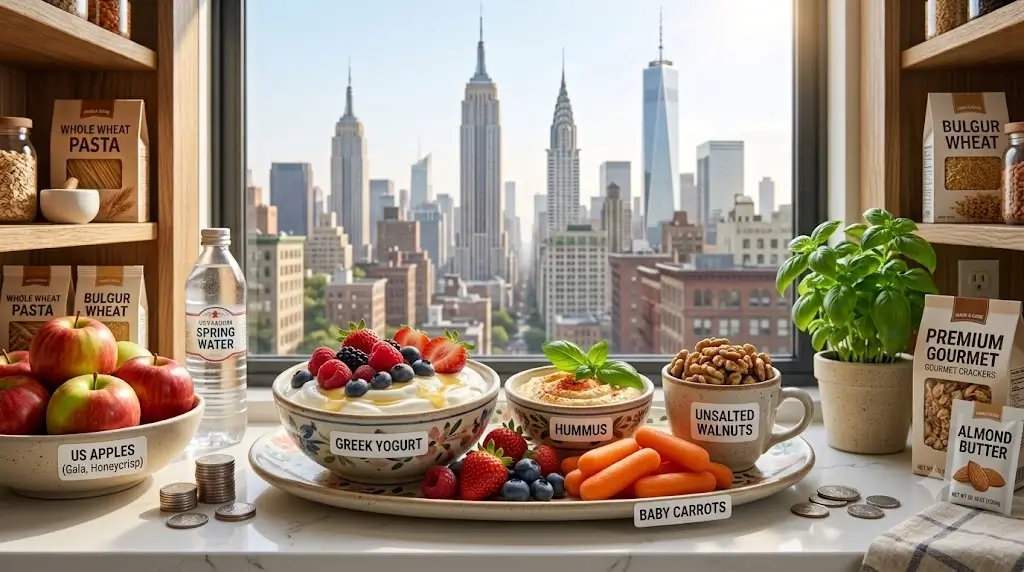
A useful snack provides more than calories. Look for foods that contribute protein, fiber, fruits or vegetables, whole grains, or other important nutrients.
| Snack component | Examples | Why it can help |
|---|---|---|
| Protein | Yogurt, eggs, cheese, nuts, beans, hummus | Helps make a snack more satisfying and contributes protein to the daily eating pattern |
| Fruit | Apples, bananas, berries, oranges, pears | Provides fiber and other nutrients |
| Vegetables | Carrots, cucumber, peppers, tomatoes | Adds vegetables and fiber |
| Whole grains | Whole-grain crackers, toast, oatmeal | Provides carbohydrates and fiber |
| Healthy fats | Nuts, seeds, peanut butter, avocado | Provides unsaturated fats and can make small snacks more satisfying |
NIA recommends a variety of nutrient-dense foods across food groups and notes that older adults often need fewer calories while still needing adequate nutrients.
What Are the Easiest Healthy Snacks With No Cooking?
No-cook snacks are particularly useful when cooking feels tiring or inconvenient.
- Greek yogurt + berries: open, combine, and eat.
- Apple + peanut butter: pair whole fruit with a small amount of nut butter.
- Hummus + baby carrots: no chopping required if the vegetables are purchased ready to eat.
- Cottage cheese + fruit: combine two ready-to-eat foods.
- Cheese + whole-grain crackers: simple and portable.
- Unsalted nuts + fruit: easy to portion and store.
- Hummus + whole-grain pita: a simple combination of plant foods.
- Avocado + whole-grain toast: requires minimal preparation.
Pre-cut vegetables and ready-to-eat fruit can be especially useful when slicing and chopping are difficult. NIA specifically recommends pre-cut produce as an option when preparation becomes challenging.
What Are Good High-Protein Snacks for Older Adults?
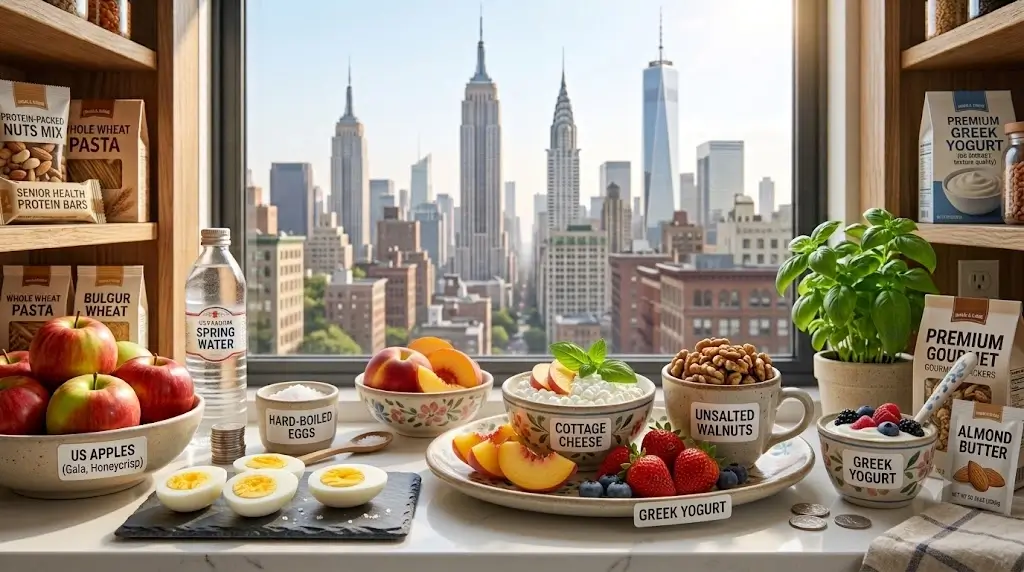
A protein-containing snack can be useful when meals are small or when there is a long interval between meals.
| Snack | Main protein source |
|---|---|
| Greek yogurt + berries | Yogurt |
| Cottage cheese + fruit | Cottage cheese |
| Hard-cooked egg + whole-grain toast | Egg |
| Apple + peanut butter | Peanut butter |
| Hummus + vegetables | Chickpeas |
| Cheese + whole-grain crackers | Cheese |
| Unsalted nuts + fruit | Nuts |
Clinical Renal & Potassium Notice: High-protein snacks such as nuts, dairy products, and nut butters naturally contain significant amounts of phosphorus and potassium. Older adults managing Chronic Kidney Disease (CKD) should check with their renal dietitian regarding safe snack portions.
What Are Good High-Fiber Snacks for Older Adults?
Fruit, vegetables, beans, whole grains, nuts, and seeds are useful sources of dietary fiber.
- Apple with peanut butter
- Pear with unsalted nuts
- Berries with plain yogurt and oats
- Carrots with hummus
- Whole-grain crackers with bean dip
- Oatmeal with fruit and seeds
- Whole-grain toast with avocado
- Fresh fruit with nuts
Whole fruits are generally a more useful everyday choice than fruit-flavored snacks or sugary fruit products. NIA recommends whole fruits and notes that fruit and vegetables contribute fiber. To learn how to add roughage to meals comfortably, read our guide on how to get more fiber from everyday foods.
What Are Good Snacks for Older Adults Who Live Alone?
Snacks for one person should be easy to portion and easy to store without creating unnecessary food waste.
Good choices include:
- Single-serving yogurt
- Individual fruit portions
- Small portions of unsalted nuts
- Whole-grain crackers with cheese
- Baby carrots with hummus
- Single hard-cooked eggs
- Small oatmeal portions
Buying large packages is not necessarily a problem if foods can be portioned and stored appropriately in durable glassware; review our tested picks for the best meal prep containers for older adults. For an organized single-person shopping plan, see healthy meal planning for one person.
What Are Good Snacks for Older Adults With Small Appetites?
A small snack can be useful when a large meal feels difficult to finish. Choose foods that provide meaningful nutrition rather than filling the available space with foods that provide mostly added sugar or refined carbohydrates.
Examples include:
- Yogurt with berries
- Cheese with whole-grain crackers
- Nut butter on whole-grain toast
- Cottage cheese with fruit
- Hummus with vegetables
- Egg with toast
- Fruit with unsalted nuts
NIA notes that nutrient-dense snacks can be particularly useful for older adults who need to obtain more nutrients without simply increasing the amount of food they eat.
What Are Good Snacks for Older Adults With Limited Cooking Energy?
The easiest snack is often the one that eliminates unnecessary preparation.
| If preparation is difficult… | Try… |
|---|---|
| Chopping | Baby carrots, berries, grapes, pre-cut vegetables |
| Standing | Ready-to-eat yogurt, nuts, fruit, cheese |
| Cooking | Hummus, cottage cheese, whole-grain crackers, fruit |
| Opening containers | Packaging that is easy to grip and open |
| Measuring | Pre-portioned snacks |
| Cleaning | Single-bowl or no-cook snacks |
NIA identifies physical problems, fatigue, chewing or swallowing difficulties, budget, and reduced appetite among potential roadblocks to healthy eating.
What Are Good Healthy Snacks in the Afternoon?
An afternoon snack can bridge the gap between lunch and dinner when hunger makes it useful.
Good combinations include:
- Apple + peanut butter
- Yogurt + berries
- Whole-grain crackers + cheese
- Carrots + hummus
- Banana + unsalted nuts
- Cottage cheese + fruit
The snack does not need to be large. Its role depends on the person’s hunger, meal schedule, and overall food intake.
What Are Good Healthy Snacks in the Evening?
An evening snack may be appropriate when dinner was early, appetite is higher later in the day, or a person simply prefers a small evening eating occasion.
Simple choices include:
- Plain yogurt with berries
- Small bowl of oatmeal
- Apple with peanut butter
- Whole-grain toast with nut butter
- Fruit with a small portion of unsalted nuts
- Cottage cheese with fruit
There is no requirement that every adult eat an evening snack. It should fit the person’s overall eating pattern rather than become an automatic habit.
What Are Good Healthy Snacks Instead of Cookies or Candy?
The easiest substitution is usually a food that provides a similar convenience but more nutritional value.
| Instead of… | Consider… |
|---|---|
| Candy | Fresh fruit |
| Cookies | Whole-grain crackers + cheese |
| Sugary yogurt | Plain yogurt + fruit |
| Chips | Unsalted nuts or vegetables + hummus |
| Sweet pastry | Whole-grain toast + peanut butter |
Relying heavily on refined, sugary snacks is one of the common healthy eating mistakes after 50. NIA recommends shifting from high-calorie snacks toward more nutrient-dense choices and limiting foods high in added sugars, sodium, and saturated fats.
Are Nuts a Good Snack for Older Adults?
Yes. Nuts can be a convenient source of protein, unsaturated fat, and other nutrients.
Practical options include almonds, walnuts, pistachios, and peanuts. Unsalted or lightly salted versions can make it easier to limit sodium.
Because nuts are energy-dense, portioning them before eating can be useful rather than repeatedly eating directly from a large container.
Is Yogurt a Good Snack for Older Adults?
Yogurt can be a convenient snack that contributes protein and, depending on the product, calcium and other nutrients.
For a simple combination, pair plain or lower-added-sugar yogurt with:
- Berries
- Banana
- Apple pieces
- Oats
- Nuts
- Seeds
Check the Nutrition Facts label when comparing products because added sugar and protein content can vary considerably between yogurts.
Are Fruit Snacks Healthy for Older Adults?
Whole fruit is generally a more useful everyday snack than candy-like fruit snacks or heavily sweetened fruit products.
Easy whole-fruit choices include:
- Apples
- Bananas
- Oranges
- Pears
- Berries
- Grapes
- Peaches
NIA recommends whole fruits as part of a healthy eating pattern and notes that at least half of the fruit consumed should be whole fruit rather than juice.
What Are Good Snacks for People With Chewing Difficulties?
Snack texture may need to be adapted when chewing is difficult. Softer foods can be easier than hard or crunchy foods.
Dysphagia Safety Guidance: Hard nuts, raw carrots, and sticky nut butters present significant choking hazards for seniors with swallowing disorders (dysphagia). Opt for smooth pureed yogurts, soft applesauce, or thin nut-butter spreads following your speech pathologist’s texture recommendations.
Examples of accessible, soft snacks include:
- Yogurt
- Cottage cheese
- Soft banana
- Applesauce without excessive added sugar
- Oatmeal
- Hummus
- Soft-cooked fruit
- Mashed avocado
If an older adult has a diagnosed swallowing disorder, food texture and liquid consistency should follow guidance from an appropriate healthcare professional.
How Can You Make Healthy Snacks Easier to Grab?
Snack organization matters almost as much as snack selection.
- Keep fruit visible. Place ready-to-eat fruit where it is easy to see.
- Wash produce ahead of time. This removes a preparation barrier.
- Portion nuts. Divide a larger package into smaller containers.
- Keep yogurt accessible. Store individual portions toward the front of the refrigerator.
- Keep vegetables ready. Use pre-cut vegetables when appropriate.
- Create a small snack shelf. Keep suitable shelf-stable choices together.
NIA recommends planning ahead and considering preparation time when making healthy food choices.
How Can Snacks Fit Into a Healthy Eating Pattern After 50?
A snack should complement meals rather than replace a balanced eating pattern by default.
A simple way to think about the day is:
Meals provide the foundation; snacks fill practical gaps.
If breakfast, lunch, and dinner already provide enough food for the individual’s needs, an additional snack may not be necessary. If meals are small or widely spaced, a nutrient-dense snack can make the overall eating pattern easier to maintain.
For the broader framework covering food groups, protein, fiber, hydration, and healthy eating patterns, see Healthy Eating After 50: Complete Guide.
How Many Snacks Should an Older Adult Eat Each Day?
There is no universal number of snacks that every older adult should eat.
Some people may not need snacks at all. Others may prefer one or two small snacks between meals. The appropriate pattern depends on appetite, meal size, activity, energy needs, preferences, and the person’s overall diet.
NIA emphasizes that calorie needs vary by individual and that the nutritional quality of food matters alongside quantity.
Can Healthy Snacks Help With Weight Gain?
For someone who needs to gain weight, nutrient-dense snacks can be one way to add food between meals.
NIA specifically lists foods such as nuts, cheese, and dried fruit as nutrient-dense snack options for people trying to gain weight.
Unintended weight loss or persistent appetite changes should not simply be managed by adding snacks without considering the underlying reason. A healthcare professional can help determine an appropriate approach.
What Snacks Are Good on a Budget?
Healthy snacks do not have to rely on expensive specialty foods.
- Bananas
- Apples
- Oatmeal
- Peanut butter
- Beans
- Hummus
- Carrots
- Plain yogurt
- Eggs
- Unsalted peanuts
- Whole-grain bread
Frozen fruits and vegetables can also be useful when fresh produce is expensive or likely to spoil before it is eaten.
What Should Older Adults Look for on Snack Labels?
When comparing packaged snacks, check the Nutrition Facts label rather than relying only on front-of-package claims.
- Added sugars: lower amounts are generally preferable for everyday snacks.
- Sodium: compare products when choosing crackers, prepared dips, soups, or packaged snacks.
- Protein: useful when selecting a more substantial snack.
- Fiber: useful when comparing grain-based snacks.
- Serving size: check how much the listed nutrition information actually represents.
NIA recommends limiting foods high in added sugar, saturated fat, and sodium while emphasizing nutrient-dense choices.
What Should Older Adults Drink With Snacks?
Water is a practical default beverage. NIA recommends drinking plenty of water throughout the day and avoiding sugary drinks. For actionable tips on establishing consistent drinking habits between meals, explore easy ways to drink more water after 50.
Other beverages may fit individual preferences and dietary needs, but a snack does not need to include a sweetened beverage to feel complete.
10 Easy Healthy Snack Combinations
| # | Snack combination | Preparation |
|---|---|---|
| 1 | Apple + peanut butter | Open and assemble |
| 2 | Greek yogurt + berries | No cooking |
| 3 | Carrots + hummus | No cooking |
| 4 | Cheese + whole-grain crackers | No cooking |
| 5 | Banana + unsalted nuts | No cooking |
| 6 | Cottage cheese + fruit | No cooking |
| 7 | Whole-grain toast + peanut butter | Toast if desired |
| 8 | Hummus + whole-grain pita + vegetables | No cooking |
| 9 | Oatmeal + berries + nuts | Short preparation |
| 10 | Hard-cooked egg + whole-grain toast | Minimal preparation if egg is prepared ahead |
Easy Healthy Snack Checklist
- ☐ Keep at least two ready-to-eat fruits available.
- ☐ Keep one protein-rich snack available.
- ☐ Keep a simple whole-grain option available.
- ☐ Keep vegetables that require little or no preparation.
- ☐ Portion nuts instead of eating directly from a large package.
- ☐ Compare added sugar and sodium on packaged snacks.
- ☐ Keep water easily accessible.
- ☐ Choose softer foods when chewing is difficult.
- ☐ Use pre-cut produce when chopping is a barrier.
- ☐ Keep low-effort snacks available for days when cooking is difficult.
Frequently Asked Questions
What is the healthiest snack for an older adult?
There is no single healthiest snack. Fruit with yogurt, vegetables with hummus, nuts with fruit, whole-grain crackers with cheese, and whole-grain toast with peanut butter are all practical nutrient-dense choices.
What is a good high-protein snack for seniors?
Greek yogurt, cottage cheese, eggs, cheese, nuts, peanut butter, and hummus are convenient protein-containing snack options.
What are easy snacks for older adults who live alone?
Single-serving yogurt, fruit, nuts, cheese with crackers, hummus with vegetables, and cottage cheese with fruit require little preparation and are easy to portion.
What are good snacks for older adults with low appetite?
Small nutrient-dense snacks such as yogurt with berries, cheese with whole-grain crackers, peanut butter on toast, or fruit with nuts can provide useful nutrition without requiring a large meal.
Are nuts healthy snacks for older adults?
Yes. Nuts provide protein, unsaturated fat, and other nutrients. Unsalted varieties can help limit sodium, and pre-portioning can make serving sizes easier to manage.
Is fruit a good snack after 50?
Yes. Whole fruits such as apples, bananas, berries, oranges, and pears provide carbohydrates, fiber, vitamins, and other nutrients.
Is yogurt a good snack for older adults?
Yogurt can be a convenient source of protein and nutrients such as calcium. Plain or lower-added-sugar varieties can be useful choices.
What can an older adult eat when they do not want to cook?
Try yogurt and fruit, hummus and vegetables, cottage cheese and fruit, cheese and whole-grain crackers, nuts and fruit, or peanut butter on whole-grain toast.
How can older adults make healthy snacking easier?
Keep ready-to-eat foods visible and accessible, wash produce ahead of time, portion nuts, and keep several no-cook options available. Reducing preparation steps can make healthy choices easier to repeat.
How many snacks should an older adult eat per day?
There is no universal number. Some adults do not need snacks, while others may benefit from one or two depending on appetite, meal schedule, and overall dietary needs.
Are packaged snacks unhealthy?
Not automatically. Packaged foods can be convenient. Compare serving size, protein, fiber, added sugars, sodium, and saturated fat when choosing among similar products.
Can snacks help older adults gain weight?
They can contribute additional food when weight gain is appropriate. NIA recommends nutrient-dense options such as nuts, cheese, and dried fruit for people trying to gain weight. Persistent or unexplained weight loss should be discussed with a healthcare professional.
The Bottom Line
Easy healthy snacks for older adults should be simple enough to prepare consistently and nutritious enough to add value to the day’s eating pattern.
Start with a short list of reliable foods: fruit, yogurt, vegetables, hummus, nuts, whole grains, eggs, cheese, beans, and nut butter. Combine two or three of them into a snack that provides protein, fiber, produce, or another useful nutrient.
There is no need for an elaborate snack plan. The best system is to keep a few good choices visible, accessible, affordable, and ready to eat.
Editorial Methodology
This guide uses an evidence-first approach, with nutrition guidance primarily informed by the National Institute on Aging and broader U.S. dietary guidance. Snack ideas are practical examples rather than individualized nutrition prescriptions. Adults with diagnosed medical conditions, swallowing disorders, food allergies, or specific dietary restrictions may need individualized guidance from a qualified healthcare professional.
Sources
- National Institute on Aging (NIA) — Healthy Meal Planning: Tips for Older Adults
- National Institute on Aging (NIA) — Healthy Eating As You Age: Know Your Food Groups
- National Institute on Aging (NIA) — How Much Should I Eat? Quantity and Quality
- National Institute on Aging (NIA) — Overcoming Roadblocks to Healthy Eating
- National Institute on Aging (NIA) — Maintaining a Healthy Weight
Editorial standard: AgingWellGuide independently develops healthy eating resources tailored specifically to adults aged 50 and older. We prioritize whole-food nutrition, effortless kitchen workflows, and clinical safety considerations.
