
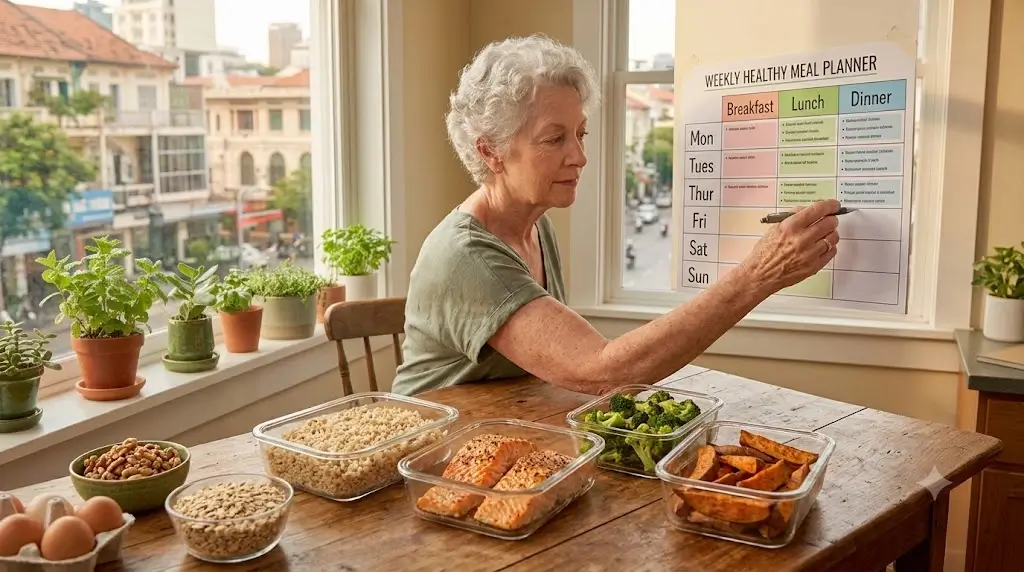
Quick answer: Start by choosing several reliable breakfasts, lunches, and dinners. Make sure the week includes a variety of vegetables and fruits, regular protein foods, whole grains or other fiber-rich foods, and appropriate sources of healthy fats. Add snacks only when useful, plan beverages, create a grocery list from the menu, and prepare a few ingredients ahead of time.
The National Institute on Aging recommends planning meals around a variety of nutrient-dense foods while considering budget, preparation time, protein intake, hydration, and practical barriers to healthy eating.
What Is a Healthy Meal Plan After 50?
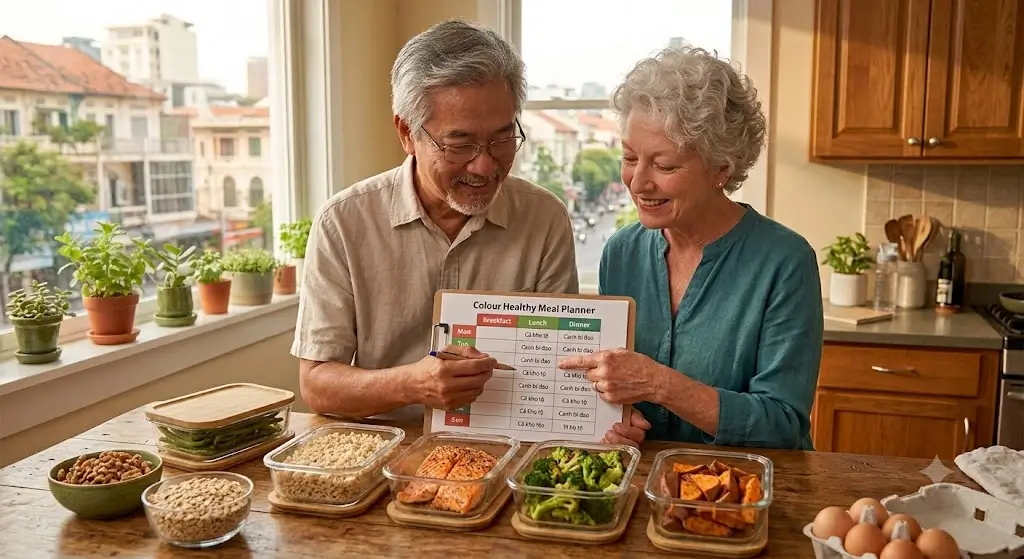
A healthy meal plan after 50 is a practical schedule of meals and snacks that provides a varied mix of nutrient-dense foods while fitting the person’s individual energy needs, preferences, budget, and lifestyle. For an overarching nutritional framework, read our core guide on healthy eating after 50.
It is not simply a list of “healthy foods.” A useful meal plan answers four practical questions:
- What will you eat?
- When will you eat it?
- What ingredients need to be purchased?
- What needs to be prepared in advance?
A strong plan also accounts for real-world limitations such as cooking fatigue, living alone, limited mobility, food preferences, and limited preparation time.
How Do You Build a Healthy Meal Plan After 50?
Build the plan in seven steps: choose the meal structure, select protein foods, add vegetables and fruit, add fiber-rich carbohydrates, include appropriate fats, plan beverages, and turn the meals into a practical grocery list.
| Step | What to do |
|---|---|
| 1 | Choose how many meals and snacks fit your routine |
| 2 | Select protein foods for the main meals |
| 3 | Add vegetables and fruit |
| 4 | Add whole grains or other fiber-rich carbohydrates |
| 5 | Add appropriate sources of healthy fats |
| 6 | Plan beverages and hydration |
| 7 | Build the grocery list and preparation schedule |
This process is easier than starting with seven completely different daily menus.
What Should Every Healthy Meal Plan Include?
Most weekly plans should regularly include vegetables, fruits, protein foods, whole grains or other fiber-rich foods, and appropriate sources of healthy fats.
| Meal-plan component | Examples |
|---|---|
| Protein foods | Fish, poultry, eggs, beans, lentils, tofu, yogurt, nuts and seeds |
| Vegetables | Leafy greens, broccoli, carrots, peppers, tomatoes, squash |
| Fruit | Berries, apples, oranges, bananas, melon |
| Whole grains and fiber-rich carbohydrates | Oats, barley, brown rice, whole-grain bread, beans, lentils |
| Healthy fats | Olive oil, avocado, nuts, seeds |
| Fluids | Water and other appropriate beverages |
The exact amounts should be individualized rather than treated as a universal formula.
How Should You Plan Protein Into a Weekly Meal Plan?
Choose the main protein foods first, then build the rest of each meal around them.
This approach makes it easier to distribute protein across the day instead of discovering at the end of the planning process that most meals contain little protein. For practical food choices, check how to get more protein from everyday foods.
| Day | Breakfast protein | Lunch protein | Dinner protein |
|---|---|---|---|
| Monday | Eggs | Beans | Chicken |
| Tuesday | Yogurt | Tuna or another fish | Lentils |
| Wednesday | Eggs | Chicken | Fish |
| Thursday | Yogurt | Beans | Tofu |
| Friday | Eggs | Lentils | Chicken |
This is an example of planning structure, not a required menu.
Clinical Renal Caution: While maintaining muscle mass is vital for older adults, individuals diagnosed with Chronic Kidney Disease (CKD) must not adopt high-protein meal plans without direct clinical supervision. Protein, potassium, and phosphorus intake must align strictly with nephrology targets to avoid accelerating renal decline.
How Many Meals Should You Plan Each Day?
There is no universal number of meals that every adult over 50 must eat.
Some people prefer three meals. Others may benefit from smaller meals or an additional snack depending on appetite, schedule, activity, and individual nutrition needs.
The meal plan should therefore start with the person’s normal eating pattern rather than forcing an arbitrary schedule.
| Pattern | When it may be practical |
|---|---|
| Three meals | Simple structure for many households |
| Three meals + snack | Useful when meals are widely spaced or appetite varies |
| Smaller meals | May be easier for someone with a smaller appetite |
| Flexible meal timing | Useful for varying schedules or activity levels |
The goal is adequate nutrition and a sustainable routine, not adherence to a particular meal frequency.
How Do You Plan Breakfast After 50?
Build breakfast around a protein food plus a fruit or vegetable and a fiber-rich carbohydrate when appropriate. For nutrient-dense morning templates, browse our healthy breakfast ideas for older adults.
Simple combinations include:
- Oatmeal + yogurt + berries
- Eggs + whole-grain toast + fruit
- Plain yogurt + fruit + oats + nuts
- Whole-grain toast + nut butter + banana
- Vegetable omelet + whole-grain toast
Repeating two or three reliable breakfasts during the week can simplify shopping and preparation.
How Do You Plan Healthy Lunches After 50?
Use a simple lunch formula: protein + vegetables or fruit + a fiber-rich carbohydrate.
Examples include:
- Bean and vegetable bowl with brown rice
- Chicken and vegetable whole-grain wrap
- Lentil soup with whole-grain toast and fruit
- Tuna and vegetable salad with whole-grain crackers
- Leftover fish with vegetables and a whole grain
Lunch is also an ideal place to use prepared leftovers, reducing the amount of cooking required during the week.
How Do You Plan Healthy Dinners After 50?
Choose a protein, add vegetables, and pair them with a fiber-rich carbohydrate or whole grain. For batch-cooking workflows and sheet-pan dinners, see our collection of healthy dinner ideas for adults over 50.
| Protein | Vegetables | Carbohydrate |
|---|---|---|
| Salmon | Broccoli | Brown rice |
| Chicken | Carrots and peppers | Barley |
| Lentils | Spinach and tomatoes | Whole-grain bread |
| Tofu | Mixed vegetables | Brown rice |
| Beans | Squash and greens | Whole-grain tortilla |
Dinner does not need to be the largest or most elaborate meal of the day. A repeatable meal that is easy to prepare can be more useful than an ambitious recipe that rarely gets made.
How Should You Plan Snacks?
Plan snacks only when they serve a purpose, such as filling a gap between meals or making it easier to meet individual nutrition needs. For low-prep snacking, explore our easy healthy snacks for older adults.
Useful options can combine protein, fiber, or both:
- Yogurt and berries
- Apple and nuts
- Vegetables and hummus
- Whole-grain toast and nut butter
- Fruit and cheese
Snacks are not automatically necessary. If regular meals comfortably meet the person’s needs, additional snacks may not be needed.
How Do You Add Enough Vegetables and Fruit to a Meal Plan?
Plan vegetables and fruit before filling the rest of the grocery list with convenience foods.
A practical method is to choose several vegetables and several fruits for the week, then deliberately assign them to meals.
| Food | Possible use |
|---|---|
| Broccoli | Dinner vegetable |
| Carrots | Soup, side dish, snack |
| Leafy greens | Salads, bowls, cooked dishes |
| Berries | Breakfast or snack |
| Apples | Snack or breakfast |
| Bananas | Breakfast or snack |
Fresh, frozen, and appropriately chosen canned produce can all contribute to the plan.
How Do You Add More Fiber to a Weekly Meal Plan?
Include fiber-rich foods at multiple meals rather than trying to get all your fiber from one food. For practical daily food swaps, read how to get more fiber from everyday foods.
Useful choices include:
- Oats
- Beans
- Lentils
- Vegetables
- Fruit
- Whole grains
- Nuts and seeds
If a person’s current diet is low in fiber, increasing high-fiber foods gradually and maintaining adequate fluid intake can be a practical approach to prevent digestive distress.
How Should You Plan Hydration?
Make fluids part of the meal plan instead of treating hydration as an afterthought. For structured drinking habits, see our guide on easy ways to drink more water after 50.
Keep water accessible and consider including a beverage with meals and regular opportunities to drink during the day.
Clinical Fluid Notice: Hydration needs vary substantially. Older adults diagnosed with Congestive Heart Failure (CHF) or end-stage renal disease who are prescribed strict daily fluid limits must follow their physician’s fluid volume restrictions rather than general water goals.
How Do You Plan Healthy Meals on a Budget?
Build the meal plan around affordable staples first, then add more expensive foods selectively. For cost-effective shopping systems, read healthy eating on a budget after 50.
| Budget-friendly staple | Meal uses |
|---|---|
| Beans | Soups, bowls, salads, wraps |
| Lentils | Soups, stews, grain bowls |
| Oats | Breakfast |
| Eggs | Breakfast, lunch, dinner |
| Frozen vegetables | Side dishes, soups, stir-fries |
| Seasonal produce | Snacks and meals |
| Whole grains | Bowls and side dishes |
NIA recommends considering food cost and preparation time when planning meals. A healthy meal plan should be financially realistic enough to follow.
Are Frozen and Canned Foods Good for Meal Planning?
Yes. Frozen and canned foods can make a healthy meal plan more practical.
They can reduce food waste, extend storage time, and decrease preparation work.
When choosing packaged foods:
- Compare sodium levels and look for “No Salt Added” labels
- Check for added sugars where relevant
- Choose products with useful nutritional value
- Use frozen vegetables without excessive added sauces when appropriate
- Choose canned foods with lower sodium when available
Convenience should be viewed as a tool for consistency rather than automatically as a nutritional compromise.
How Do You Build a Grocery List From a Meal Plan?
Write the grocery list from the meals, not the other way around.
Once the week’s meals are selected, group ingredients into categories.
| Category | Examples |
|---|---|
| Protein | Eggs, chicken, fish, beans, lentils, yogurt, tofu |
| Produce | Vegetables, fruit, leafy greens |
| Grains | Oats, brown rice, barley, whole-grain bread |
| Healthy fats | Olive oil, nuts, seeds, avocado |
| Frozen | Frozen vegetables, frozen fruit |
| Pantry | Canned beans, canned fish, herbs, spices |
Check the pantry and refrigerator before shopping so the grocery list does not duplicate ingredients already available.
How Far Ahead Should You Plan Meals?
Plan far enough ahead to make shopping and preparation easier, but not so far ahead that the plan becomes rigid.
For many households, a one-week plan is a useful balance.
A seven-day plan provides enough structure to create one grocery trip and prepare ingredients in batches while still allowing flexibility for leftovers, unexpected events, and changing appetite. Some people may prefer planning only three or four days at a time.
How Do You Meal Prep for the Week After 50?
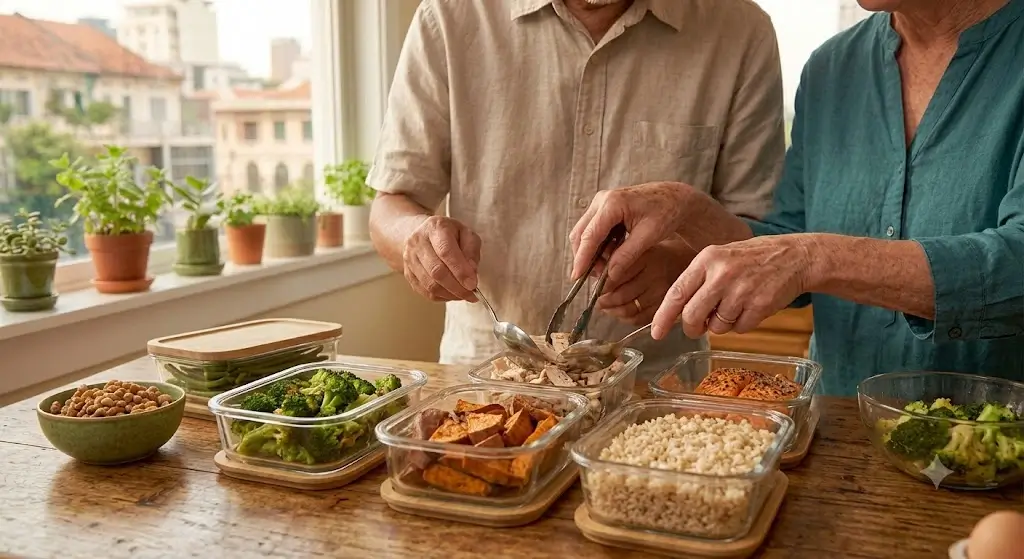
Prepare ingredients that can be reused in multiple meals rather than cooking seven complete meals at once.
For example:
- Cook a batch of whole grains.
- Prepare several portions of a protein food.
- Wash or portion vegetables.
- Prepare fruit for easy access.
- Portion leftovers into airtight glassware; see our reviewed best meal prep containers for older adults.
This component-based approach can reduce cooking time without forcing the same meal every day.
How Do You Plan Meals When You Live Alone?
Meal planning for one requires extra attention to package sizes, perishability, leftovers, and food waste. For an end-to-end framework, check healthy meal planning for one person.
A useful strategy is to combine:
- Small packages of fresh foods
- Frozen vegetables and fruit
- Canned staples
- Foods that freeze well
- Batch-cooked components
- Flexible leftovers
For example, cooked chicken could become a grain bowl one day and a wrap the next rather than being served as the identical meal repeatedly.
How Do You Plan Meals for Two Older Adults?
Planning for two is often easier because ingredients can be purchased and prepared in larger quantities without requiring the same degree of portion management as cooking for one.
A useful system is:
- Choose five or six main dinners.
- Use leftovers for one or two lunches.
- Repeat a few breakfasts.
- Keep flexible foods for unexpected meals.
- Freeze portions that will not be eaten in time.
This reduces the need to cook a completely different meal every day.
How Do You Meal Plan When Cooking Is Physically Difficult?
Design the meal plan around the person’s physical abilities instead of choosing recipes first and discovering later that they are too demanding.
Reduce tasks involving:
- Long periods of standing
- Repeated chopping
- Heavy lifting
- Carrying hot cookware
- Frequent bending
- Reaching high shelves
- Multiple rounds of cleanup
Practical shortcuts can include frozen vegetables, pre-cut produce, canned foods, batch preparation, countertop appliances, and meals requiring fewer cooking steps.
Dysphagia Texture Adaptation: Older adults who experience chewing or swallowing difficulties should prioritize naturally soft or minced ingredients (such as tender fish, scrambled eggs, well-cooked legumes, and pureed soups) to avoid choking risks.
How Do You Build a Meal Plan for Low-Energy Days?
A good meal plan should include backup meals that require very little preparation.
Examples include:
- Bean soup + whole-grain toast + fruit
- Yogurt + oats + berries + nuts
- Eggs + whole-grain toast + fruit
- Frozen vegetables + cooked grain + prepared protein
- Hummus + vegetables + whole-grain pita
The purpose of a backup meal is not to create a nutritionally perfect emergency menu. It is to prevent a difficult day from automatically turning into a day with no practical healthy options.
How Do You Avoid Getting Bored With a Meal Plan?
Repeat ingredients, not necessarily complete meals.
The same chicken, beans, vegetables, or grains can appear in different combinations.
| Base ingredient | Meal 1 | Meal 2 | Meal 3 |
|---|---|---|---|
| Chicken | Grain bowl | Wrap | Soup |
| Beans | Salad | Soup | Rice bowl |
| Vegetables | Roasted side | Omelet | Soup |
| Brown rice | Rice bowl | Side dish | Bean-and-rice meal |
This reduces shopping complexity while preserving variety.
How Do You Know if a Meal Plan Is Balanced?
Review the entire week rather than judging one meal.
Ask:
- ☐ Are vegetables included regularly?
- ☐ Is fruit available throughout the week?
- ☐ Are protein foods included at main meals?
- ☐ Are whole grains or other fiber-rich foods included?
- ☐ Are healthy fats included appropriately?
- ☐ Is water readily available?
- ☐ Is the plan realistic for the household?
- ☐ Does it fit the grocery budget?
- ☐ Can the meals actually be prepared with the available equipment and abilities?
- ☐ Are leftovers and perishable foods managed?
- ☐ Are there low-effort backup meals?
- ☐ Is there enough variety to keep the plan enjoyable?
What Should You Do With Leftovers?
Plan leftovers deliberately rather than treating them as accidental food.
For example, a batch of cooked chicken can become lunch the following day, while cooked vegetables and grains can be combined into another meal.
USDA Leftover Safety Rule: Perishable leftovers must be refrigerated within 2 hours of cooking (or 1 hour if the room temperature exceeds 90°F) and consumed within 3 to 4 days. When reheating, all cooked leftovers must reach an internal temperature of at least 165°F (74°C) to eliminate foodborne pathogens.
What Are the Biggest Meal-Planning Mistakes After 50?
Avoiding the most common healthy eating mistakes after 50 makes meal planning much easier to sustain:
Planning Too Many Complicated Recipes
A complicated plan is difficult to maintain when energy or time is limited.
Ignoring Protein
Choosing vegetables and grains without deliberately including protein foods can leave the plan poorly structured.
Ignoring Fiber
A meal plan dominated by refined grains and highly processed foods may provide less fiber than intended.
Planning Too Much Fresh Food
Buying more perishable food than the household can use can increase waste and cost.
Making Every Meal Different
Excessive variety increases shopping and preparation demands without necessarily improving the overall eating pattern.
Ignoring Physical Ability
A meal plan that requires extensive chopping, lifting, or standing may not be realistic.
Forgetting Low-Effort Meals
Without backup meals, one difficult day can disrupt the entire plan.
Treating the Plan as Rigid
A meal plan is a tool, not a contract. Leftovers, appetite, schedules, and food availability can require adjustments.
How Can You Build a Simple 7-Day Meal Plan?
The following is an example framework rather than a prescribed diet.
| Day | Breakfast | Lunch | Dinner |
|---|---|---|---|
| Monday | Oatmeal, yogurt, berries | Bean and vegetable bowl | Chicken, broccoli, brown rice |
| Tuesday | Eggs, whole-grain toast, fruit | Chicken wrap, vegetables | Lentil soup, whole-grain bread |
| Wednesday | Yogurt, oats, fruit, nuts | Leftover lentil soup | Fish, vegetables, barley |
| Thursday | Oatmeal, berries, nuts | Bean salad, whole-grain toast | Tofu, vegetables, brown rice |
| Friday | Eggs, toast, fruit | Leftover tofu bowl | Chicken, vegetables, whole grain |
| Saturday | Yogurt, fruit, oats | Lentil or bean soup | Fish, vegetables, potatoes |
| Sunday | Oatmeal, fruit, yogurt | Leftover grain bowl | Bean and vegetable meal |
The important part is the planning structure: protein appears regularly, plant foods are distributed across the week, fiber-rich foods are repeated, and leftovers reduce preparation demands.
How Do You Turn a Weekly Meal Plan Into a 30-Minute Planning Routine?
A simple weekly routine can be completed in five stages.
| Time | Task |
|---|---|
| 5 minutes | Check refrigerator, freezer, and pantry |
| 5 minutes | Choose breakfasts and lunches |
| 10 minutes | Choose dinners and identify leftovers |
| 5 minutes | Build the grocery list |
| 5 minutes | Choose foods to prepare ahead |
The goal is to reduce decisions during the week, not to create a perfect menu.
How Should You Adjust a Meal Plan as Your Needs Change?
A meal plan should be periodically reassessed.
Changes in appetite, activity, cooking ability, household size, food preferences, or medical recommendations may require changes to the plan.
Useful questions include:
- Are meals still enjoyable?
- Is food being wasted?
- Are meals too difficult to prepare?
- Are grocery costs reasonable?
- Are protein foods appearing regularly?
- Are vegetables, fruits, and fiber-rich foods being eaten consistently?
- Is hydration being overlooked?
If a health condition or medication changes dietary requirements, individualized professional advice should take priority over a general meal-planning template.
What Is the Best Meal-Planning Strategy After 50?
Plan the week around a small group of reliable meals and reusable ingredients rather than trying to create a completely different menu every day.
Choose protein foods first, add vegetables and fruit, include fiber-rich carbohydrates and appropriate healthy fats, plan beverages, then create the grocery list and preparation schedule.
This creates a meal plan that is nutritious enough to support healthy eating while remaining practical enough to use repeatedly.
Healthy Meal Planning After 50: Final Checklist
- ☐ I know which meals I will prepare this week.
- ☐ Protein foods are planned regularly.
- ☐ Vegetables are included throughout the week.
- ☐ Fruit is readily available.
- ☐ Fiber-rich foods are included regularly.
- ☐ Whole grains are included when appropriate.
- ☐ Healthy fats are included appropriately.
- ☐ Water and other appropriate fluids are considered.
- ☐ The plan fits my grocery budget.
- ☐ The plan does not require excessive preparation.
- ☐ I have low-effort backup meals.
- ☐ Leftovers have a planned use.
- ☐ Perishable foods can be used before they spoil.
- ☐ The plan works for my household size.
- ☐ The plan is flexible enough to adjust when circumstances change.
Frequently Asked Questions
How do you build a healthy meal plan after 50?
Start with a realistic meal schedule, choose protein foods, add vegetables and fruit, include whole grains or other fiber-rich foods, add appropriate healthy fats, plan beverages, and create a grocery list from the meals.
What should every healthy meal plan include?
A varied plan should regularly include vegetables, fruits, protein foods, whole grains or other fiber-rich foods, appropriate healthy fats, and adequate fluids.
How many meals should adults over 50 eat each day?
There is no universal meal frequency. Three meals may work well for some people, while others may prefer smaller meals or an additional snack based on appetite, schedule, and individual needs.
How should protein be planned after 50?
Choose protein foods deliberately for main meals rather than adding protein as an afterthought. Fish, poultry, eggs, beans, lentils, tofu, yogurt, nuts, and seeds can all contribute.
How can I get enough fiber in my meal plan?
Include vegetables, fruit, beans, lentils, whole grains, nuts, and seeds across multiple meals. If fiber intake is currently low, increase it gradually and maintain adequate fluid intake.
How do you meal plan for one person after 50?
Use smaller packages, frozen foods, canned staples, foods that freeze well, batch-cooked components, and flexible leftovers to reduce waste and preparation demands.
How do you meal plan for two older adults?
Choose several repeatable dinners, use leftovers for lunches, repeat a few breakfasts, and freeze portions that will not be eaten in time.
Are frozen vegetables good for meal planning?
Yes. Frozen vegetables can make healthy eating more convenient and reduce waste. Check products for excessive added sodium or sauces when relevant.
Are canned foods okay in a healthy meal plan?
Many canned foods can fit into a healthy eating pattern. Compare sodium and added sugars where relevant and choose lower-sodium options when available.
How far ahead should I plan meals?
A one-week plan is practical for many households, but a shorter three- or four-day plan may work better for people whose schedules or appetite change frequently.
How do you meal prep without cooking every meal in advance?
Prepare reusable components such as grains, vegetables, and protein foods, then combine them into different meals during the week.
What should I do if cooking becomes physically difficult?
Reduce chopping, standing, lifting, and carrying by using frozen or pre-cut foods, canned staples, batch preparation, and lower-effort meals.
How can I meal plan on a budget?
Build the plan around affordable staples such as beans, lentils, oats, eggs, frozen vegetables, seasonal produce, and whole grains before adding more expensive ingredients.
How do I prevent meal-plan boredom?
Repeat ingredients rather than complete meals. The same protein, grain, or vegetable can be used in different combinations during the week.
How do I know if my meal plan is balanced?
Review the entire week and check for regular protein foods, vegetables, fruit, fiber-rich foods, appropriate fats, fluids, variety, affordability, and realistic preparation requirements.
Should a healthy meal plan include snacks?
Not necessarily. Snacks can be useful when they fit the person’s appetite and schedule, but they are not required simply because someone is over 50.
How should leftovers be included in a meal plan?
Assign leftovers a specific future meal rather than leaving them unplanned. Store perishable foods promptly and follow appropriate food-safety practices.
Should older adults follow a strict diet plan?
Not automatically. A flexible, nutrient-dense eating pattern is generally more practical than a rigid diet unless a qualified professional has recommended a specific dietary approach.
Final Verdict
The best healthy meal plan after 50 is not the most complicated one. It is the one that consistently makes nutritious food easy to buy, prepare, eat, and repeat.
Start with a small group of reliable meals. Plan protein deliberately. Add vegetables, fruit, whole grains, and other fiber-rich foods. Include appropriate healthy fats and regular fluids. Then build the grocery list around what you actually intend to eat.
Finally, design the plan around real life: household size, budget, cooking ability, appetite, mobility, preparation time, and food preferences.
A meal plan should reduce friction—not create another demanding task.
Editorial Methodology
This guide uses an evidence-first approach based primarily on National Institute on Aging (NIA) healthy meal planning guidelines, Dietary Guidelines for Americans, and USDA food safety standards. It focuses on accessible whole-food systems and realistic cooking workflows tailored to older adults without prescribing rigid caloric targets.
Sources and Editorial Basis
- National Institute on Aging (NIA) — Healthy Meal Planning
- National Institute on Aging (NIA) — Healthy Eating As You Age: Know Your Food Groups
- National Institute on Aging (NIA) — Healthy Aging Tips
- National Institute on Aging (NIA) — Overcoming Roadblocks to Healthy Eating
- National Institute on Aging (NIA) — Quantity and Quality: What to Eat and Drink as You Age
- National Institute on Aging (NIA) — Food Safety
- U.S. Department of Agriculture (USDA) — Dietary Guidelines for Americans
- U.S. Department of Agriculture (USDA) — Food Safety and Leftovers
This article provides general nutrition information and is not individualized medical or dietary advice.
